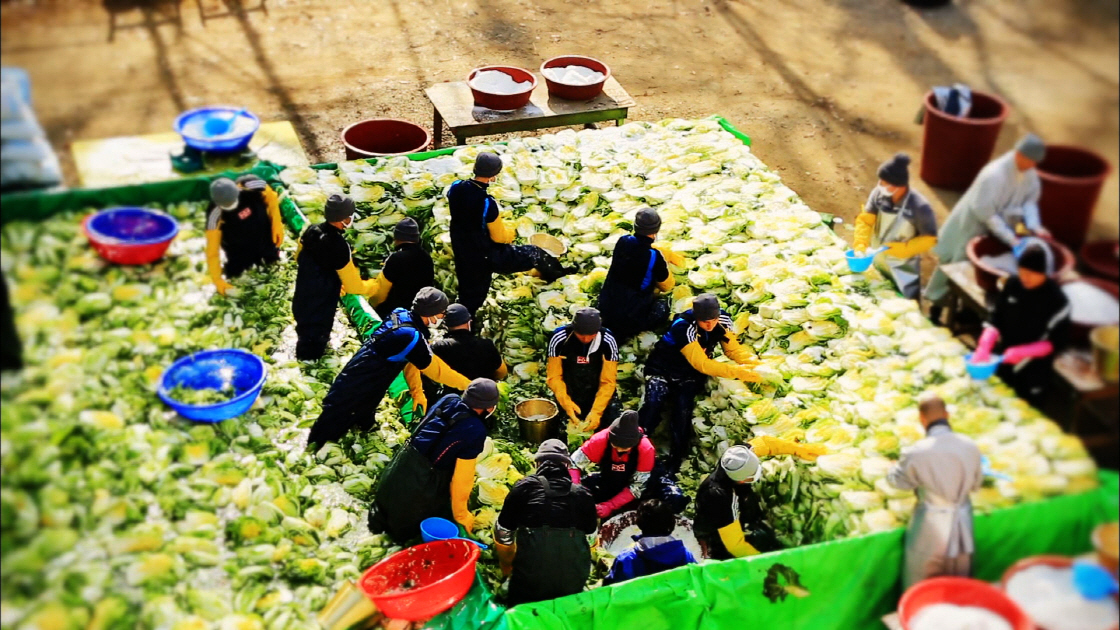
Kimjang is the Korean tradition of making a whole winter’s supply of kimchi in one go, usually in late November or early December. For generations, it was one of the biggest events in a Korean household’s year. Relatives gathered, neighbors helped each other, and dozens or even hundreds of heads of napa cabbage were salted, seasoned, and packed away in a single long weekend.
Kimjang still happens every autumn, but it looks different today. Fewer families make it at home, more people buy kimchi ready-made, and pre-salted cabbage can now be ordered online. This guide explains what kimjang is, how it works step by step, why UNESCO recognized it, and how the tradition is changing in modern Korea.
What Is Kimjang?
Kimjang (김장) means preparing kimchi in large amounts to last through the winter. The word itself points to storage: it comes from an older term for “storing” vegetables for the cold months.
Before refrigerators, Korean winters left very few fresh vegetables. Families solved that problem by fermenting cabbage and radish in late autumn, when they were cheap and plentiful, and then eating that kimchi for months. A household’s kimjang kimchi was its main side dish until spring. If you have read my guide to banchan, Korea’s small side dishes, you already know kimchi is at the center of almost every table. Kimjang is how that table was kept full through the coldest part of the year.
The main kimchi made at kimjang is baechu-kimchi (배추김치), whole napa cabbage stuffed with a spicy seasoning paste. Many families also make radish kimchi such as kkakdugi (깍두기), cubed radish, and dongchimi (동치미), a mild, clear radish water kimchi.
Why UNESCO Recognized It
In 2013, UNESCO added “Kimjang, making and sharing kimchi in the Republic of Korea” to its list of the Intangible Cultural Heritage of Humanity. The recognition was not really about kimchi as a food. It was about the custom of making it together and sharing it.
That distinction matters. Kimjang was never a one-person job. It took many hands, and it created a natural reason for families, neighbors, and whole villages to work side by side. Households took turns helping each other, and whoever finished first often sent kimchi to elderly neighbors or families who could not make enough on their own.
Korea added its own recognition later. Kimchi-making was designated a national intangible heritage, and in 2020 the government made November 22 Kimchi Day (김치의 날) an official day. The date was chosen as a symbol: kimchi’s many ingredients, one by one, coming together to create more than twenty-two benefits for the body.
When Kimjang Happens
The traditional timing follows the weather. Kimjang is best done when the air is cold enough to keep kimchi from fermenting too quickly but before the ground freezes hard. Korean weather forecasters have long used a simple rule: kimjang time arrives when daily average temperatures stay around 4°C or lower and nights begin dipping below freezing.
In practice, that means:
- Northern and inland regions: mid to late November
- Seoul and central regions: late November to early December
- Southern coast and Jeju: into December
Cost also shapes the timing. Every autumn, Korean news tracks the price of cabbage, radish, red pepper powder, and salted shrimp as closely as other countries track gasoline. This year, early reports in October showed cabbage cheaper than last year, while radish and salted shrimp were noticeably more expensive. Many households wait for prices to settle before deciding how much to make.
How Kimjang Works, Step by Step
Every family has its own recipe, and arguments about whose mother’s kimchi is best never end. But the basic process is the same almost everywhere.
1. Salting the Cabbage
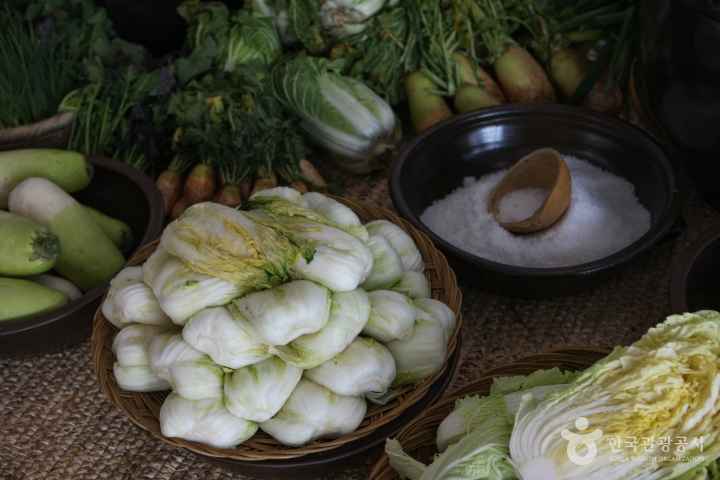
The cabbages are cut in half lengthwise, and coarse salt is sprinkled onto every leaf. They are left to soak in salt water, often overnight, until the leaves turn soft and bend without snapping. This step draws out water, seasons the cabbage, and keeps the kimchi crisp later.
Salting is the hardest, heaviest part of kimjang. Large families sometimes salt more than a hundred heads at once, using big plastic basins and the whole yard or balcony. Getting the salt level right is a skill, and in many families it is the one job the most experienced person refuses to hand over.
2. Rinsing and Draining
The next morning, the salted cabbage is rinsed several times in cold water and stacked upside down to drain. This is wet, cold work, and it is one reason kimjang is remembered as a test of endurance as much as cooking.
3. Making the Seasoning
While the cabbage drains, the seasoning paste, called sok (속) or yangnyeom (양념), is mixed. It typically includes:
- Red pepper powder (gochugaru)
- Julienned radish
- Garlic and ginger
- Green onions and Korean leeks or mustard greens
- Fish sauce and salted shrimp (saeujeot)
- Often a little glutinous rice paste to help everything stick
Regional styles differ. Kimchi from the south tends to be saltier and spicier, with more fermented fish sauce, while northern-style kimchi is milder and lighter. Coastal families may add oysters or other seafood.
4. Stuffing the Leaves
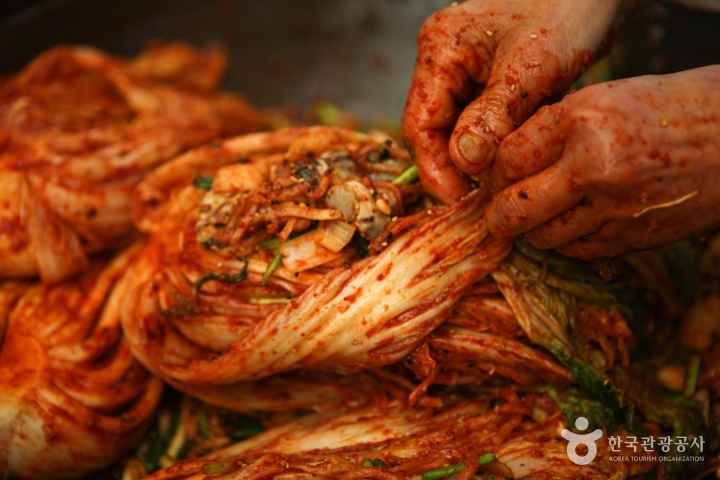
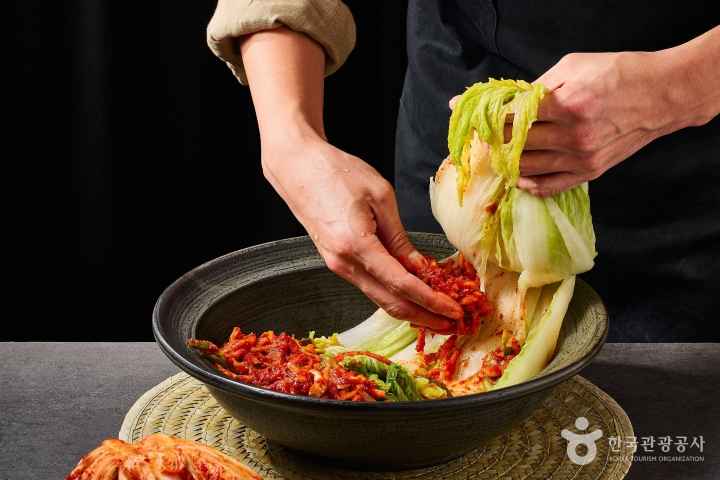
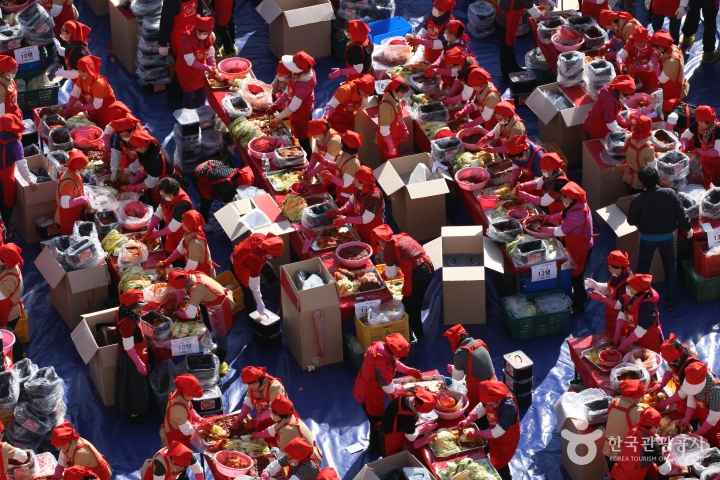
This is the part most people picture. Everyone sits around a big mat or table wearing rubber gloves, often bright red ones, and spreads seasoning onto every leaf of every half cabbage. Each finished piece is folded over and packed tightly into containers.
It is also the most social step. Conversation flows, gossip gets traded, and someone always tears off a fresh leaf, wraps it around a bit of seasoning, and feeds it to whoever is nearby. That spontaneous taste test is one of the most loved moments of the whole day.
5. Storing and Fermenting
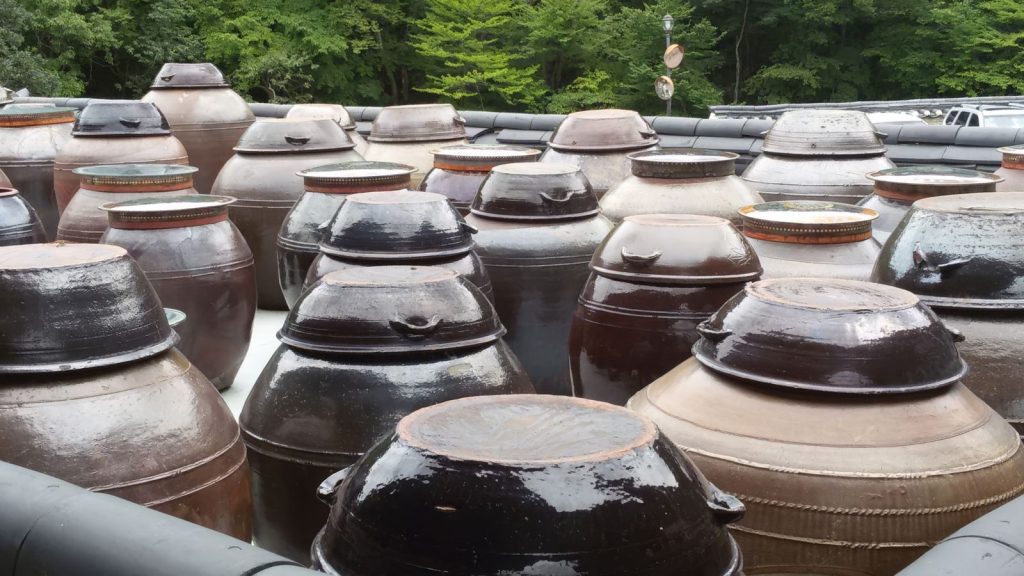
Traditionally, kimchi was packed into large clay jars called onggi (옹기) and buried in the ground up to the neck, where the earth kept the temperature cool and stable all winter. Today, most Korean homes use a kimchi refrigerator (김치냉장고), a separate appliance designed to hold kimchi at precise temperatures. It is one of the most common appliances in Korean homes, and many families own one in addition to their regular refrigerator, especially in Korean apartments where there is no yard to bury jars.
The Kimjang Feast: Bossam
Kimjang day has its own reward. When the work is done, families traditionally eat bossam (보쌈), tender boiled pork belly, wrapped in fresh kimjang kimchi or salted cabbage leaves. The kimchi has not fermented yet, so it tastes bright, crunchy, and fresh, completely different from the sour kimchi that comes later in the winter.
For many Koreans, this meal is the real memory of kimjang. Tired, cold, and hungry, everyone sits down together over steaming pork and new kimchi, often with a bowl of rice and a glass of makgeolli. It is the moment the long day pays off.
Kimjang Is Changing
Kimjang has not disappeared, but Korean households have changed, and the custom has changed with them.
More People Are Buying Kimchi
Smaller families, single-person households, and couples who both work have made a full kimjang harder to manage. According to the Korea Rural Economic Institute’s 2025 survey on kimjang plans, about one in three consumers (32.5 percent) said they would buy store-made kimchi instead of making their own, up three percentage points from the year before. The top reasons were being able to buy only as much as needed and the hassle of making it at home.
Korean media even has a nickname for these households: gimpojok (김포족), a play on words meaning “people who gave up kimjang.”
The Middle Path: Pre-Salted Cabbage
Many families still want home-made kimchi but no longer want to spend a cold night salting cabbage. The solution is jeorim-baechu (절임배추), cabbage that has already been salted and rinsed, delivered to the door in boxes. Supermarkets open pre-orders for it every autumn, and farming regions famous for cabbage sell it directly online. Families then spend just one afternoon making seasoning and stuffing the leaves.
It is the same pattern I described in my post on how Koreans eat at home: Koreans keep the parts of a tradition that matter and outsource the parts that are pure labor.
Smaller Batches
Even families who still do a full kimjang tend to make less than before. Where a household might once have prepared a hundred heads, many now make twenty or thirty, enough for a few months rather than the whole winter.
Sharing Kimjang: The Spirit That Survives
The sharing side of kimjang has found new life in public events. Every November, local governments, churches, temples, companies, and volunteer associations hold kimjang sharing events (김장 나눔). Volunteers in matching aprons and red gloves fill huge outdoor spaces, stuffing thousands of cabbages, and the finished kimchi is delivered to elderly people living alone, low-income families, and welfare centers.
These events are one of the most visible signs of November in Korea, and they carry the exact spirit UNESCO recognized: making kimchi together so that no one goes through winter without it. Many towns also run kimjang festivals where visitors can try making kimchi and take some home.
If You Are in Korea During Kimjang Season
If you are visiting or living in Korea in November, there are several ways to experience kimjang:
- Join a kimjang festival. Many regions famous for cabbage or kimchi hold festivals in November with hands-on kimchi-making programs.
- Volunteer at a sharing event. Local community centers and churches often welcome extra hands, and foreign residents are usually greeted warmly.
- Take a kimchi class. Cooking schools and cultural centers in Seoul and other cities run kimchi-making classes in English, especially in autumn.
- Visit a market. Traditional markets fill up with mountains of cabbage, radish, and red pepper powder in November. Just walking through is an experience.
- Accept the invitation. If a Korean friend invites you to their family’s kimjang, say yes. You will work hard, but you will also be fed very well.
A Practical Note for Residents
Kimjang creates a lot of leftover cabbage leaves, radish tops, and trimmings. In Korea, these count as food waste and must be disposed of separately, so if you make kimchi at home, check your area’s rules. My guide to Korean waste separation explains how the system works.
Make a Small Kimjang at Home
You do not need a hundred cabbages to try kimjang. A small version for one or two heads of napa cabbage works well anywhere you can buy Korean ingredients:
- Salt the cabbage. Halve one or two napa cabbages, sprinkle coarse salt onto each layer of leaves, and leave them in lightly salted water for six to eight hours until the leaves bend easily.
- Rinse and drain. Rinse three times in cold water and drain upside down for at least an hour.
- Make the seasoning. Mix red pepper powder, minced garlic and ginger, fish sauce, a little sugar, julienned radish, and chopped green onions. Add salted shrimp if you can find it.
- Stuff and pack. Spread the seasoning onto each leaf, fold each half over, and pack tightly into an airtight container.
- Ferment. Leave it at room temperature for a day, then move it to the refrigerator. Taste it fresh, then again after a week or two as it sours.
If you cannot find gochugaru, Korean grocery stores abroad almost always stock it, and it is worth using the real thing. Regular chili flakes taste very different.
Quick Answers
When is kimjang season?
Usually from mid-November to early December, depending on the region and the weather.
Is kimjang a public holiday?
No. It is a household tradition. Families choose their own weekend, often coordinating with relatives.
When is Kimchi Day?
November 22. It became an official day in Korea in 2020.
Do Koreans still make kimchi at home?
Many do, but fewer than before. Roughly a third of consumers now plan to buy kimchi instead, and many others use pre-salted cabbage to make the process easier.
Final Thoughts
Kimjang began as a way to survive winter, and it became a way to hold families and neighborhoods together. The jars in the ground have become kimchi refrigerators, and many households now order their cabbage pre-salted or buy kimchi outright. But every November, somewhere in every Korean city, people still sit in a circle with red gloves on, passing seasoning and stories, and feeding each other fresh leaves.
That shared work is what UNESCO chose to protect, and it is still very much alive.
Sources: Kim Ji-ho, Korea Tourism Organization, Korea Educational Broadcasting System,