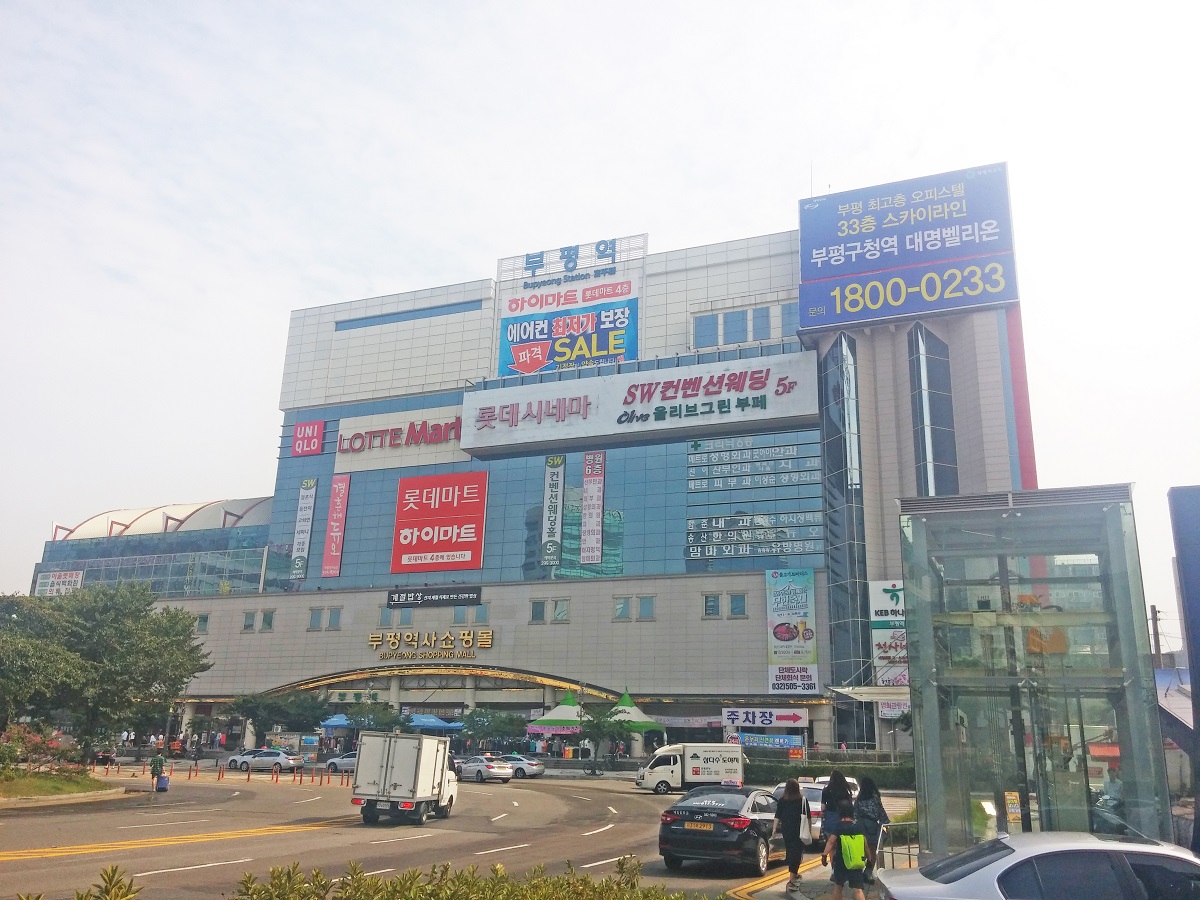
Bupyeong Station Incheon sits above a shopping arcade so large that getting lost in it is not a beginner’s mistake — it is the normal experience, including for people who have used it for years.
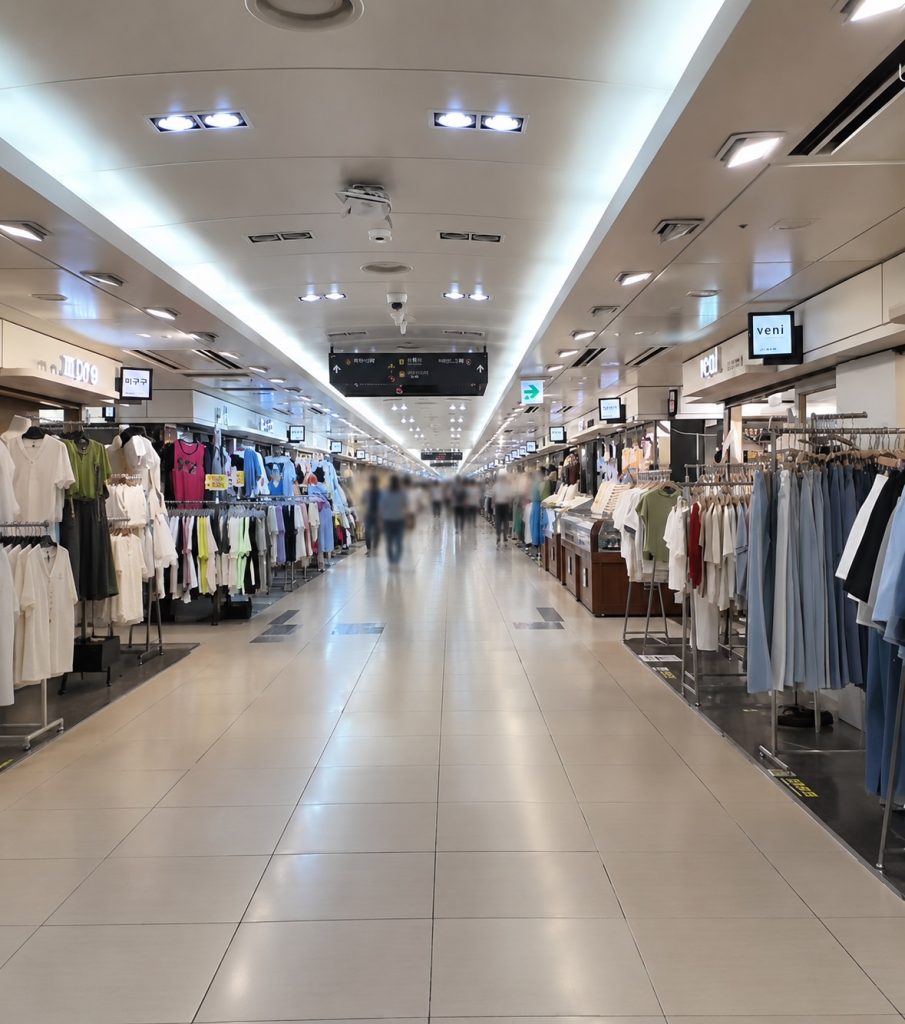
The numbers explain why. In 2014 the arcade was officially certified as having the most shops inside a single underground building, with 1,408 stores counted at the time. The floor area runs to roughly 32,000 square meters, all of it connected, all of it looking broadly similar once you are three turns in.
One correction before anything else, because English-language sources get this wrong constantly: this is not a Guinness World Record. The certification came from the Korea Record Institute, a Korean body, and Guinness has not listed it. The scale is real. The attribution usually is not.
Why Tourists Never End Up Here
Bupyeong is roughly twenty minutes from Seoul on Line 1, which means most visitors pass through it without ever leaving the platform. It is not on any itinerary. There is no landmark above ground that photographs well, no palace, no viewing tower.
What is there instead is a working commercial district that serves the people who live in western Incheon. That is exactly why it is worth an afternoon — it is a Korean shopping street doing what it does when nobody is performing for cameras.
The Arcade Started as a Bomb Shelter
The underground space was excavated in 1978, and shopping was not the original purpose. It was built as a civil defense shelter.
This was ordinary planning logic in 1970s South Korea. Incheon is close to the border by any reasonable measure, the memory of the Korean War was one generation old, and cities built underground capacity on the assumption it might be needed. Seoul’s subway system carries the same design DNA.
The shelter was never used for its intended purpose. Merchants moved in, the corridors filled, and over three decades the space turned into the largest underground retail arcade in the country. The low ceilings and the maze layout that make it confusing today are not bad design. They are what a shelter looks like when you put shops in it.
What You Will Actually Find Down There
Clothing dominates — fast fashion, work clothes, seasonal stock, much of it priced well below what the same item costs in Seoul. Beyond that: shoes, bags, cosmetics, phone accessories, watch repair counters, alteration shops, hair salons, and small food stalls.
A few things worth knowing before you go down:
- Cash still helps. Cards work almost everywhere, but small independent stalls sometimes prefer cash, and some will quietly discount for it.
- Fitting rooms are rare. Many clothing stalls have a curtain at best. Sizing is often eyeballed by the owner, who is usually right.
- Prices are mostly fixed. Aggressive haggling is not the culture here the way it is in a traditional market. Asking politely about a discount on multiple items is fine.
- Expect empty units. More on that below.
The Vacancy Problem Is Real
The 1,408 figure is a snapshot from 2014, and it should be read that way. Walk the arcade now and you will pass shuttered units, some with paper over the glass, some simply dark.
This is not specific to Bupyeong. Retail vacancy has climbed across the Seoul metropolitan area and Incheon, driven by online shopping and a slow consumer economy, and underground arcades have been hit harder than most. Anyone who tells you the arcade currently operates 1,408 shops is quoting a certification, not a count.
It is still busy. It is just no longer full, and the honest version of this place includes that.
Above Ground: Bupyeong Munhwa-ui-geori
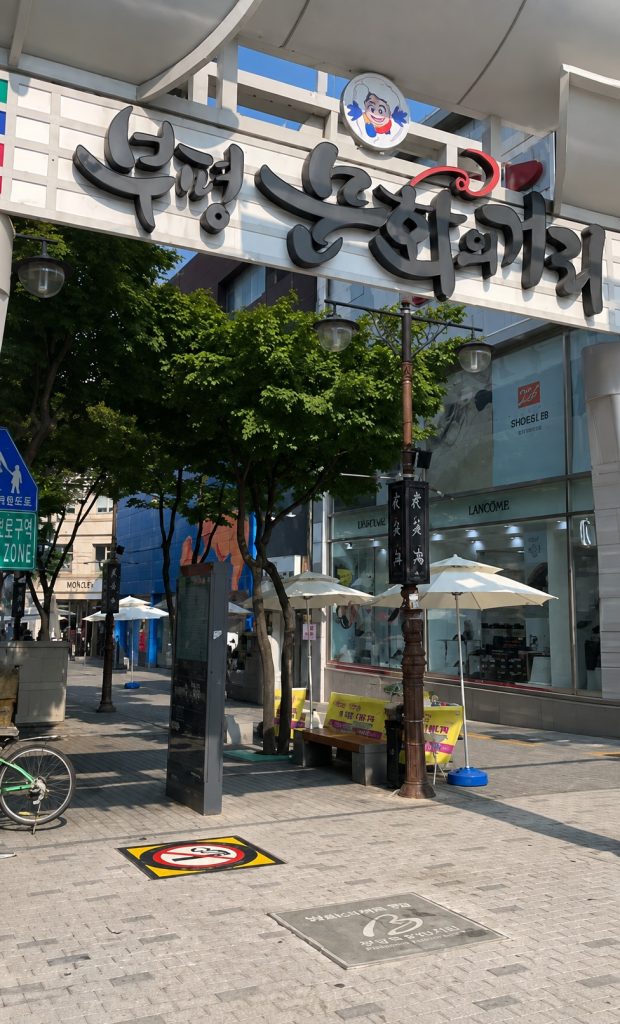
Come up from the arcade and you reach Munhwa-ui-geori (문화의거리), the Bupyeong Culture Street — a pedestrianised strip that is the actual center of gravity for young people in this part of Incheon.
What is packed into it: clothing stores, karaoke rooms (noraebang), PC bangs, billiard halls, massage shops, cafes, chicken-and-beer places, and the kind of late-night restaurant density that keeps a street awake past midnight. If you have seen Juan Station’s food alley, this is the same idea at several times the scale.
It is a nightlife district as much as a shopping one. Weekend evenings are the peak, and the crowd skews young.
Bupyeong Market: Two Names, One Place
The market a short walk from the Culture Street has an official name and a name people actually use, and they are not the same.
Signage and city documents call it Bupyeong Jonghap Market (부평종합시장), which translates roughly as Bupyeong General Market. Locals mostly say Bupyeong Kkang Market (부평깡시장). Kkang is shorthand tied to wholesale trade, and it stuck because it is shorter and because that is what the place was.
Either name will get you there if you ask. If you are typing it into a map app, use the official one.
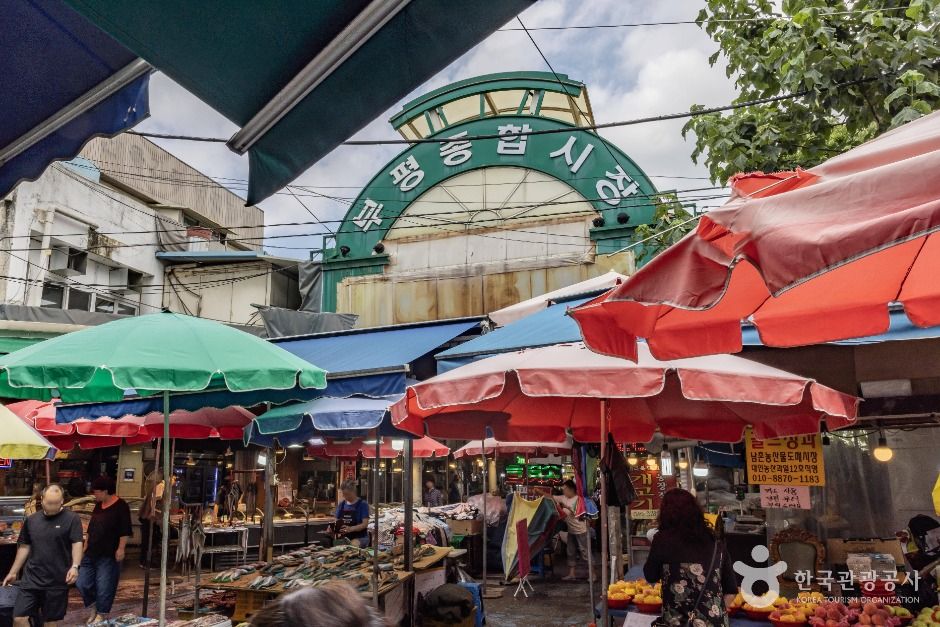
What is inside: produce, dried goods, butchers, fishmongers, and long counters of prepared side dishes sold by weight. Parasols over the outdoor stalls, a covered arcade further in, and prices that are noticeably below any supermarket.
Locals will tell you it is quieter than it once was, and they are right. Traditional markets across Korea have lost ground to supermarkets and delivery apps for decades. But the location saves it — close enough to the station and the Culture Street that foot traffic keeps moving through, which is more than can be said for markets in less central neighborhoods.
For a visitor this is the most useful of the three stops. It is where you see what an ordinary Korean household actually buys, at ordinary prices, which is a different picture from what any restaurant menu gives you. Much of what fills a Korean table starts here — the banchan side dishes in particular are sold ready-made by the tub, and buying them this way is completely normal rather than a shortcut.
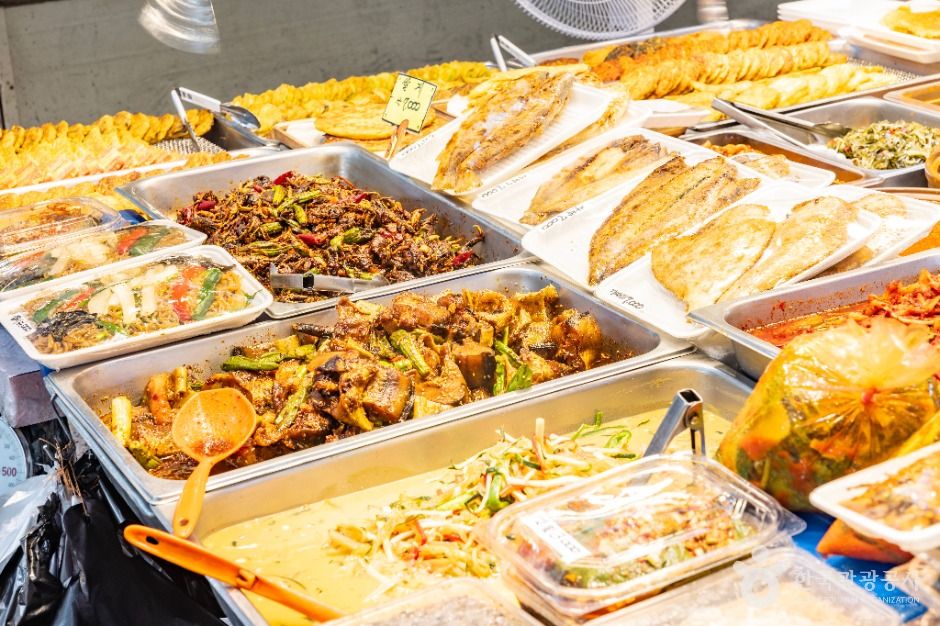
Mornings are best. Stalls are fully stocked, the prepared food is fresh out, and the crowd is people shopping rather than passing through.
Getting There
Bupyeong Station is served by two lines and that is the main reason for its size:
- Seoul Subway Line 1 — roughly 20 minutes from central Seoul, direct
- Incheon Subway Line 1 — the north-south line connecting to Songdo and Gyeyang
The transfer between the two happens underground, and the shopping arcade is woven directly into that transfer route. You do not need to exit the station to reach the shops. You will reach them whether you meant to or not.
For the Culture Street, take the exits on the north side of the station and follow the pedestrian strip. For Bupyeong Jonghap Market — locals say Kkang Market — continue past the Culture Street — it is a short walk, well signposted in Korean, less so in English.
How Not to Get Lost
Nobody navigates this arcade by memorising it. Two practical rules cover most of it.
Use the exit numbers, not landmarks. The exits are numbered and signposted, and they are the only reliable coordinate system down there. Shopfronts change; exit numbers do not. If you are meeting someone, agree on an exit number, not a shop or a corner.
Come up whenever you are unsure. Surfacing costs nothing and the street grid above is far easier to read than the corridors below. Most people who have used Bupyeong for years still do this.
Meeting points here work the way they do everywhere in Korea — people gather at station exits and in the open plaza in front of the station, and that is what you should default to.
When to Go
| Time | What it’s like |
|---|---|
| Weekday afternoon | Calmest. Best for actually browsing the arcade |
| Weekend afternoon | Full. Culture Street crowded, arcade busy |
| Weekend evening | Nightlife peak above ground, arcade winding down |
| Morning | Kkang Market is at its best; the arcade is mostly still closed |
The arcade and the market keep different hours from each other, and individual shops set their own. Check before you make a special trip for one specific store.
Closer to the old port, Sinpo International Market is where jjolmyeon started and where Sinpo dakgangjeong got its name — a shorter, denser market than this one, and walkable to Chinatown.
Worth the Detour?
If your Korea trip is four days long, no. Go to Seoul.
If you have been before, or you are living here, or you want to see what a Korean commercial district looks like when it is not curated for visitors — then yes, and Bupyeong gives you three different versions of it stacked on top of each other. A Cold War shelter turned shopping maze, a nightlife street above it, and Bupyeong Jonghap Market a few minutes further on
It is twenty minutes from Seoul on a line you are probably already using. That is the whole argument.
For more of western Incheon, Juan Station’s food alley and underground arcade work on the same logic at smaller scale, and Incheon Subway Line 1 connects most of it.