Getting into K-pop can feel like learning a new language. Fans throw around words like bias, comeback, and maknae as if everyone was born knowing them. If you’ve ever felt lost scrolling through a comment section, this guide is for you. Here’s a clear, beginner-friendly K-pop terminology glossary covering the essential words you’ll need to follow your favorite groups and join the conversation with confidence.
Group and Member Terms
These are the words fans use to talk about groups and the people in them. Learn these first — they come up constantly.
Bias and Bias Wrecker
Your bias is your favorite member of a group. Simple as that. A bias wrecker is a different member who keeps catching your attention and threatening to “wreck” your loyalty to your bias. If you love the main vocalist but the dancer keeps stealing the show, that dancer is your bias wrecker.
Maknae and Leader
The maknae is the youngest member of a group, a term borrowed from everyday Korean. There’s also the concept of a “golden maknae” — a youngest member who happens to be talented at nearly everything. The leader is the member responsible for guiding the group, often speaking on its behalf and keeping everyone organized.
Visual, Center, and All-Rounder
The visual is the member considered to best fit the group’s beauty standards and image. The center is the member positioned front and center during performances, usually during key moments of a song. An all-rounder is someone skilled across the board — singing, dancing, and rapping alike.
Line Terms (Vocal Line, Dance Line, Rap Line)
Members are often grouped by their main role. The vocal line handles the singing, the rap line covers the rapping, and the dance line leads the choreography. You’ll also hear age-based groupings like “hyung line” (older members) and “maknae line” (younger members).
Music and Promotion Terms
K-pop has its own release and promotion cycle, and these words describe how it works.
Comeback
A comeback is when a group returns with new music — a single, EP, or album — after a period away. It doesn’t mean the group ever left; even a group that released music a few months ago will call their next release a comeback. Each comeback usually comes with a new concept, styling, and choreography.
Title Track and B-side
The title track is the lead single an album is promoted around, complete with a music video and stage performances. B-sides are the other songs on the album — often fan favorites that don’t get official promotion but still earn plenty of love.
Teaser and Concept
Before a comeback, groups release teasers — short photos, clips, or trailers hinting at the new release. The concept is the overall theme and aesthetic of a comeback, which can range from cute and bright to dark and edgy. Groups are known for reinventing their concept with each release.
Music Show and All-Kill
In Korea, groups perform their title track on weekly music shows, where wins are awarded based on sales, streaming, and votes. An all-kill happens when a song tops all the major real-time music charts at once — a major sign of a hit.
Fandom Terms
K-pop fandoms are famously organized and passionate, and they have their own vocabulary.
Fandom Name and Lightstick
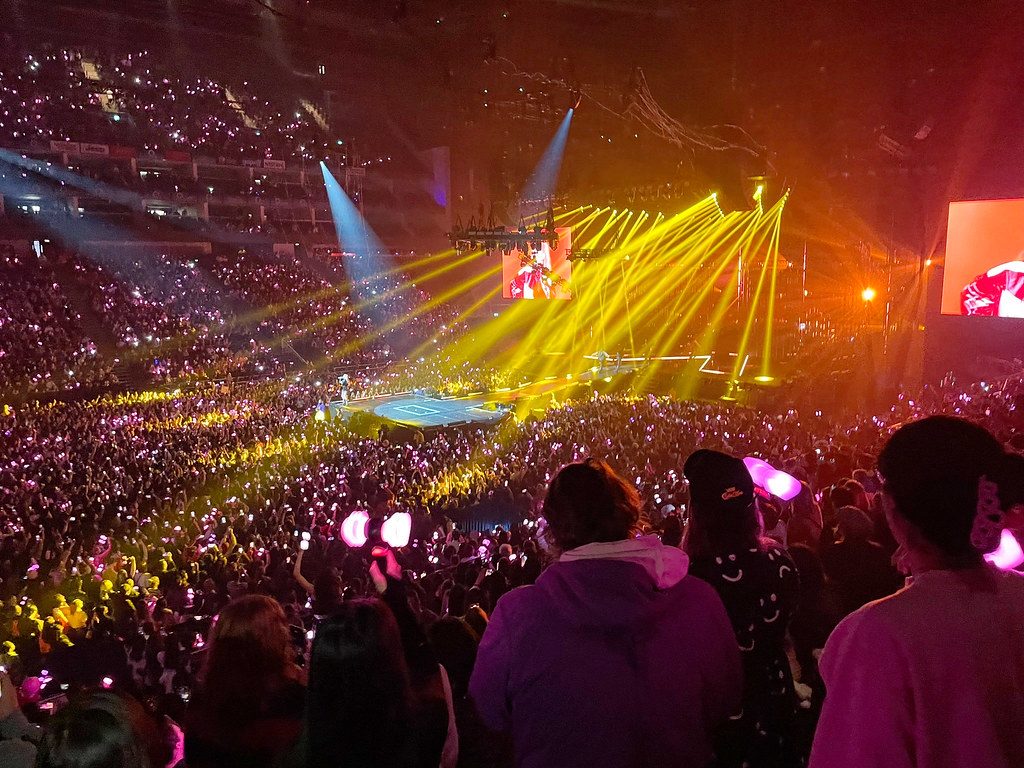
Most groups give their fans an official fandom name, creating a shared identity. Fandoms also have an official lightstick — a uniquely designed light fans wave at concerts, turning the audience into a sea of coordinated color.
Stan and Ult
To stan a group means to be a dedicated fan. Your ult (short for “ultimate”) is your all-time favorite group or member above all others. Someone might casually enjoy several groups but reserve “ult” status for just one.
Fan Chant and Fan Service
A fan chant is a set sequence of words fans shout during a performance, often calling out members’ names at specific points in a song. Fan service refers to the little things idols do to delight fans — hearts, waves, playful interactions, and special moments during shows.
Idol Life and Industry Terms
These words describe the people and system behind the music.
Idol and Trainee
An idol is a performer in the K-pop system, typically part of a group and skilled in singing, dancing, and public image. Before debuting, most idols spend years as trainees, studying vocals, choreography, and languages under an entertainment company. The trainee period can last anywhere from months to many years.
Debut and Rookie
A group’s debut is its official first release and public introduction — a milestone every fandom celebrates. In their first year or so, new groups are called rookies, and there are even award categories dedicated to the best rookie groups of the year.
Sunbae and Hoobae
Borrowed from Korean social culture, sunbae means a senior — someone who debuted earlier — while hoobae means a junior who came later. These terms reflect the respect-based relationships within the industry.
Sub-unit and OT
A sub-unit is a smaller group formed from members of a larger group, releasing their own music separately. OT followed by a number (like OT7) refers to a fandom loving the complete group with all its members — “one true seven,” for example.
Why Learning the Lingo Helps
K-pop terminology isn’t just jargon — it’s the shared language that makes the fandom experience richer. Once you know these words, comment sections, fan edits, and news articles suddenly make sense, and you can talk about your favorite groups like a longtime fan. You don’t need to memorize everything at once; pick up a few terms at a time and the rest will come naturally as you dive deeper.
New to Korean culture beyond music? Explore our guide to Korea’s favorite street food, tteokbokki, and keep discovering everything the country has to offer.
Several of these words come from ordinary Korean — maknae is simply the family term for the youngest sibling. How age and titles work in everyday Korean is covered in Korean age and titles. More in the K-Culture section.