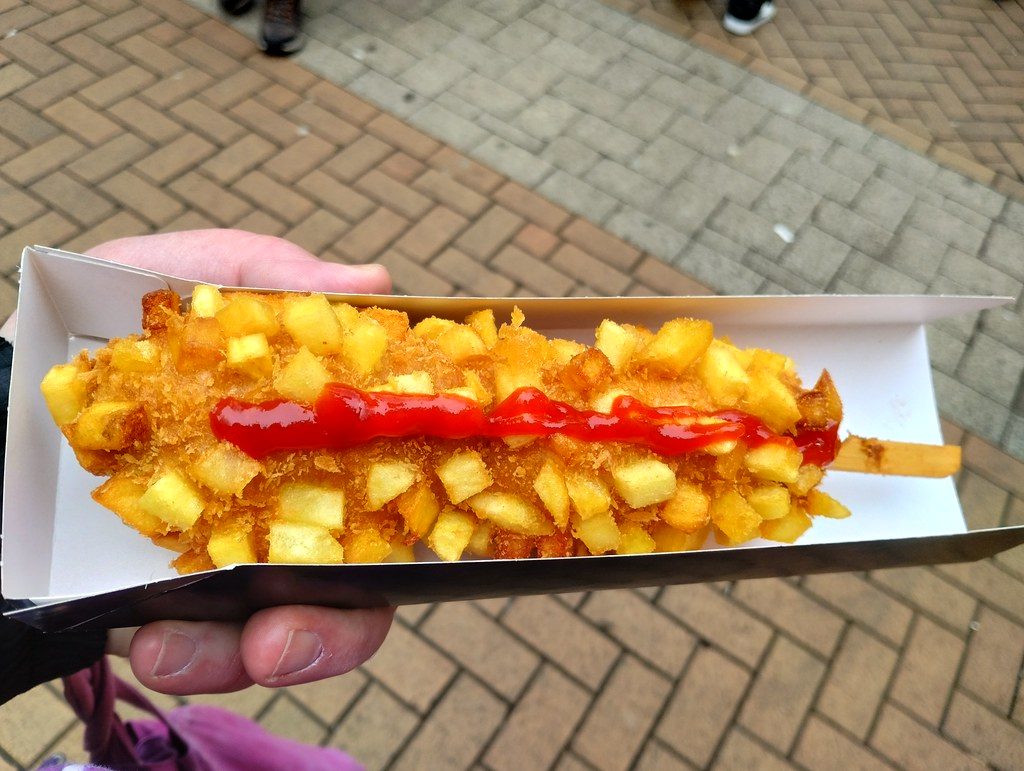
Somewhere between a corn dog and a work of art, the Korean corn dog has become one of the country’s biggest street-food exports. You’ve probably seen it online: a skewered sausage or cheese stick coated in batter, rolled in crunchy toppings, deep-fried golden, and finished with a zigzag of ketchup and mustard. It’s crispy, chewy, gooey, and messy in the best way. Here’s what makes the Korean corn dog different, the styles worth knowing, and how to eat one properly.
What Is a Korean Corn Dog?
A Korean corn dog (often called hotdog or gamja hotdog in Korea) is a deep-fried snack on a stick. At its core is a filling — a sausage, a block of mozzarella, or both — dipped in a wheat or rice-flour batter and fried until crisp. What sets it apart from the American county-fair version is everything that happens on the outside.
Korean versions are famous for their coatings and toppings: diced potato cubes, panko breadcrumbs, crushed ramen noodles, or even a layer of sugar sprinkled on after frying. The result is a snack with dramatic texture contrast — a shattering, crunchy shell around a hot, stretchy, savory center.
How Is It Different From an American Corn Dog?
The classic American corn dog uses a sweet cornmeal batter around a hot dog. The Korean take rethinks almost every part of that formula. The batter is usually wheat- or rice-based rather than cornmeal, giving a chewier, bread-like bite. The fillings go well beyond sausage — mozzarella is arguably the star, prized for its long cheese pull.
Then there are the toppings and the finish. A Korean corn dog is often rolled in something crunchy before frying and dusted with sugar afterward, creating a sweet-and-savory combination that surprises first-timers. Sauces are applied generously and artfully on top, turning each stick into something closer to a customizable dessert-snack hybrid.
Popular Types of Korean Corn Dogs
Corn dog shops usually offer a menu of variations, and half the fun is choosing. These are the styles you’ll run into most often.
The Classic Sausage Dog
A full sausage coated in batter and fried. Simple, satisfying, and the baseline everything else builds on. Great if you want the familiar corn-dog experience with a chewier Korean batter.
The Mozzarella (Cheese) Dog
Instead of sausage, the center is a stick of mozzarella that melts into a long, dramatic cheese pull when you bite in. This is the one you see stretching across the screen in food videos, and it’s a favorite for good reason.
The Half-and-Half
Can’t decide? The half-and-half packs sausage in one end and mozzarella in the other, so you get both the savory bite and the cheese pull in a single stick. It’s one of the most popular orders.
The Potato Dog (Gamja Hotdog)
Before frying, the battered dog is pressed into small cubes of diced potato. They fry up crispy on the outside and fluffy inside, giving the corn dog an extra layer of crunch and a French-fry-like flavor. It’s a texture lover’s favorite.
The Ramen and Specialty Coatings
More adventurous shops roll their dogs in crushed instant ramen, flamin’-hot chip crumbs, or squid-ink batter for a jet-black look. These specialty versions are a big part of why Korean corn dogs became so photogenic and shareable online.
How to Eat a Korean Corn Dog
Eating one is part of the experience. First, add your sauces — most shops set out ketchup, mustard, sweet chili, and sometimes cheese or honey-mustard for you to drizzle yourself. If your dog was dusted in sugar, don’t skip it; the sweet-savory-tangy mix is the whole point.
Then eat it hot and fresh. A mozzarella dog’s cheese pull only works while it’s warm, and the crispy coating softens as it cools. Take a bite, let the cheese stretch, and go in for more. It’s handheld, casual food — no plate, no fork, just a stick and a napkin (you’ll need it).
Where to Find Korean Corn Dogs
In Korea, corn dog shops cluster in youth-heavy areas: university districts, shopping streets, and traditional markets. Chains like the ones that started the modern craze have made them a staple nationwide, and there’s almost always a line at the popular spots. Because they’re fried to order, you’ll usually get yours fresh and piping hot.
Outside Korea, the trend has spread fast. Korean corn dog shops have opened in cities across North America, Europe, and Southeast Asia, riding the global wave of interest in Korean food and culture. If there’s a Koreatown near you, chances are good you can find one.
Can You Make Them at Home?
You can, though the deep-frying takes a little practice. The batter needs to be thick enough to cling to the skewered filling, and the oil temperature matters for that even golden crust. Mozzarella sticks and sausages are easy to find, and rolling the battered dog in panko or diced potato before frying gets you close to the shop experience. Finish with a dusting of sugar and your favorite sauces, and you’ve recreated one of Korea’s most fun street foods in your own kitchen.
A Street-Food Star Worth the Hype
The Korean corn dog is proof of how creatively Korea reinvents familiar foods — taking a simple fried snack and turning it into a crunchy, cheesy, endlessly customizable sensation. Whether you go for a classic sausage, a stretchy mozzarella pull, or a crispy potato dog, it’s an easy and delicious entry point into Korean street food. Grab one hot, add your sauces, and see what all the hype is about.
Craving more Korean street food? Read our guide to tteokbokki, Korea’s sweet and spicy rice cakes.
Roasted sweet potato is the other end of Korea’s street food calendar — Korean street roasted sweet potato is strictly a winter thing, for reasons baked into the ingredient itself.