Ask a foreign resident what they found hardest about settling into Korea, and a surprising number will say the same thing: the rubbish.
Not the language. Not the work culture. The bins.
Korean waste separation is one of the strictest household recycling systems in the world, it is enforced with fines, and the rules change depending on which district you live in. This is a guide to how it actually works — and to the mistake that causes more penalties than any other, which has nothing to do with sorting.
The Four Streams
Everything you throw away goes into one of four categories.
- General waste (일반쓰레기) — anything that is neither recyclable nor food. Tissues, hygiene products, contaminated plastic.
- Food waste (음식물쓰레기) — leftovers, rice, noodles, most vegetable trimmings.
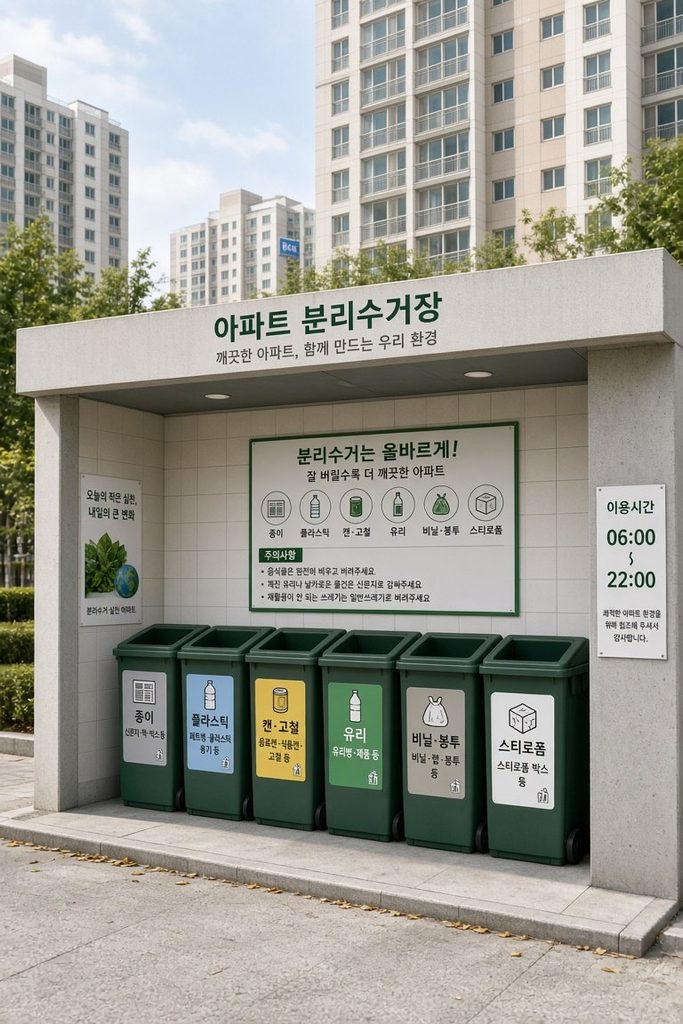
- Recycling (재활용) — paper, glass, cans, plastic, vinyl, styrofoam. Sorted further into separate bins.
- Bulky waste (대형폐기물) — furniture and appliances, which require a purchased sticker and a scheduled collection.
The first two are the ones that cost money directly, and they work differently from each other.
General Waste: You Must Buy the Right Bag
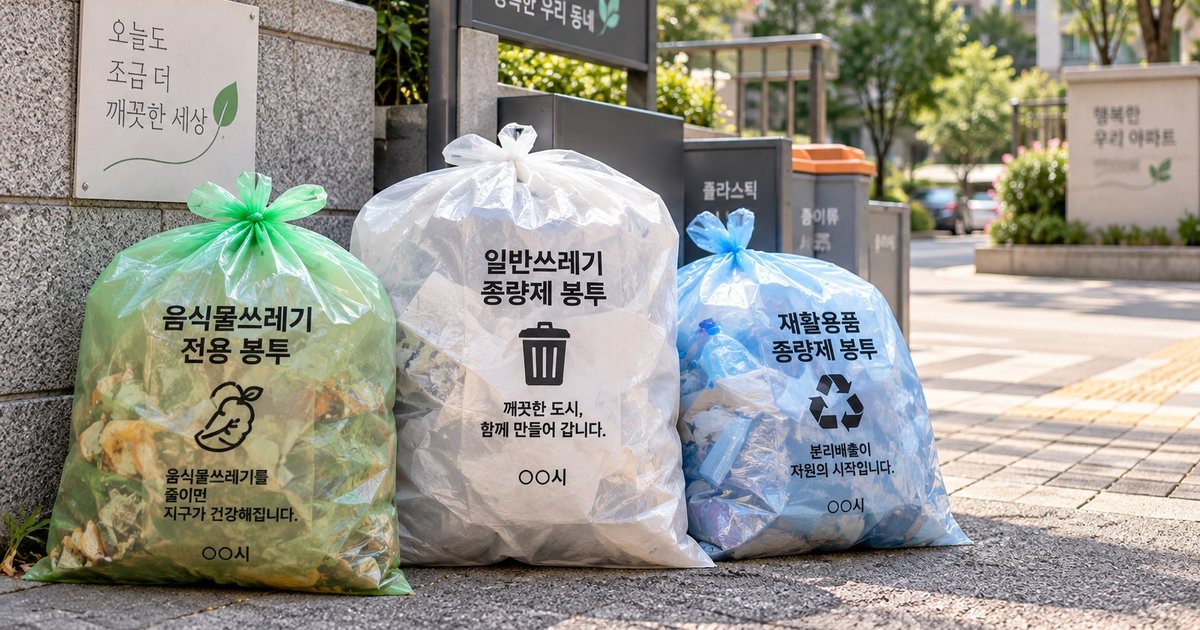
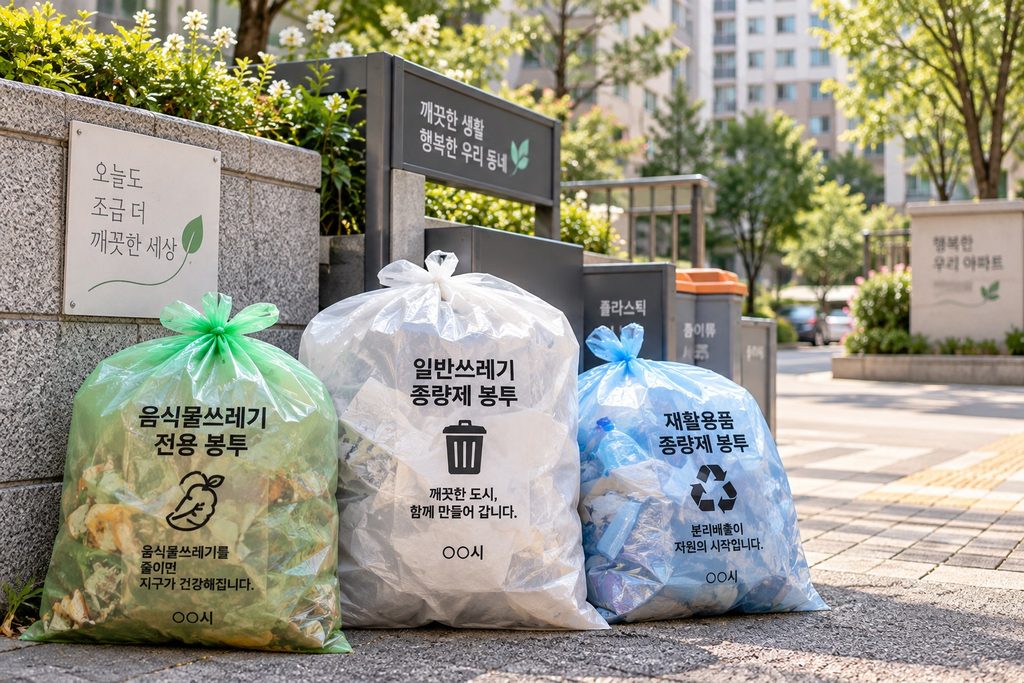
Korea does not collect general waste in whatever bag you have. You buy official volume-based bags — jongnyangje bongtu (종량제 봉투) — from convenience stores and supermarkets, and only waste inside those bags is collected.
They come in sizes from a few litres up to 100, and the price of the bag is the disposal fee. That is the entire logic of the system: you pay by volume, so you throw away less.
The bags are district-specific. A bag bought in one district is not valid in another. If you move — even across the city — your leftover bags become worthless, and using them counts as illegal dumping. Buy them at a shop near your new home, not online.
Food Waste: Two Systems, Depending on Your Building
Food waste is collected separately and charged by weight or volume.
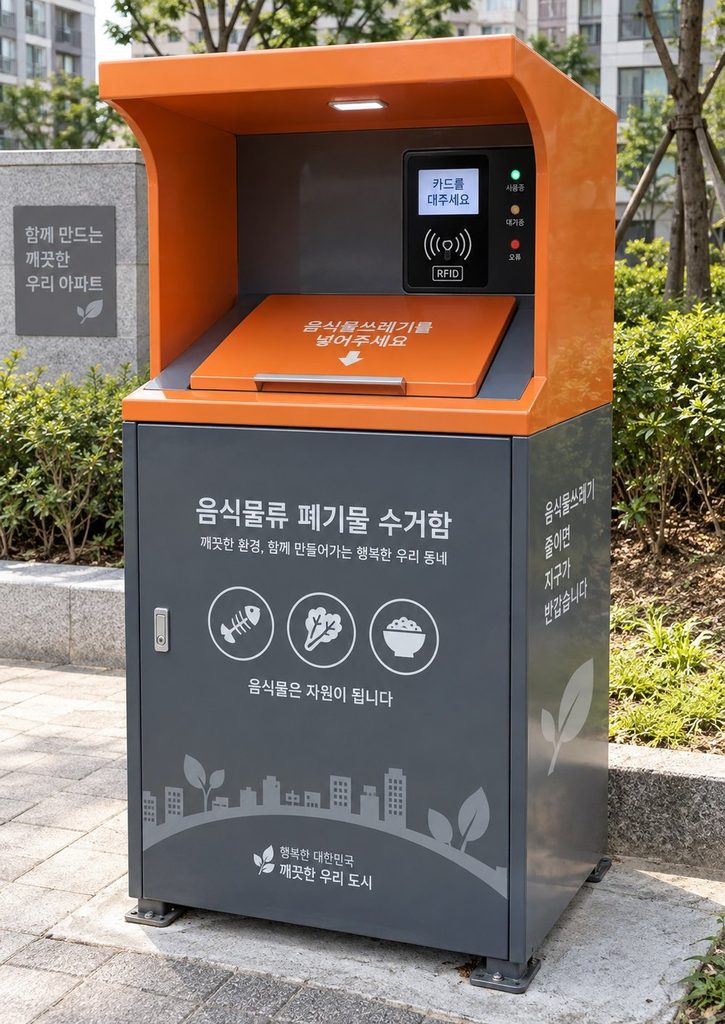
Roughly two thirds of Korean local authorities now use RFID machines. You tap a registered card or fob, the lid opens, you tip your food waste in, and the machine weighs it. The charge appears on your management bill. If you live in an apartment complex, this is most likely your system, and the card comes from the management office.
The remaining third still use designated bags or stickers with a communal bin.
Either way, the rule when you move is the same as with general waste: confirm the method at your new district office. Using the wrong one is treated as illegal dumping regardless of intent.
What Is Not Food Waste
This trips up nearly everyone, including Koreans. Food waste is processed into animal feed and compost, so anything too hard to grind does not qualify — it goes in general waste instead.
- Shells and bones — clam, oyster, crab, abalone shells; fish bones; eggshells
- Hard pits and shells — peach, apricot, persimmon stones; nut shells
- Tough vegetable parts — onion and garlic skins, spring onion roots, corn husks and cobs, chilli seeds and stems
- Tea bags and coffee grounds — general waste, not food
The test is simple: could a machine grind this into feed? If not, it is general waste.
The Mistake That Causes Most Fines
Here is the part no English-language guide covers.
According to Ministry of Environment enforcement data from early 2026, 68 percent of household waste fines came from putting rubbish out at the wrong time — not from sorting it wrongly.
Every neighbourhood has designated collection days and hours, typically in the evening before a morning collection. Put your bags out on the wrong evening, or too early in the day, and they can be treated as illegal dumping even if everything inside is sorted perfectly.
Apartment complexes usually have a permanent collection area, which removes the problem. If you live in a villa, an officetel, or a house, find out your collection schedule before your first bin day. The district office or your landlord will know it.
Penalties under the Wastes Control Act start at 100,000 won for a first offence and rise substantially for repeats. Using an unofficial bag carries its own penalty.
Recycling: Rinse, Dry, Separate
The general rule is that recyclables must be clean and dry. Food residue contaminates a whole batch, and a delivery container with sauce still in it is one of the most commonly flagged items.
Two items have their own rules worth knowing:
- Clear PET bottles — remove the label, crush the bottle, replace the cap, and put them in a separate clear bag rather than with mixed plastics. Labels left on are a common cause of penalties.
- Paper cartons — milk and juice cartons are not the same material as paper. They go in a dedicated carton bin, or are kept separate if none exists.
Greasy vinyl, oily pizza boxes, and containers with sauce residue are general waste, not recycling.
Bulky Items
A desk, a mattress, a refrigerator — none of these can go out with the rubbish. You report the item to the district, either online or at the office, pay a fee, receive a sticker, attach it to the item, and leave it at the designated point on the collection date.
Fees run from a few thousand won for small items upward. Clearing a full apartment at the end of a lease can run into the hundreds of thousands.
Never use an unlicensed clearance service. If they dump illegally, liability can fall on the person who hired them, and the penalty is severe.
The App That Solves Most Questions
The government publishes a free app for exactly the “which bin does this go in” problem. You search an item and it tells you how to dispose of it. It is Korean-only, but it is searchable, and it settles arguments.
Look for 내 손안의 분리배출 on either app store. For anything not covered, your building’s management office deals with this daily — the same office that bills you, as we covered in our guide to Korean apartment management fees.
Anything too large for a volume-based bag falls outside this system entirely and follows a separate paid process. Our guide explains how to dispose of bulky waste and why the rules differ from one district to the next.
Why Korea Does This
Korea is small, dense, and has almost no room for landfill. The volume-based system was introduced in the mid-1990s precisely because burying waste was running out as an option, and it worked — household waste volumes dropped sharply and recycling rates rose to among the highest in the developed world.
It is the same collective logic that runs through Korean apartment living generally: shared buildings, shared costs, shared rules, and a fairly low tolerance for people who opt out. That logic is worth understanding before you arrive, and it shows up in everything from noise disputes to how buildings are managed — see our guides to Korean apartments and apartment noise.
The Short Version
- Buy district-specific bags from a local shop. Not online, not from your old neighbourhood.
- Ask your district office how food waste works where you live. It varies.
- Find out your collection days and hours first. This is what actually gets people fined.
- Rinse and dry recyclables. Dirty ones are general waste.
- Shells, bones, and hard pits are not food waste.
Rules are set by local ordinance and differ between districts. This article describes the national framework; confirm the specifics at your local district office when you register your address.
Waste rules in apartment complexes are often set locally by the building’s own council — see our guide to the Korean apartment resident representative.
Clearing out furniture before a move? Our guide to moving in Korea covers how the whole process works.