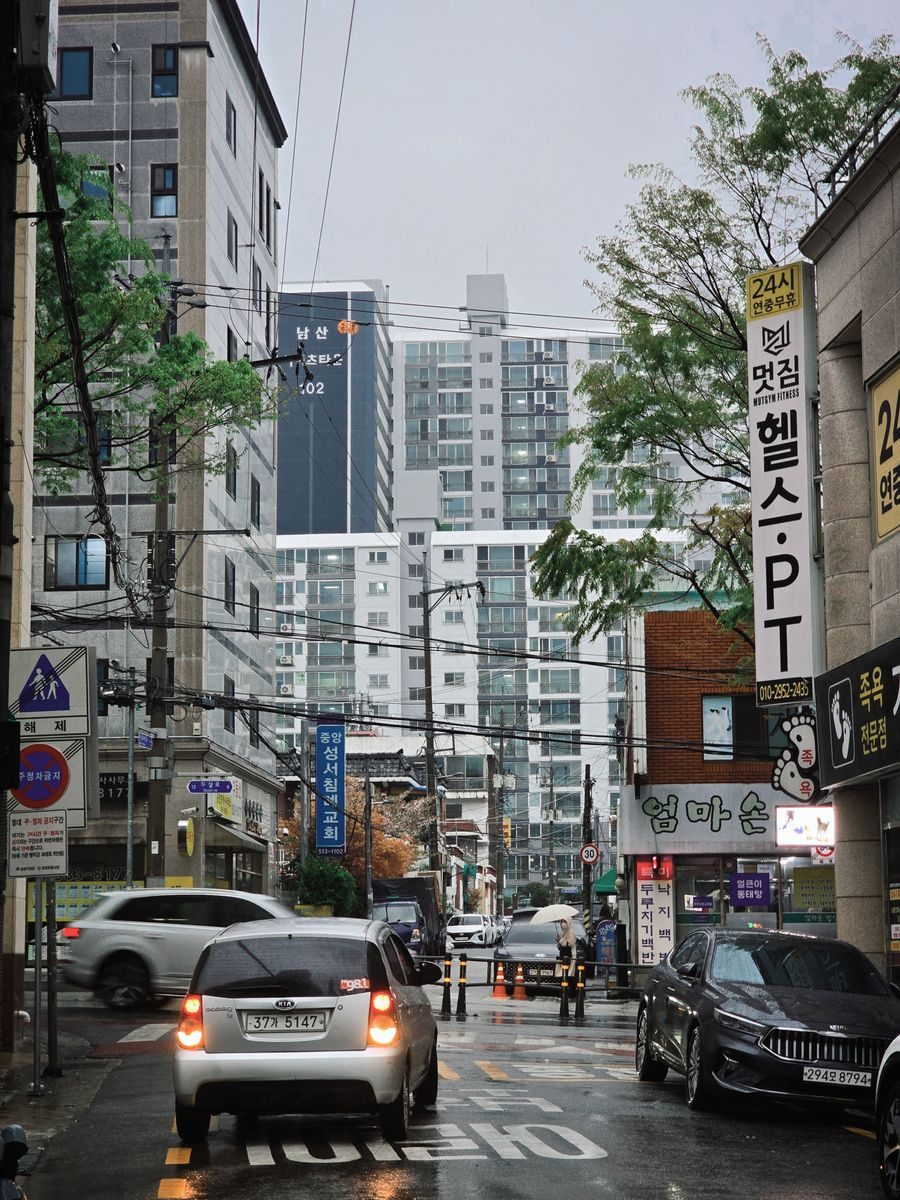
You found an apartment. The monthly rent is settled. Then the first bill arrives, and it is not rent — it is gwallibi (관리비), and it is a document with about twenty line items on it, none of them in English.
Korean apartment management fees are the part of Korean housing that nobody warns foreign residents about. They are not a small administrative charge. In winter they can rival the rent itself. And one of the line items is money you are entitled to get back when you move out, which almost no tenant realizes.
What Gwallibi Actually Is
Every apartment complex in Korea is run by a management office (관리사무소) that handles the building itself — the lobbies, lifts, corridors, grounds, security desk, and everything else nobody individually owns. Gwallibi is how that gets paid for, split among the households.
It is billed monthly, separately from rent, and it is not optional.
The bill divides into three parts, and knowing which is which is the whole skill.
Part One: Shared Management Costs
These are the building’s own running costs, split by floor area. Typical lines include:
- General management — the office’s staffing and administration
- Security — the guard post at the entrance, usually staffed around the clock
- Cleaning — corridors, lifts, and grounds
- Lift maintenance
- Disinfection — scheduled pest control for shared areas
- Repairs — small fixes to shared parts of the building
This portion is fairly stable month to month. It is also why the security office is staffed at all — you are paying for it directly, which is worth remembering when you need a parcel held.
Part Two: What You Personally Used
The second block is your own consumption, collected through the management office rather than billed separately by each utility. Depending on the building this can include electricity, water, gas, district heating, hot water, the television licence fee, and waste charges.
This is the part that swings. A bill that sits at a comfortable level through spring can double in January in a building on central heating. Newcomers routinely budget for their summer bill and get caught by the winter one.
If your building uses district heating, you have less individual control than you might expect, and the seasonal difference is larger.
Part Three: The Money You Get Back
Here is the line worth knowing about: jangisuseon chungdanggeum (장기수선충당금), the long-term repair reserve.
This is a fund the complex builds up over years to pay for major work — roof replacement, exterior repainting, lift replacement, structural repairs. Under the Multi-Family Housing Management Act, it is the owner’s obligation, not the tenant’s.
But it appears on the monthly bill, which the tenant pays. So in practice the tenant fronts it every month for the length of the lease.
When you move out, you can claim it back from the landlord. The management office will issue a payment confirmation certificate on request, and the law requires them to do so without delay. You present that to the landlord when settling the deposit.
Over a two-year lease this is not trivial — it can amount to a few hundred thousand won or more depending on the size of the unit. Many tenants, Korean and foreign alike, simply never ask.
One caveat: a lease can contain a special clause assigning this cost to the tenant. Check the contract before assuming. This is one of several reasons the lease document matters more in Korea than most renters expect, as we covered in our guide to jeonse and Korean rental deposits.
You Can Look Up Any Building’s Fees
Korea publishes this data. The Ministry of Land, Infrastructure and Transport runs a public system called K-apt, where complexes above a certain size are legally required to disclose their monthly management costs — dozens of line items, per complex, updated monthly.
You can compare a building against others of similar size and age before you sign anything. The site is in Korean, but the layout is numerical and translation tools handle it reasonably well.
Complexes are also required to post the breakdown on their own notice boards and websites. If a line looks abnormal, you can ask the management office in writing, and residents have the right to request inspection of the books.
Small Buildings Are a Different Situation
Everything above applies to apartment complexes large enough to fall under mandatory management rules. Below that threshold — most villas, low-rise buildings, and studio officetels — the disclosure requirements do not apply in the same way.
In those buildings you are often quoted a flat monthly management fee with no itemization at all. A fixed sum, no breakdown, no comparison data. This has been a recurring complaint in Korea for years.
If you are renting a small unit, ask what the management fee covers before signing, and ask whether it is fixed or metered. The difference between a flat fee that includes water and one that does not can be significant over a year.
What This Costs in Practice
There is no useful single number, because the fee depends on floor area, building age, heating type, whether there is underground parking, and how many facilities the complex maintains. A newer complex with a gym, a library, and landscaped grounds costs more to run than a plain block from the 1990s.
The practical approach is to ask the current occupant or the agent for the last twelve months of bills, not one month. A single bill in October tells you nothing about January.
Why It Works This Way
Korean apartment complexes are managed collectively to a degree that surprises people from countries where renting means dealing only with a landlord. The complex has a residents’ representative body, an external auditor, a management company, and a legal framework governing all of it.
The result is more transparency than most rental markets offer — the numbers are public, the accounts are audited — and also more shared obligation. You are paying into a building, not just occupying a unit. It is the same collective logic that makes noise between neighbours a genuinely serious matter in Korea, which we wrote about in Korean apartment noise.
For what the buildings themselves are actually like to live in, see our guide to Korean apartments.
Korean apartment management fees divide into three parts, and knowing which is which is the whole skill.
The same office handles the complex’s waste collection area, which operates under rules strict enough that most household fines in Korea come from timing rather than sorting — see our guide to Korean waste separation.
Before You Sign
- Ask for twelve months of bills. Not one.
- Ask what heating system the building uses. It determines your winter bill more than anything else.
- Check whether the long-term repair reserve is assigned to you in the lease’s special clauses.
- Look the complex up on K-apt if it is large enough to be listed.
- For small buildings, get the flat fee itemized verbally and confirm what is and is not included.
This article explains how the management fee system works. It is not legal advice. For a specific lease or dispute, consult a licensed agent or legal professional.
The Short Version
Rent is not your housing cost in Korea. Rent plus Korean apartment management fees is. Budget for the winter figure rather than the annual average, read the three sections of the bill separately, and keep the receipts for the repair reserve — that part is yours.
The system is available at the Ministry of Land, Infrastructure and Transport’s apartment management information portal.
Those fees are approved by an elected body of your own neighbors — see how the Korean apartment resident representative system works.
Households in detached houses deal with a different setup, receiving each charge separately instead of one consolidated statement. See how utility bills work in a house for that side of the comparison.