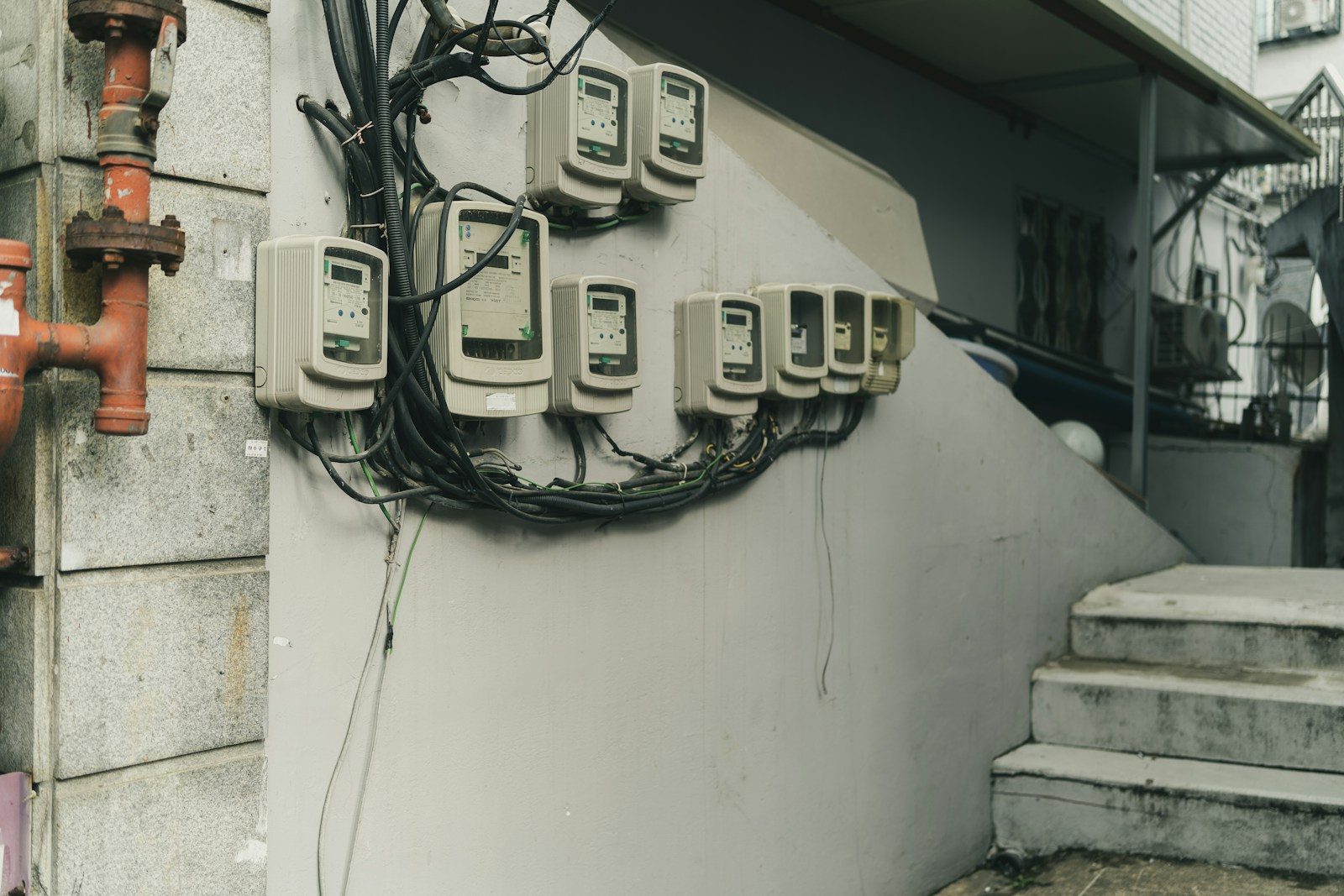
Utility bills in Korea arrive one at a time, from three different places, on three different schedules. Water, electricity, gas. Nobody bundles them for you, and nobody explains this when you sign a lease.
If you live in an apartment complex, much of this is absorbed into a single monthly statement from the building’s management office. If you live in a house, it is all yours to track.
I live in a detached house in Incheon. What follows is how it actually works at my address — the paperwork, the meter readers who show up at my gate, and the two seasons that quietly decide how much you pay each year.
Three bills, three senders
In a house, each utility bills you independently. There is no single account that covers everything, which means three due dates to keep track of rather than one.
Apartment residents usually experience this differently. Many charges are consolidated into the monthly management fee statement instead of arriving as separate bills, though exactly what is included varies by complex. Our guide to Korean apartment management fees covers how that statement is built, and if you are still deciding where to live, Korean apartments explains the wider structure. Check your own complex’s statement rather than assuming — I do not live in one and will not describe a system I have not used.
The practical consequence of three separate accounts is that you have three separate relationships to maintain. Each one has its own customer number, its own billing cycle, and its own way of contacting you. Losing track of one is easy in the first months, particularly if the previous occupant’s paperwork is still arriving alongside yours.
It also means the accounts have to be transferred individually when you move in. There is no single point of contact who handles all three, and no automatic handover simply because your name is on a lease. This catches people out — a bill arriving in someone else’s name is not a clerical error that will resolve itself, and sorting it out later is considerably more annoying than doing it at the start.
How the bill actually reaches you
Traditionally a paper bill called a jiro (지로) arrives in your mailbox. It is a standardized payment slip you can take to a bank, and it is still very much in use.
These days the notification is just as likely to reach you electronically. Email, SMS, and KakaoTalk messages are all common, depending on what you signed up for. It is worth knowing that a KakaoTalk message about your electricity is normal and not a scam, because that particular realization takes most newcomers a while.
For payment, the two methods I see used most are automatic bank transfer and manual bank transfer. Automatic transfer is the one to set up early, because it removes the problem of tracking three separate due dates in a language you may still be learning. Whether card payment is available depends on the provider — worth asking directly rather than assuming either way.
Manual transfer is straightforward once you have a Korean bank account. The bill carries an account number, you transfer the amount, and that is the transaction. Banking apps handle it in under a minute, and for people who prefer to see each amount before it leaves the account, this remains the common choice.
Automatic transfer has one advantage that goes beyond convenience. A bill you never see is a bill you cannot fail to read, and reading is the actual obstacle for most foreign residents. A paper slip in Korean sitting in a mailbox looks like junk mail until it does not, and the gap between those two states is where late payments happen.
Whichever you choose, keep the first few bills rather than discarding them. They establish what a normal month looks like at your address, which is the only way to notice when something has gone wrong — a leak, a faulty meter, or a charge that belongs to someone else.
Someone will come to read your meter
This is the part that startles foreign residents, so it deserves its own section.
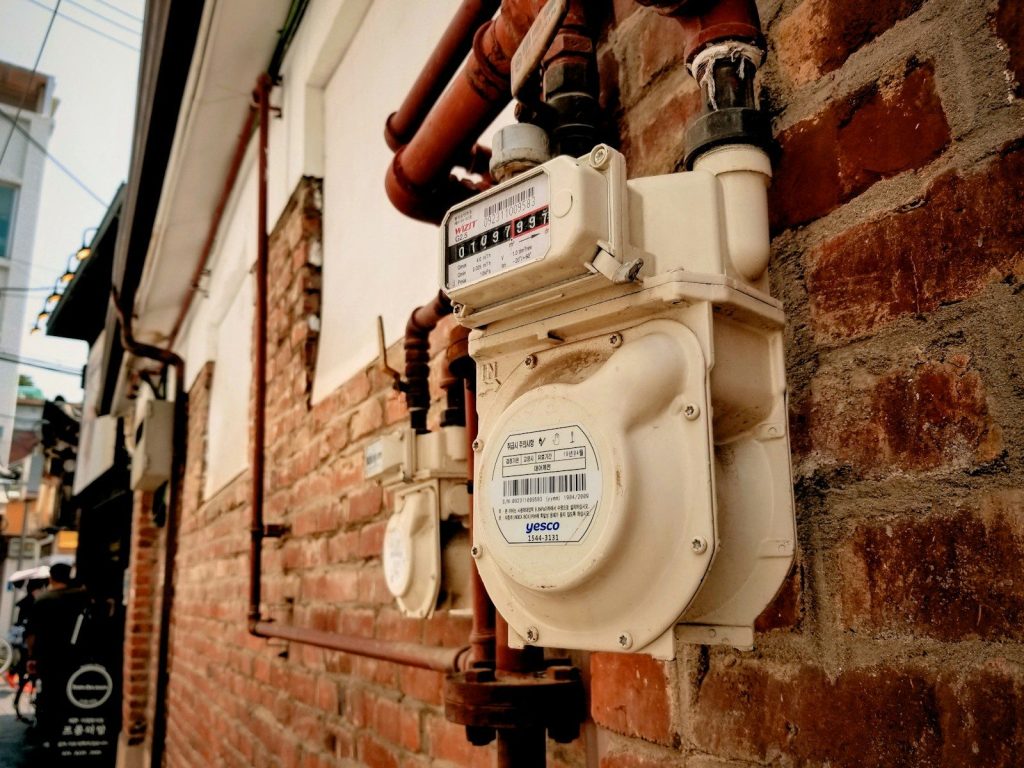
Meters get read in person, roughly monthly, by someone from the utility. Water, electricity, and gas each send their own. Gas staff may also check for leaks, which is a safety inspection rather than a billing visit.
Whether you need to be home depends on your house
If your meter sits on an outside wall, the reader handles it without involving you. You may never notice they came.
My meter is in the yard, behind a locked gate. That means someone has to open the gate. In a country where both partners commonly work full-time, the odds of anyone being home at midday are not good.
When nobody answers, they leave a note on the gate or send a message, and they come back another time. In practice, this can go on for a while — people are busy, and opening the gate for a meter reading is not most households’ top priority. Eventually the visit happens. It is a normal, low-stakes rhythm of living in a house here, not a warning sign.
What happens to your bill in the meantime is worth understanding. When a reading cannot be taken, usage is typically estimated, and the correction arrives once an actual reading finally happens. This can produce a month that looks strangely low followed by one that looks alarmingly high. Neither figure is wrong, exactly; they are two halves of the same period being settled.
If being home is genuinely impossible, it is worth asking the utility what options exist at your address. Some arrangements allow access without anyone present, and in some cases you can report the reading yourself. What is available varies by provider and by how your property is built, so this is a question for them rather than something to assume in either direction.
Other people who knock
Meter readers are not the only official visitors. National census workers come door to door during survey periods, and housing-related surveys sometimes involve checking whether a residence is actually occupied, including whether the water meter is moving.
Knowing the categories in advance takes most of the anxiety out of an unexpected knock. If you are unsure about someone at your door, asking for identification is entirely reasonable and will not offend anyone.
The two seasons that decide your year
Talk to Korean households about utility costs and the conversation goes straight to summer electricity and winter gas. Everything else is background noise.
Summer: the air conditioning problem
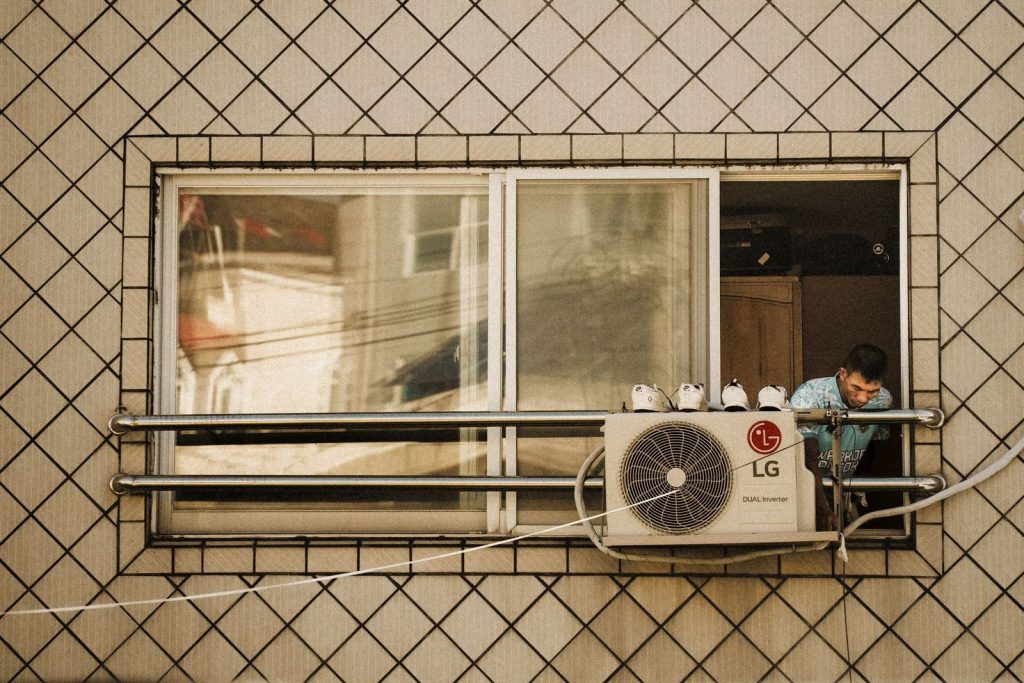
Korean summers are humid and increasingly punishing, and air conditioning stops being optional. The complication is that residential electricity is priced progressively — the more you use, the more each additional unit costs. Heavy summer use does not raise your bill in a straight line.
The result is a national habit of rationing. People run the air conditioner in bursts rather than continuously, cool one room instead of the whole house, and watch the usage creep up with real anxiety. During heat waves, demand climbs sharply and household circuits can trip when too much is running at once.
Winter: the boiler problem
Most homes heat with a gas boiler running warm water through the floor, the ondol (온돌) system. It is comfortable and it is expensive, so winter brings its own set of tactics — heating only the rooms in use, keeping the thermostat lower than feels natural, adding insulation film to windows.
What surprises people is that the effort is not a fringe frugality thing. Managing summer electricity and winter gas is ordinary household practice across income levels.
The two seasons demand different tactics because the systems behave differently. Air conditioning cools a room quickly and the cost is driven by how long it runs, so people run it in bursts. Floor heating is slow in both directions — it takes hours to warm a room and holds that warmth afterwards — so the tactic there is keeping a steady low setting rather than switching on and off.
Anyone moving into a house rather than an apartment should expect higher figures in both seasons. A detached house has more external wall, more roof, and no neighbours above or below contributing warmth. The same habits that keep an apartment comfortable will not produce the same result, and the first winter in a house is usually where people learn this.
Window insulation film, draft strips around doors, and heating only the rooms in use are all standard rather than extreme measures. Hardware shops stock this material prominently from autumn onward, which tells you how normal it is.
Why you see solar panels on houses
Walk through an older residential neighborhood and you will notice solar panels on rooftops of otherwise unremarkable houses.
There are government-backed programs supporting residential solar installation, generally carried out by private companies with subsidy support. For households watching summer electricity costs climb year after year, it is an appealing proposition. The specifics — what is available, who qualifies, how much support — depend on the program and the year, so check current information rather than relying on what a neighbor installed three summers ago.
What happens if you fall behind
Bills that go unpaid do not stay ignored indefinitely. Reminders come first, and if the situation is left long enough, service can be affected — water shutoff is the case I have seen firsthand.
The important thing for a foreign resident is that nothing here happens without warning. Notices arrive well before anything is cut. The real risk is not sudden disconnection; it is a paper bill sitting unread in a mailbox because you did not recognize what it was. That alone is a good argument for setting up automatic transfer in your first month.
Getting set up
Transferring or opening utility accounts is part of the moving process, and our guide to moving in Korea covers the day itself. A few things are worth doing early:
- Confirm what your lease covers. Some arrangements fold certain utilities into a fixed monthly amount. Ask specifically rather than assuming.
- Set up automatic transfer for anything you can.
- Register for electronic notifications so bills are not depending on your reading of a paper slip.
- Find out where your meters are. If they are behind a gate, you now know why that matters.
The short version
Three utilities, billed separately, read by hand once a month. Summer electricity and winter gas are where the money goes. Somebody will eventually need into your yard.
None of it is complicated once you know the shape of it. It is just that nobody tells you in advance, and the first unfamiliar slip in the mailbox always looks more alarming than it is.
Not every arrangement bills you separately. In a goshiwon, utilities are typically folded into the monthly payment along with everything else.