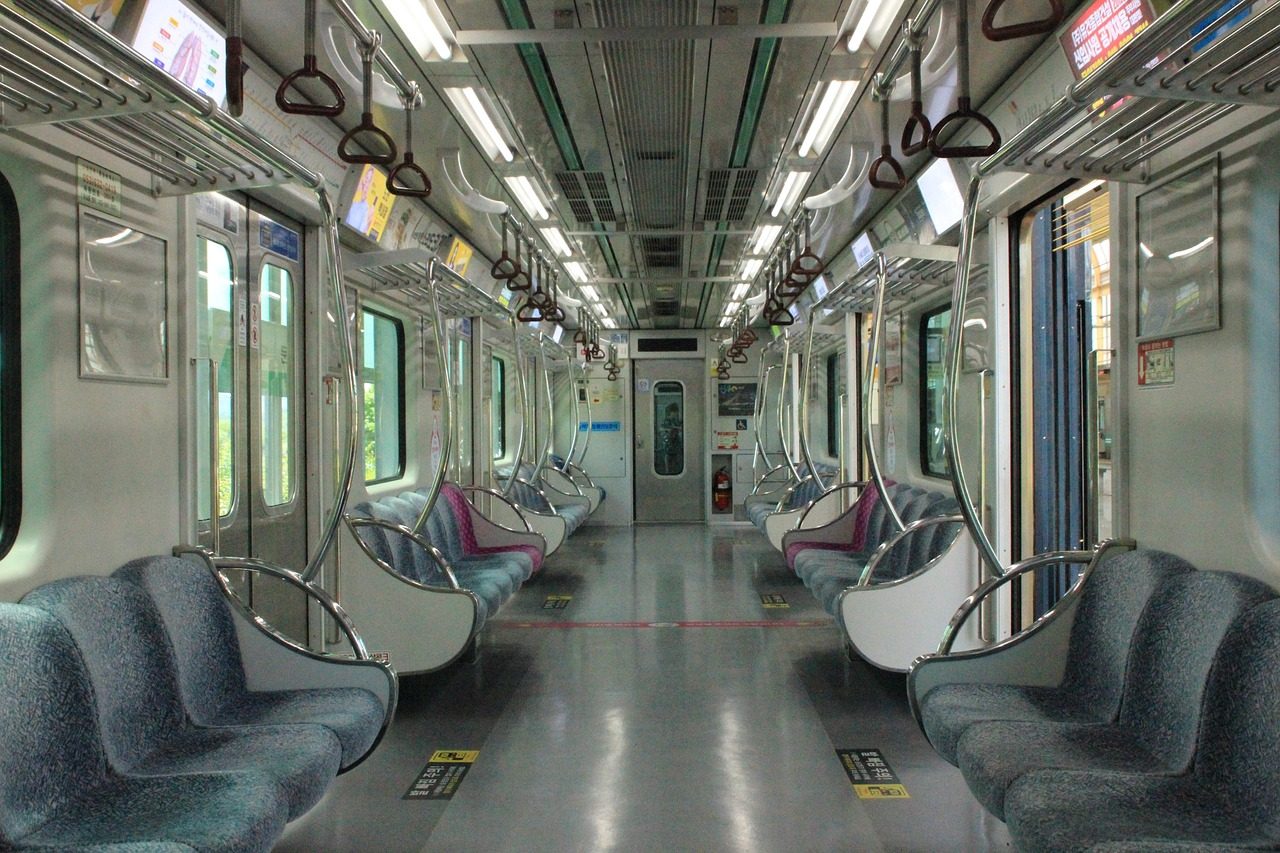
Ask anyone who’s ridden a Seoul subway during rush hour about Korean subway etiquette, and they’ll mention the same thing first: a row of pink or yellow seats near the doors, usually empty even when everyone else is standing. To a first-time visitor, this looks like wasted space on an otherwise packed train. To Koreans, it’s one of the clearest unwritten rules in daily life — and breaking it, even by accident, can turn a lot of heads.
The Seats You’re Not Supposed to Sit In
Every Seoul subway car has a set of priority seats (노약자석, noyakjaseok) — literally “seats for the elderly and weak” — usually located at both ends of the car. They’re often colored differently from the rest of the seating, which makes them easy to spot even if you can’t read the signage above them.
A second, newer category exists specifically for pregnant riders: the pink pregnancy seat (임산부 배려석, imsanbu baeryeoseok). These seats began appearing on Seoul’s subway system in the early 2010s, marked with a pink seat cover and a pregnancy icon on the floor and seatback. Unlike the general priority seats, these are reserved at all times — even if the car looks empty of anyone who obviously needs them.
Who They’re Actually For
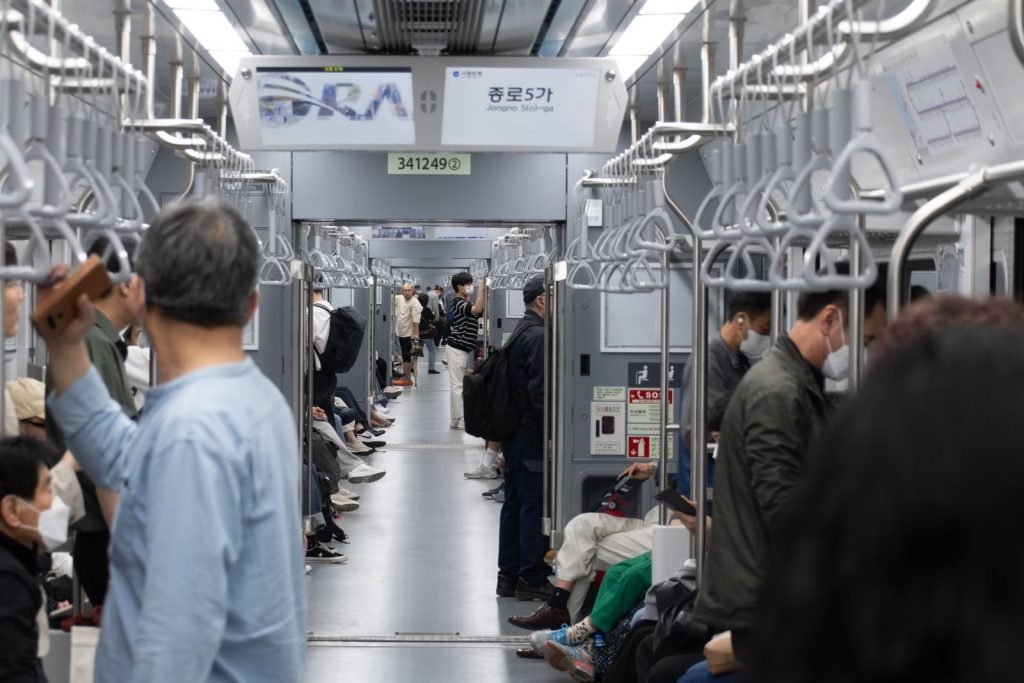
Priority seats are meant for elderly passengers, pregnant women, people with disabilities, and those carrying infants. In practice, the social expectation is broader than the sign suggests: even a healthy adult under 65 will usually avoid sitting there, empty seat or not, simply because it’s understood as “off-limits” space rather than first-come-first-served seating.
This surprises a lot of visitors. In many countries, priority seating is a courtesy you offer if someone needs it — you can sit there and get up when necessary. In Korea, the seat itself is treated as spoken for before anyone with an obvious need even boards the train.
What Happens If You Sit There Anyway
Nothing official happens — there’s no fine, no subway staff enforcing it. But the social response can be immediate. An older passenger may stand pointedly nearby and stare. Someone might tap you on the shoulder. In more direct moments, an elderly rider will simply expect you to get up, sometimes without a word exchanged.
Pregnancy seats carry their own layer of tension, because early pregnancy isn’t visibly obvious. Some pregnant riders wear a small pink keychain or badge (distributed by local transit authorities) signaling “I’m pregnant, please give up this seat” — precisely because strangers can’t otherwise tell. Sitting in a pregnancy seat as a visibly non-pregnant, able-bodied rider, even briefly, tends to draw disapproving looks faster than the general priority seats do.
Where This Comes From
Korea’s priority seating system reflects a culture with deeply rooted Confucian values around age and hierarchy — respect for elders isn’t just etiquette, it’s treated as a near-moral obligation in daily interactions, and public transit is one of the most visible places this plays out. Korea is also aging rapidly; it already has one of the highest elderly populations relative to total population among developed countries, and public infrastructure has adapted accordingly.
The pregnancy seat system is a more recent, deliberate policy response to a different problem: Korea’s low birth rate has made supporting pregnant women a matter of public discussion, and visible pink seats were one small, symbolic piece of a much larger set of policies aimed at that issue.
Beyond the Seats: Other Unspoken Subway and Bus Rules
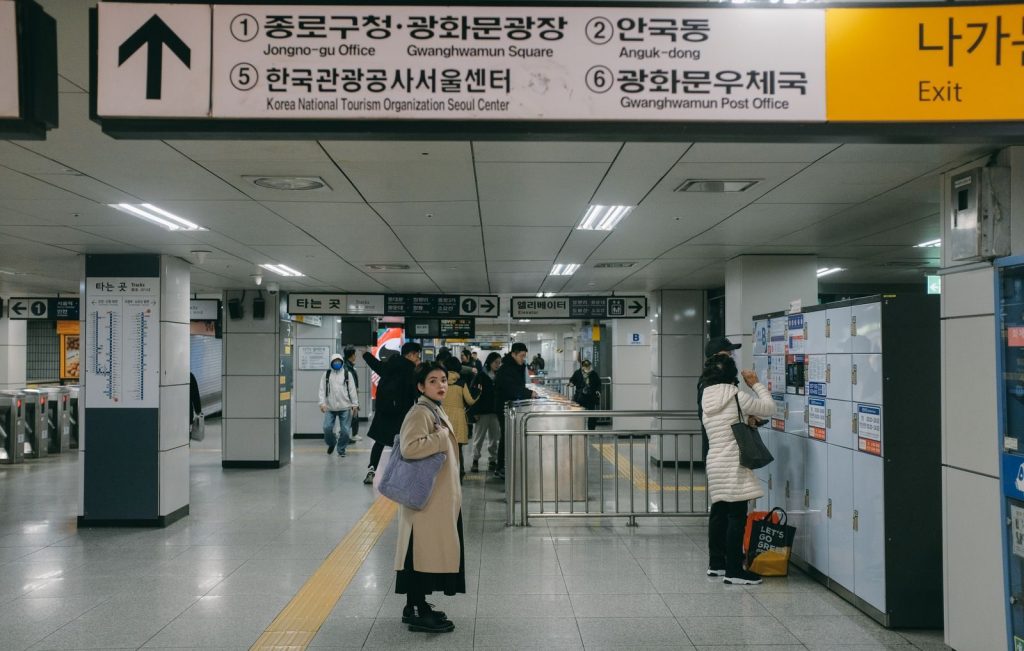
Priority seating gets the most attention from visitors, but it’s just one piece of a broader, mostly unspoken code of conduct on Korean public transit:
- Phone calls are avoided. Texting is fine; taking a voice call on a crowded train is not. If a call comes in, most Koreans either let it go to voicemail or step toward the doors and speak quietly.
- Eating is generally not done on subway cars, though it’s more tolerated on longer intercity buses. A quick sip of coffee is fine; a full meal draws stares.
- Standing to the right on escalators used to be a strict unwritten rule in Seoul stations, letting people in a hurry pass on the left. Safety campaigns in recent years have pushed back on this — officials now encourage standing on both sides — but the old habit is still common enough that you’ll see it in most stations.
- Boarding order matters. Riders line up along marked floor arrows at platform doors and let passengers exit before stepping on, rather than pushing straight in.
Is This Still Followed Today?
Compliance isn’t universal, and younger Koreans are sometimes just as likely as visitors to end up in a priority seat without thinking twice — phones down, headphones in, not paying close attention to who’s boarding. But the social cost of getting caught is real. Videos of people refusing to give up priority seats to elderly riders occasionally go viral on Korean social media, usually with the sitter cast as the villain of the clip regardless of the full context.
That said, the rule bends in genuinely empty cars. On a near-empty late-night train, plenty of Koreans will sit in a priority seat and move without complaint the moment someone who needs it gets on. The expectation isn’t “never sit there” so much as “notice who’s around you and act accordingly” — which is a harder rule for a visitor to read than a simple sign would be.
What Visitors Should Do
The safest approach, especially during commuting hours, is simple: treat priority and pregnancy seats as unavailable by default, regardless of how empty the car looks. If you’re traveling with an elderly relative or are visibly pregnant yourself, you’re of course welcome to use them.
Beyond seating, keeping your voice down, silencing phone calls, and following the boarding-line arrows will cover almost everything else you need to know. None of this is written down anywhere a tourist would see it — it’s absorbed by watching, which is exactly why it catches so many first-time visitors off guard.
Korean subway etiquette goes well beyond the seats themselves — the same instinct toward reading the room shows up at the dinner table and in how people address each other by age and title. If you’re navigating any of that for the first time, it’s worth knowing the basics before you land.