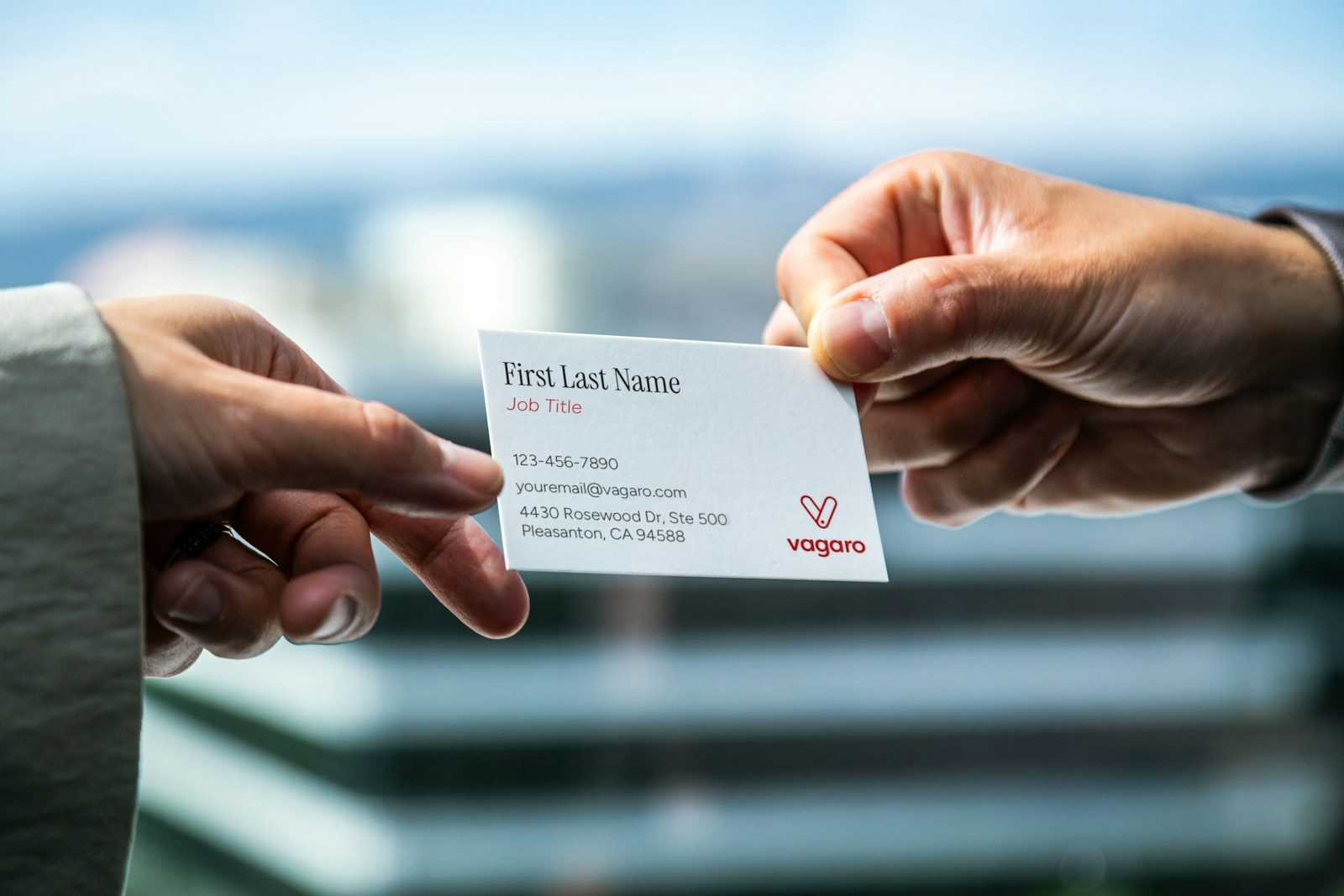
A business card in Korea is handed over with both hands, angled so the recipient can read it right side up, and — this is the part visitors miss most — it does not go straight into a pocket. Korean business card etiquette treats the exchange as a small sequence with its own rules, and skipping a step registers more than most first-time visitors expect.
The Exchange Itself
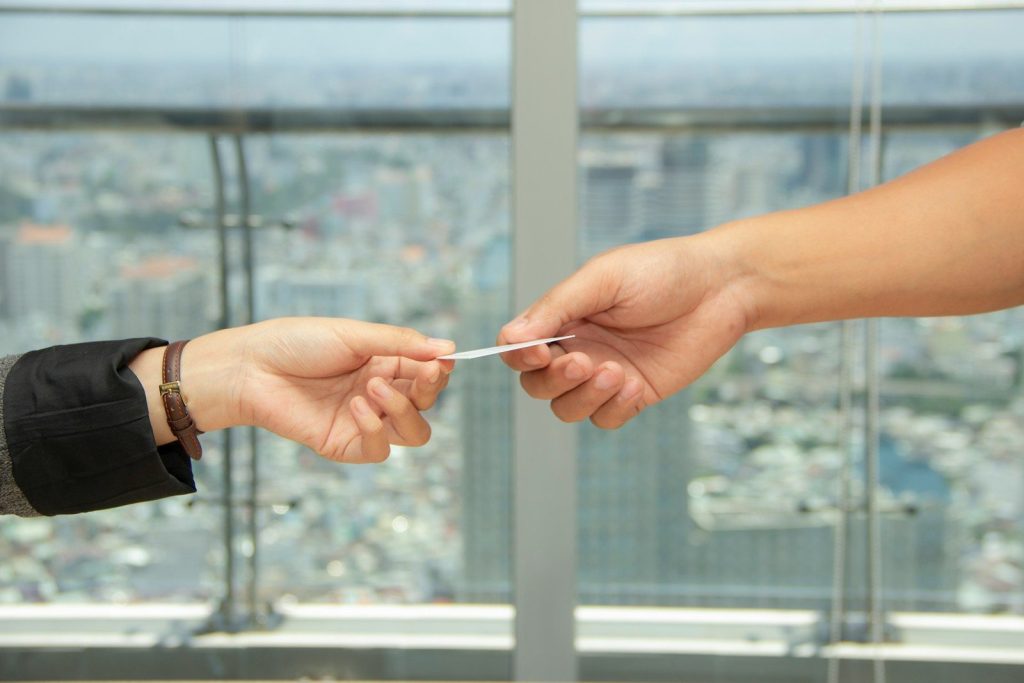
The card is presented with both hands, or with the right hand while the left touches the right forearm or wrist. This is the same physical logic that governs receiving a drink from someone older or accepting a gift — a gesture that shows up everywhere in Korean social life once you know to look for it.
Orientation matters. The card faces the recipient, text upright from their point of view, not yours. Handing it over backward or upside down is a small stumble that Koreans will forgive instantly, but it is one of the easiest details to get right if you practice it once beforehand.
In a group meeting, cards go to the most senior person in the room first, working down in rank. If you are unsure who that is, a brief pause to let your Korean counterparts sort it out themselves is safer than guessing.
Read It Before You Put It Away
Once you have the card, look at it. Actually read the name and title before setting it down or putting it away — a glance of a few seconds, not a performance. Pocketing a card immediately without looking at it reads as treating the person as an afterthought.
Writing on someone’s card in front of them — even a helpful note like the date you met — is considered disrespectful. If you need to jot something down, wait until the meeting has ended or the person is no longer watching.
Where It Goes During the Meeting
In a formal business meeting, cards are not pocketed at all until the meeting ends. Instead, they are laid on the table in front of each person, arranged in the same order as the seating, so you can glance down and match a name to a face without asking again. This is common enough in Korean offices that you will see stacks of cards lined up neatly in front of each seat during longer negotiations.
What the Card Itself Tells You
Korean business cards are usually printed with Korean on one side and English on the other, and the title matters as much as the name. Korean workplaces run on job title rather than given name — the same logic covered in our guide to Korean age and titles — and the card is often the fastest way to work out how to address someone and where they sit in the hierarchy relative to you.
A company name you do not recognize is worth a quick mental note rather than a question on the spot. Asking directly “what does your company do?” moments after receiving a card can come across as under-prepared for the meeting.
What Not to Do
- Never put a received card in your back pocket. Sitting on someone’s name is read as literally disrespecting them, and it is one of the few genuine faux pas available here.
- Don’t fold, bend, or fidget with the card. It stands in for the person, and treating it carelessly reads the same way as treating them carelessly.
- Don’t hand it over one-handed to someone clearly senior to you. Among peers of similar age and rank, one hand is increasingly common and not a problem — but with anyone senior, both hands remain the safe default.
Is This Changing?
Among younger professionals and startup culture, the formality has loosened somewhat — one-handed exchanges between peers are common, and some companies have moved toward sharing contact details digitally via KakaoTalk instead of printed cards entirely. But in traditional companies, government offices, and any first meeting with someone senior, the full version — both hands, careful reading, no pocketing — is still the expected baseline, and defaulting to it costs a visitor nothing.
What Visitors Should Do
Bring cards if you have any professional reason to be exchanging them in Korea — arriving without one to offer in return can be its own small awkwardness. Present and receive with both hands, take a moment to actually read what you’re handed, and resist the reflex to pocket it immediately. None of this requires any Korean language ability, which is part of why it travels so well.
Korean business card etiquette is really the same underlying logic — read the room, defer to who outranks you — that runs through why Koreans use two hands for almost any exchange, and through Korean drinking etiquette once the introductions move to dinner.
The same both-hands rule extends to any gift exchange — Korean gift giving etiquette has its own specific taboos around numbers and objects worth knowing before your next visit.