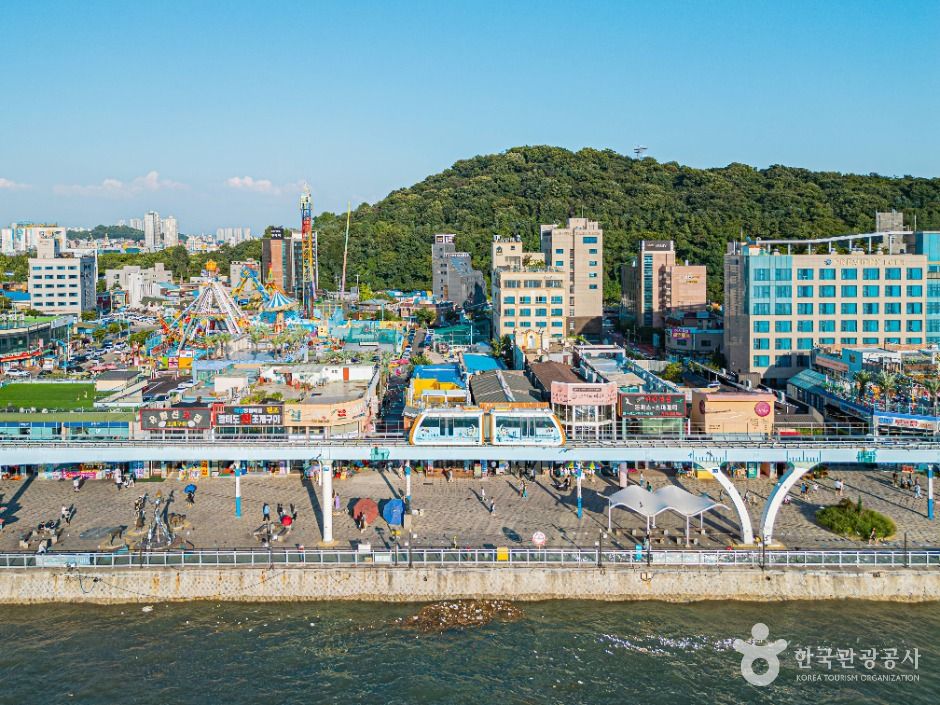
Wolmido Incheon is the place nearly every person in this city has been at least once — on a school trip, on a first date, or on an ordinary Saturday when there was nothing else to do. It is Incheon’s signature seaside strip: amusement rides, arcades, food stalls, and a waterfront promenade at the end of the subway line.
It is also a place where the most interesting part sits a ten-minute walk away and most visitors never reach it. Here is what is actually there.
Photos: 김지연 via Korea Tourism Organization (KOGL Type 1).
The Disco Pang Pang and Its DJ
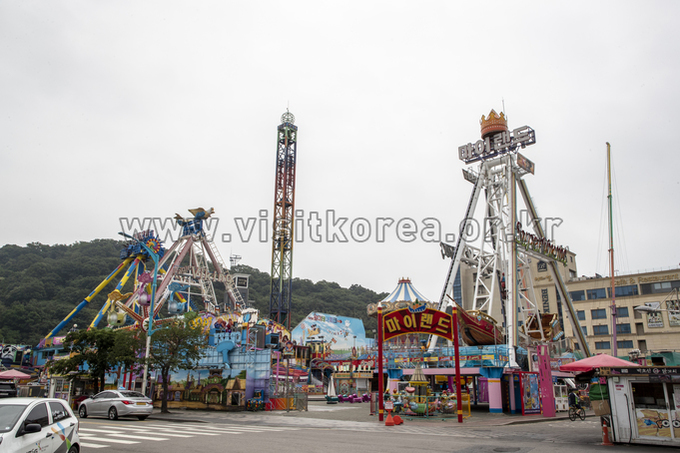
If you have seen a clip of Korean amusement rides online, there is a good chance it was this one. Disco Pang Pang is a spinning, tilting platform ride where passengers sit around the edge and try not to slide off. That part is ordinary. What is not ordinary is the DJ.
A live operator sits at the controls with a microphone, narrating the riders — teasing the ones gripping the bar too hard, commenting on outfits and reactions, calling people out by seat — while simultaneously controlling the ride’s tilt and speed in response to what the crowd is doing. Riders are not just passengers; they are the material. Speed up when someone gets cocky, ease off when someone is genuinely frightened, and keep the commentary running the whole time.
The format has been covered on Korean television and has circulated widely online for years, which is why foreign visitors sometimes arrive at Wolmido specifically to find it. Understanding the commentary requires Korean, but the crowd’s reaction is legible in any language.
Photos: 이범수 via Korea Tourism Organization (KOGL Type 1).
Everything Else on the Strip
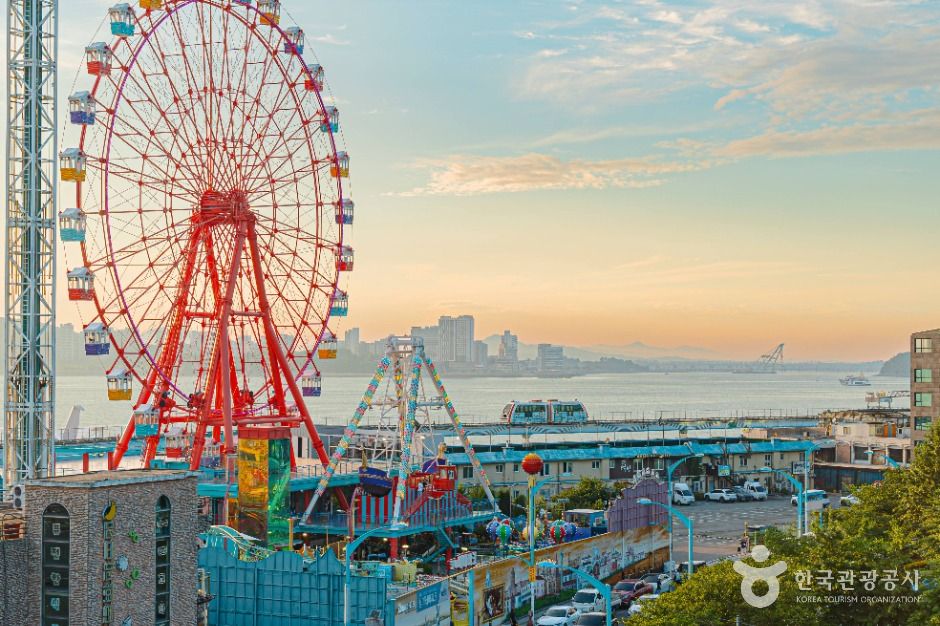
Around it is a compact, slightly worn seaside amusement zone that has not changed its basic character in decades:
- The Viking — the swinging pirate ship, a fixture of Korean amusement parks
- Arcades and claw machines — clustered along the street, busy into the evening
- Street food — stalls and small restaurants the length of the strip
- The waterfront — a promenade along the sea where most visitors end up taking photographs, especially toward sunset
It has been a school excursion destination for generations. Korean adults who came here on a class trip as children now bring their own kids, and the place they remember is recognizably still there. That continuity is a large part of why Wolmido occupies the position it does in Incheon — not because it is spectacular, but because it is shared.
Photos: 김지연 via Korea Tourism Organization (KOGL Type 1).
One Honest Warning: The Raw Fish Restaurants
This is the part travel guides skip.
The seafood restaurants along Wolmido have a long-standing local reputation for charging tourist prices. Among Incheon residents, the common advice is simple: don’t eat raw fish here. The complaint mirrors what locals say about Sorae Port — a well-known seafood destination where the prices reflect the reputation rather than the market.
This is not a claim that every restaurant overcharges, and plenty of visitors eat well. But if raw fish is what you came for, understand that you are paying a location premium, and that people who live here generally buy theirs elsewhere. The street food and the casual restaurants are a different matter — those are priced normally and are a large part of the appeal.
Photos: 김지연 via Korea Tourism Organization (KOGL Type 1).
The Ferry: Wolmido as a Departure Point
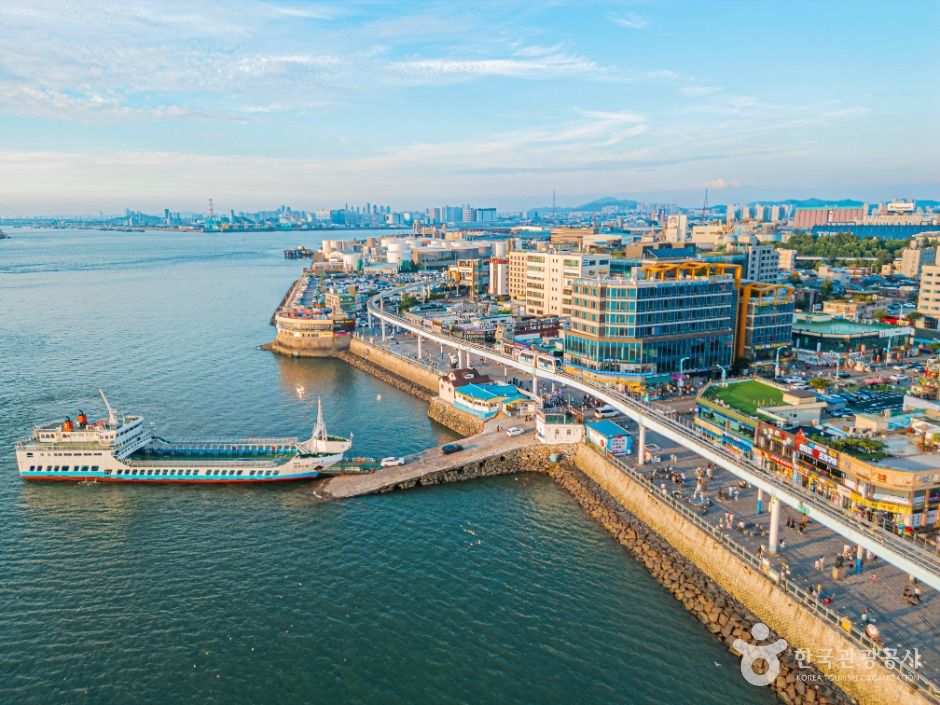
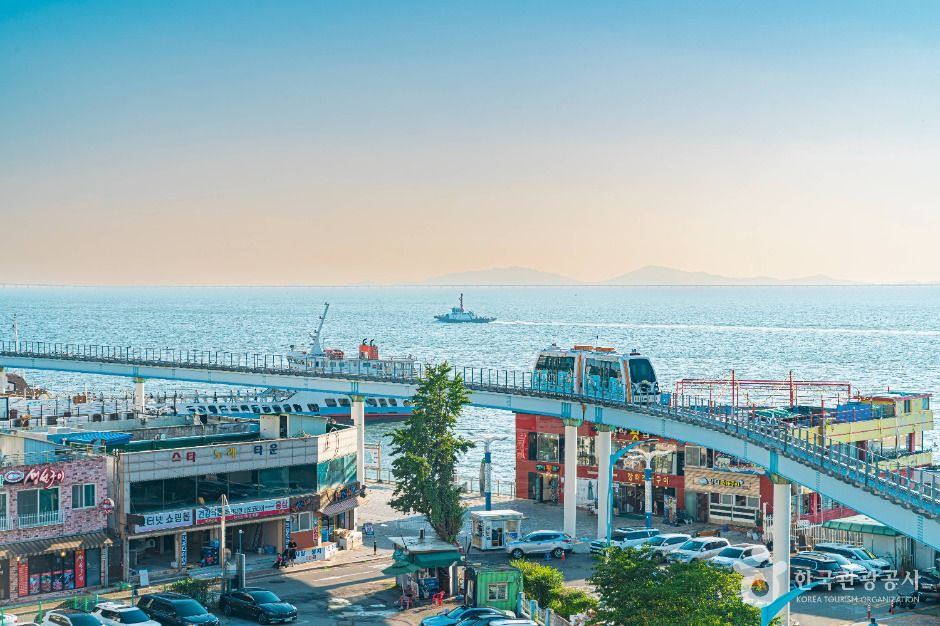
At the pier, a car ferry runs to Yeongjongdo, docking at Gueup Baetteo on the island’s southeastern side. It runs roughly hourly through the day, and it carries vehicles as well as foot passengers — adult fares run around 3,500 won, with a passenger car costing about 7,500 won.
For a lot of people, this is the actual reason they are at Wolmido: the pier is a jumping-off point toward the islands west of the city. Once on Yeongjongdo, the road network reaches further out — Muuido, for instance, has been connected by bridge since 2019, so what used to require a second boat is now a drive.
Fares and timetables shift seasonally and with weather, so check before you plan around it.
Photos: 김지호 via Korea Tourism Organization (KOGL Type 1).
The Part Most Visitors Miss: Wolmi Park
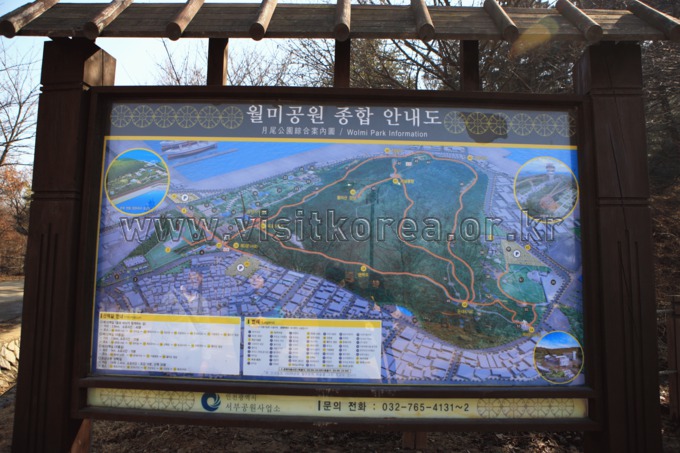
A short walk from the amusement strip is a hill called Wolmisan. It is only about 108 metres high. For roughly fifty years after the Korean War, ordinary people could not set foot on it.
The hill was held as a military zone, and civilian access was closed. In 2001 the city of Incheon acquired the land from the Ministry of National Defense and began converting it into a park, with construction continuing in phases into 2010. The long closure produced an unintended result: with no development and almost no foot traffic for half a century, the forest on the hill was left alone, and the park today is notably well-preserved ecologically for a green space sitting this close to a port and a city centre.
Photos: 이범수 via Korea Tourism Organization (KOGL Type 1).
Photos: 이범수 via Korea Tourism Organization (KOGL Type 1).
The Korean Traditional Garden
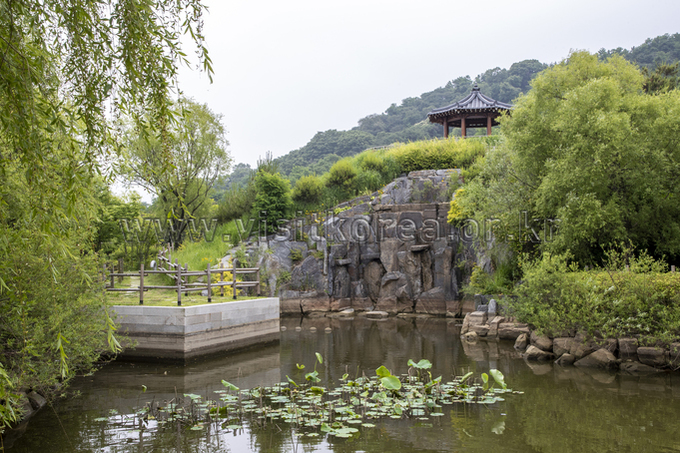
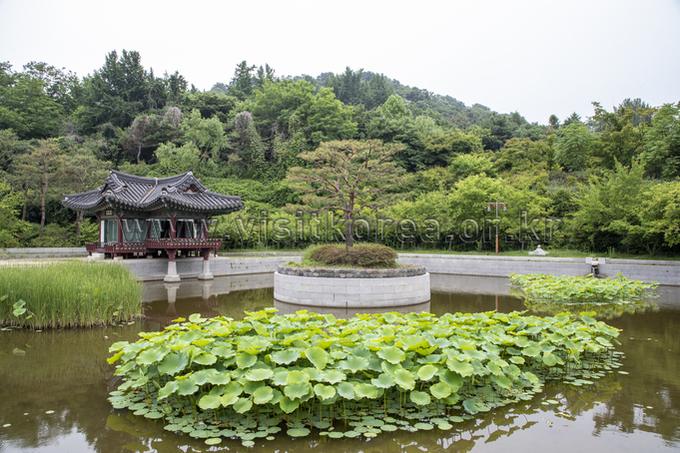
The park’s centrepiece is a recreated traditional garden complex, built between 2004 and 2007, laid out to show three distinct types of Korean garden design side by side — palace gardens, scholars’ retreat gardens, and commoners’ house gardens. Ponds, pavilions, and reconstructed traditional buildings are arranged across the grounds.
Admission to the park is free. For a visitor who has spent the afternoon on a loud amusement strip, walking into this from a few hundred metres away is a genuinely strange transition, and it is the single best argument for coming to Wolmido at all.
Photos: 김지연 via Korea Tourism Organization (KOGL Type 1).
The Observatory
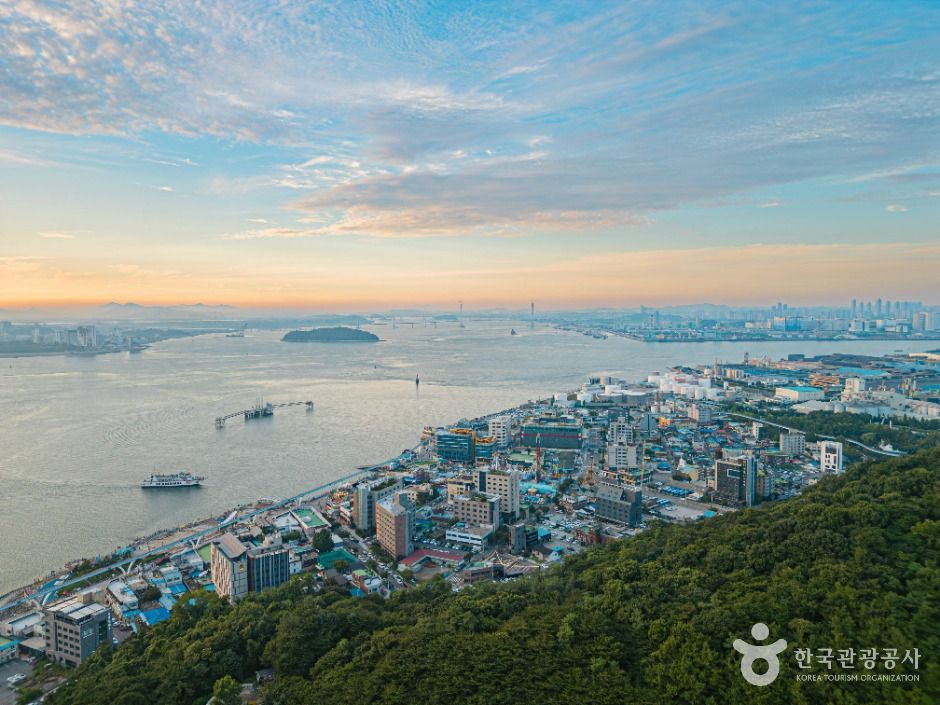
At the top there is an observation deck looking out over the water — the port, the ships moving in and out, and Incheon Bridge in the distance. Sunset is the obvious time to be up there.
Among Incheon residents, Wolmi Park is where people go for the flowers and the quiet, specifically to photograph and walk rather than to ride anything. It draws a different crowd from the strip below, on the same afternoon, a few minutes apart.
Why the Hill Was Closed
Wolmido sits directly in front of Incheon’s harbour, which made it militarily important long before it was a day-trip destination. It was the first landing point of the Incheon Landing Operation in September 1950, and the island was heavily bombarded in the run-up to the landing — civilians living there were killed in that bombardment. Afterward, the hill remained under military control for decades, which is why a generation of Incheon residents grew up looking at a hill they could not climb.
You will find memorials and markers related to the operation scattered through the park. It is worth knowing why the trees are as old as they are.
Getting There
Take Incheon Subway Line 1 or the Seoul Subway Line 1 branch to Incheon Station, the end of the line, then continue by bus or on foot. The Wolmi Sea Train, an elevated monorail, loops the island with stops near the culture street, the park, and the museum area — it is slow by design and functions more as a sightseeing ride than as transport.
Incheon Station also puts you at the entrance to Incheon Chinatown, which means Wolmido combines easily into a longer day rather than standing alone.
Wolmido is where the first wave of the 1950 Incheon Landing came ashore. To see how the city still remembers that day, climb to Jayu Park, where locals leave flowers at the MacArthur statue every September.
Representative Photos: 김지연 via Korea Tourism Organization (KOGL Type 1).