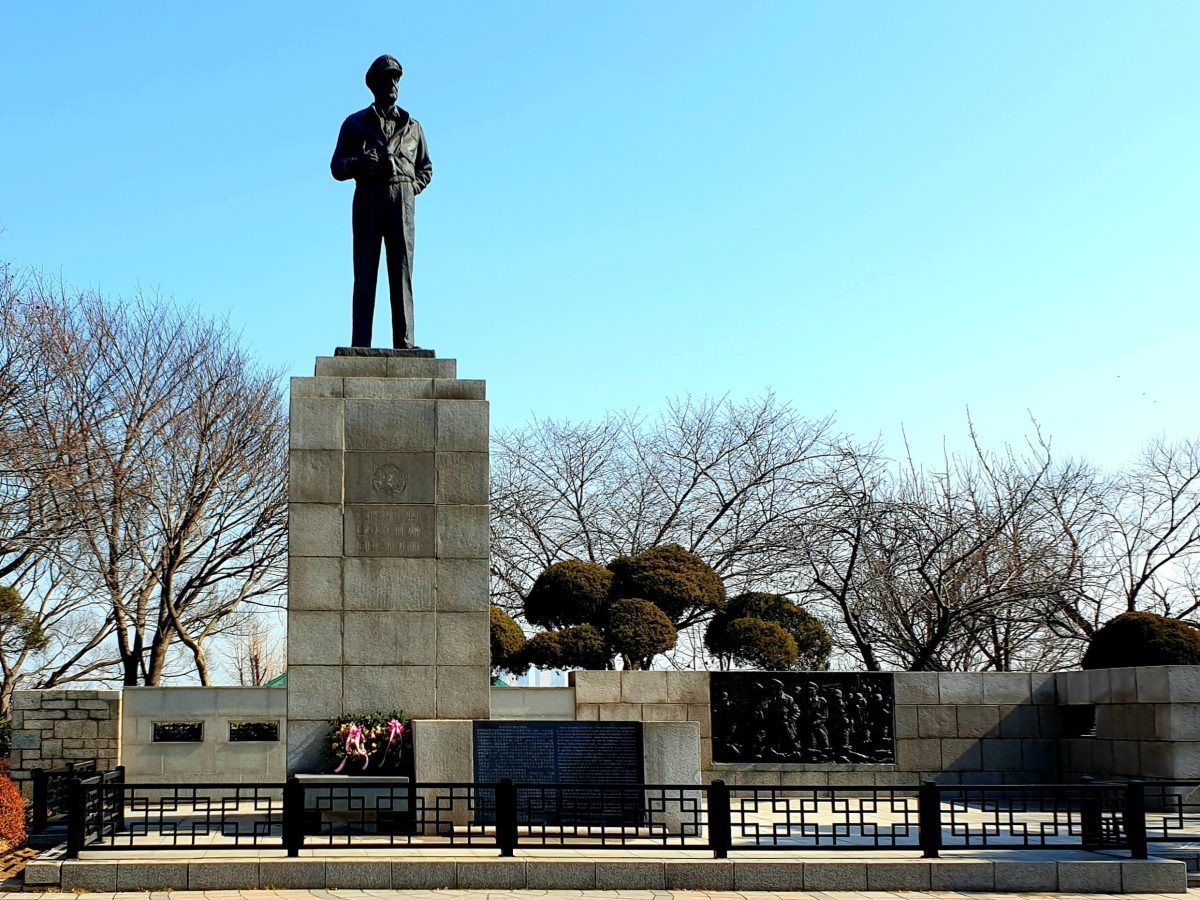
Jayu Park (자유공원) is the hill I think of whenever someone asks me what old Incheon was like. It covers the whole of Eungbongsan (응봉산), a low hill rising behind Incheon Station and Chinatown, and from the top you look straight out over the port, the cranes, and the open water of the Yellow Sea.
Most English-language guides give it one line: the park with the MacArthur statue. That is true, but it leaves out almost everything that makes this hill matter to the people who grew up here. Jayu Park is Korea’s oldest Western-style public park. It is where Incheon remembers the landing that changed the course of the Korean War. And for many of us who were students in the 1980s and 1990s, it was the place you climbed after dark.
I live in Michuhol-gu and have spent most of my life in Incheon. So this is not a visitor’s review. It is the park as a local knows it: the history on the plaques, the gratitude people still carry up the hill, and a few stories you won’t find on any sign.
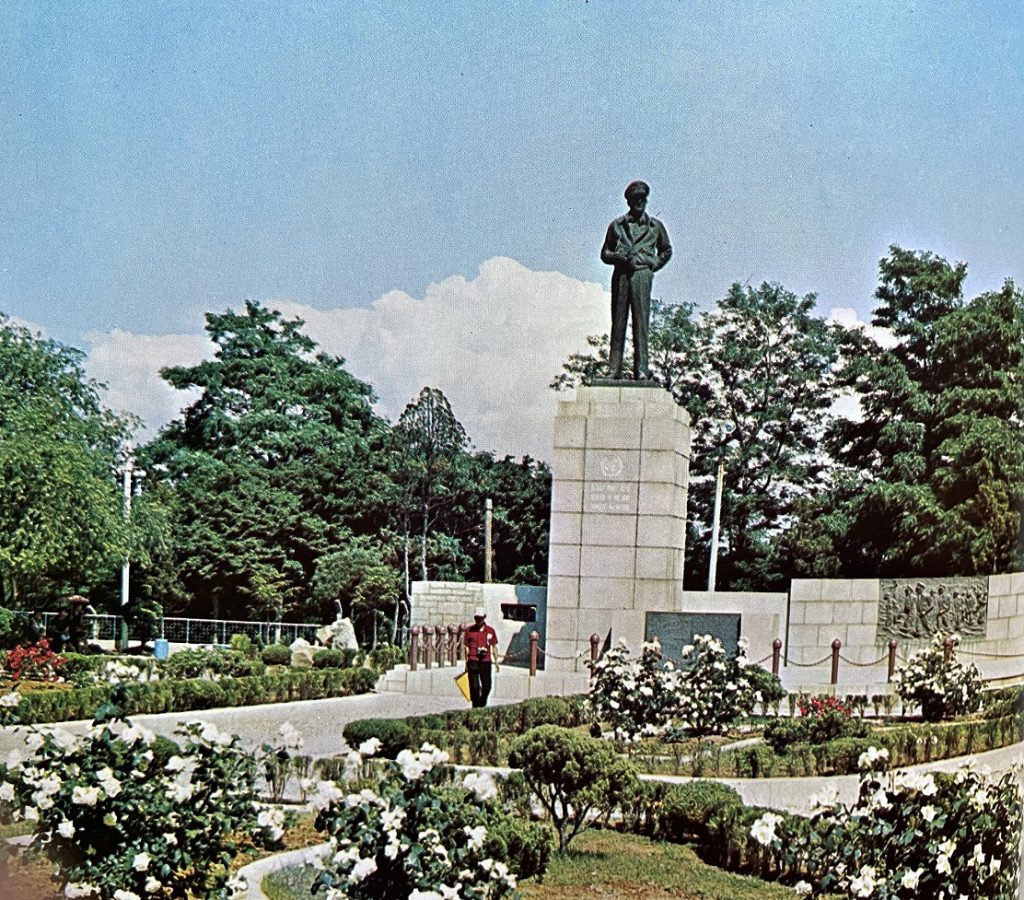
What Kind of Place Is Jayu Park?
The name means “Freedom Park,” and you may see it written either way in English. Both names point to the same hill.
It isn’t a flat city park with lawns and a fountain. It is a small wooded hill with paths, stairs, and lookout points winding up from several sides of the old port district. Some walkers come up from Chinatown, others from the old open-port streets or the Sinpo side, and the routes meet near a wide plaza close to the summit.
Two landmarks stand at the top. One is the bronze statue of General Douglas MacArthur. The other is the tall white Korea–US Centennial Monument (한미수교 100주년 기념탑), raised in 1982 to mark one hundred years since the 1882 treaty that opened relations with the United States. That treaty was signed right here in Incheon, which makes the monument feel less like a decoration and more like a local memory.
In spring the paths turn pink and white with cherry blossoms, and the park has long been one of Incheon’s favorite places to see them. In the evening, it is one of the best free viewpoints in the city.
Korea’s First Western-Style Park
To understand why a Western-style park appeared on a Korean hill in the 1880s, you need to know what Incheon was then. The port, known at the time as Jemulpo (제물포), opened to foreign trade in 1883. Within a few years, merchants and diplomats from Japan, China, Britain, the United States, Germany, and other countries were living in designated foreign settlements around the harbor.
In 1888, a public garden was laid out on Eungbongsan, inside the multinational settlement. The survey is credited to Afanasy Seredin-Sabatin, a Russian-Empire architect of Ukrainian origin who later worked on several buildings in Seoul. That date puts Jayu Park about nine years ahead of Seoul’s Tapgol Park, which is why Koreans call it the country’s first Western-style park.
The hill has changed names almost as often as Korea’s own fortunes changed:
| Period | Name | What it meant |
|---|---|---|
| 1888–1914 | Gakguk Park (각국공원) | “Park of the Nations,” managed by the foreign settlement |
| 1914–1945 | West Park (서공원) | Used after Japan abolished the foreign settlements and took control |
| 1945–1957 | Manguk Park (만국공원) | “Park of All Nations,” the name Koreans used after liberation |
| 1957–today | Jayu Park (자유공원) | “Freedom Park,” renamed when the MacArthur statue was unveiled |
A few older buildings remain around the edges of the hill, including the Jemulpo Club (제물포구락부), a social club built for foreign residents in 1901. Walking down from the summit, you pass through more than a century of history in about ten minutes.
The MacArthur Statue and What It Means to Incheon
To see why this statue matters, go back to the summer of 1950. North Korea invaded on June 25, and within weeks its forces had pushed the South Korean army and its allies down into a small corner of the peninsula around Busan. The country was close to disappearing.
On September 15, 1950, United Nations forces under General Douglas MacArthur landed at Incheon. It was a risky plan. Incheon’s tidal range is famously large, and the landing had to be timed to a narrow window of high water. It worked. Within about two weeks, Seoul was retaken and the war turned.
For Koreans who know that history, the landing is not a distant military story. Without it, the free and democratic Republic of Korea that exists today might never have survived. That is why, in Incheon especially, many people speak of MacArthur and the landing with real pride and gratitude, and why this statue is a point of pride for the whole city.
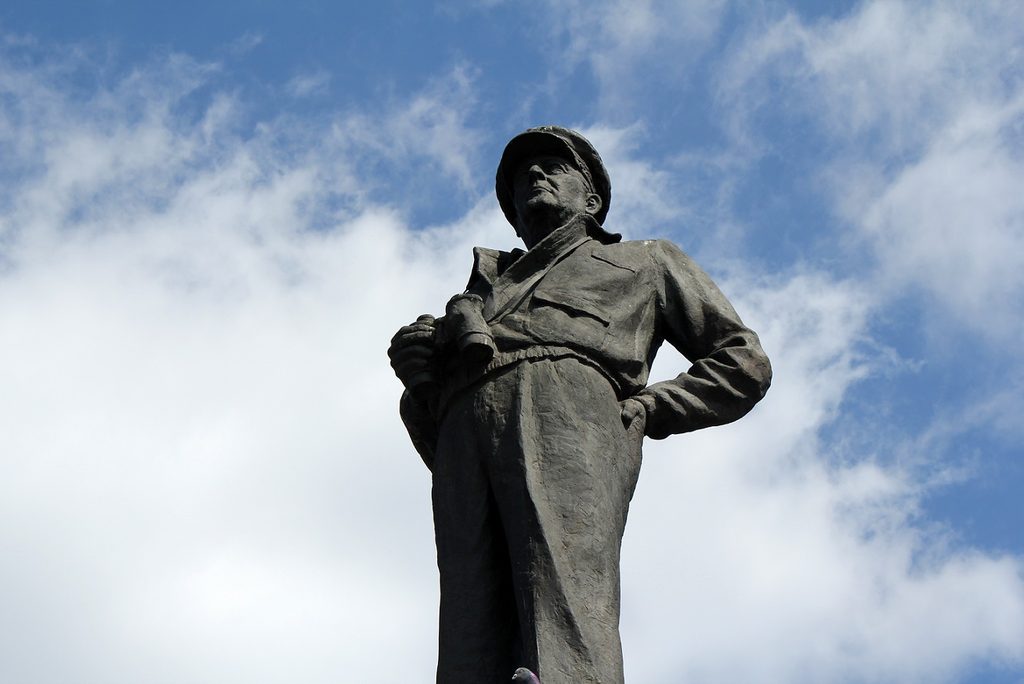
Unveiled on the seventh anniversary
The statue was unveiled on September 15, 1957, exactly seven years after the landing. Newspapers of the time described ships’ whistles sounding together over the harbor as it was revealed. Most of the country’s top officials attended, and the park was renamed Jayu Park, Freedom Park, to honor the freedom the landing had protected.
It was unusual then to build a statue of a living person, and MacArthur was still alive. That alone tells you how Koreans in the 1950s felt about him.
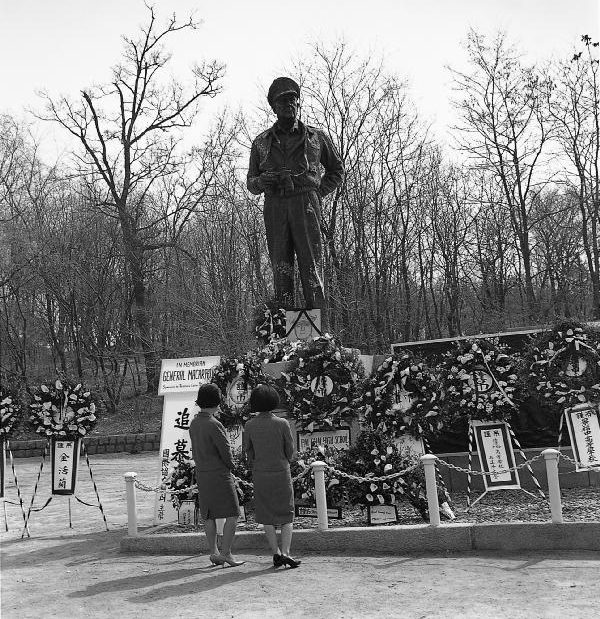
Flowers every September 15
This tradition goes back decades. When MacArthur died in April 1964, the base of the statue filled with wreaths from people who wanted to say goodbye.
Every year on September 15, Incheon marks the anniversary of the landing, and the day begins here. In 2026, for the 76th anniversary, the mayor of Incheon and the commander of the Republic of Korea Marine Corps laid flowers at the foot of the statue before the main ceremony was held near the harbor.
It isn’t only officials. Ordinary Koreans also come up the hill with flowers, leave them at the base, and stand for a moment of silent thanks. If you visit around mid-September, don’t be surprised to find fresh bouquets there.
The statue has not been free of debate. Since the 2000s, some activist organizations have called for it to be removed or moved to the Incheon Landing Operation Memorial Hall, and protests have been held at the site. The statue has stayed where it is, and each September the city still opens the anniversary with flowers at its feet.
The Park After Dark: What Locals Remember
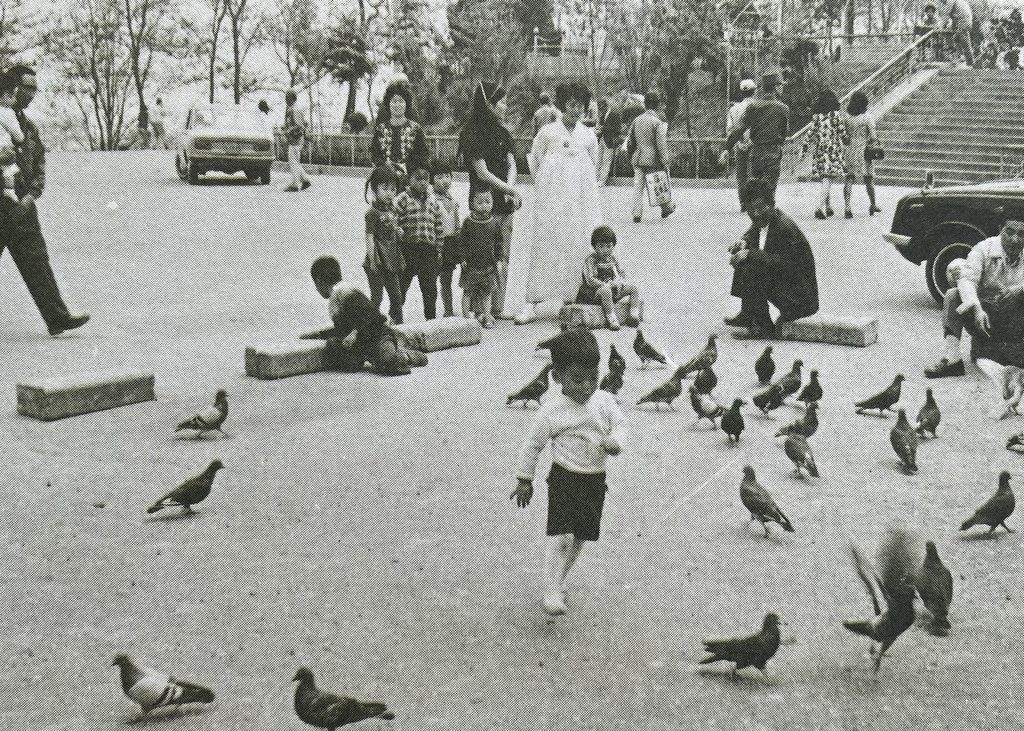
Here is the part no plaque mentions. In the 1980s and 1990s, Jayu Park had two lives. By day it belonged to families, retirees, and school trips. After dark, it belonged to Incheon’s teenagers and young couples.
It was a well-known date course. Couples walked the paths up to the plaza, looked at the lights of the port, and stayed as long as they could. For students who didn’t want to go home, it was a hangout. The park also had a rough reputation among students back then, and stories of fights on the hill went around from school to school. Late at night, you could hear motorcycles, the bikers Koreans called pokjujok (폭주족), roaring up the winding roads to the top.
I’m not sharing this to make the park sound dangerous. Today it is known far more for its night view than for trouble. But if you want to understand what Jayu Park meant to ordinary people in Incheon, it was never only a monument. It was where a lot of young people spent their evenings, for better or worse.
The View Toward the Sea
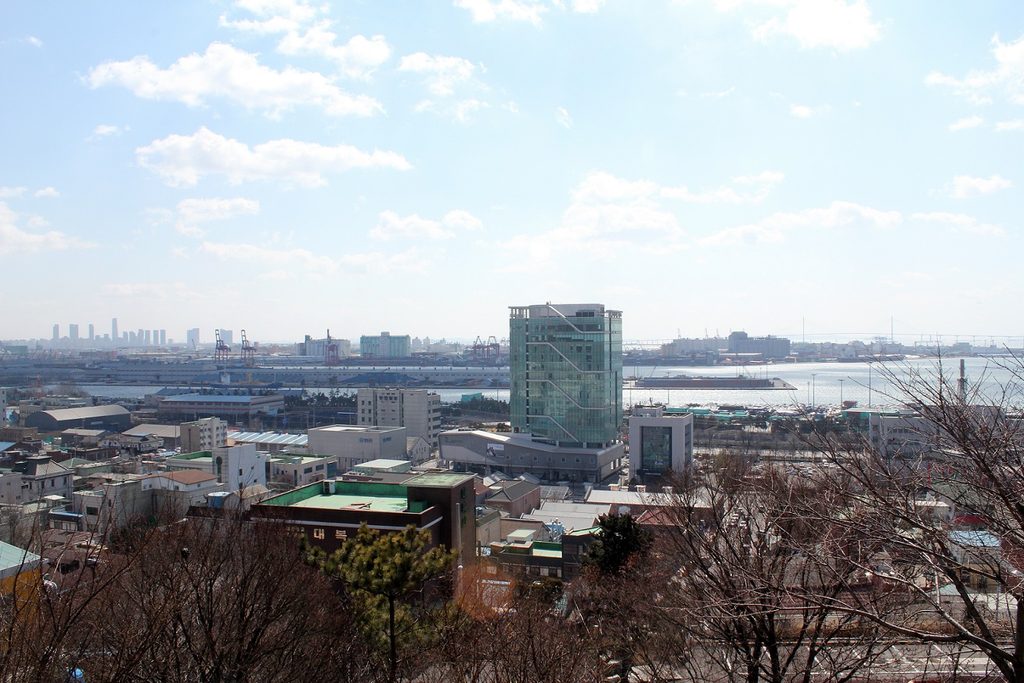
The real reason to climb is the view. From the plaza near the statue, Incheon’s inner harbor opens up below you: cargo ships, cranes, the rooftops of Chinatown and the old port streets, and past them the water stretching west toward Wolmido and the open sea.
The park is close enough to the water that you feel the port rather than just see it. On a clear day the sea looks almost within reach. In the early evening, the plaza is one of the most popular places in the city to watch the light fade over the water.
What’s Nearby
Jayu Park sits in the middle of Incheon’s old port district, so it pairs easily with other stops:
- Incheon Chinatown: right at the foot of the park. Most visitors walk up through it. Read my guide to Incheon Chinatown.
- Sinpo International Market: a short walk from the other side of the hill, and the birthplace of jjolmyeon. See my guide to Sinpo International Market.
- Wolmido: the island, now joined to the mainland, where the first wave of the 1950 landing came ashore. It is a short trip from Incheon Station. See my guide to Wolmido.
- Incheon Landing Operation Memorial Hall: farther away in Yeonsu-gu, but worth the trip if the history of the landing interests you.
How to Get to Jayu Park
The easiest way is by subway. Take Seoul Subway Line 1 or the Suin–Bundang Line to Incheon Station, the last stop on both lines. The Chinatown gate is directly across the road from Exit 1. Walk uphill through Chinatown to the stone boundary stairway, where the old Qing and Japanese settlements once met; the park begins right above it. The climb to the summit plaza takes roughly 15 to 20 minutes at an easy pace.
If you are coming from Sinpo International Market, you can walk up from that side instead. Many visitors do a loop: up through Chinatown, across the top of the park, and down toward Sinpo for something to eat.
A note for map searches: in July 2026, Incheon reorganized its districts, and the old inland part of Jung-gu merged with Dong-gu to become Jemulpo-gu (제물포구). Older guides and signs may still say Jung-gu.
Before you go
- Entry is free.
- Wear comfortable shoes. There are stairs and slopes on every route up.
- Cherry blossoms usually peak in early to mid-April.
- September 15 is the landing anniversary, with a flower ceremony at the statue in the morning.
Final Thoughts
Jayu Park is small. You can walk the whole hill in an hour. But few places in Korea hold this many layers in so little space: the foreign settlement of the 1880s, the independence movement, the war that nearly ended the country, the rescue that saved it, and generations of Incheon kids climbing up at night to look at the harbor lights.
If you only have time for one stop in old Incheon beyond Chinatown’s food, climb the hill. Stand by the statue, look out at the water where the ships came in, and you’ll understand why so many people here still bring flowers.