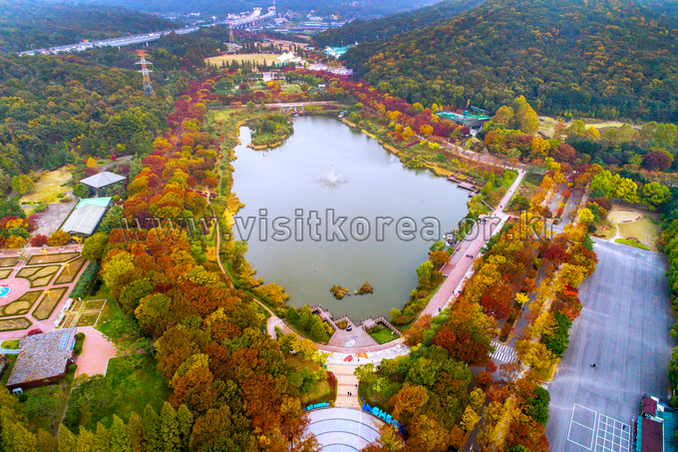
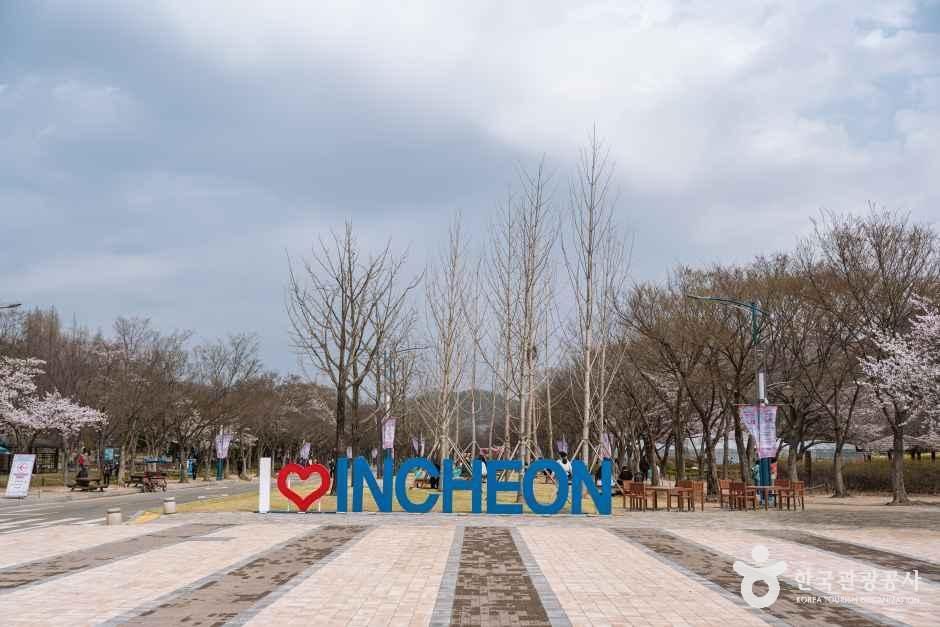
Incheon Grand Park is the place almost every kid in Incheon has been walked to at least once, lunchbox in hand, while a teacher counts heads at the gate. For me it was more than once. Whenever my school, and later my church, needed somewhere green and big enough for a few hundred people to spend a whole day, this was the answer.
It still is. The park is one of the busiest green spaces in the Seoul metropolitan area, drawing millions of visits a year, and yet it rarely shows up in English-language travel guides. This post is my attempt to fix that, with the history, the practical details, and the memories that make this place feel like a second backyard to people who grew up here.
What Incheon Grand Park Is
Incheon Grand Park (인천대공원) sits in Jangsu-dong, Namdong-gu, on the eastern edge of the city. It is tucked against two low forested hills, Gwanmosan (관모산) and Sangasan (상아산), which is why the far end of the park feels less like a city park and more like the start of a mountain trail.
The first thing that strikes you is the scale. The park covers roughly 2.7 square kilometers. Walking from the front gate to the back of the arboretum and returning can easily take half a day, and that is before you stop to sit by the lake or wander into the forest paths. There is no admission fee to enter the park itself.
One quick note before going further. Seoul has a completely different place called Children’s Grand Park (어린이대공원), and the two get mixed up online all the time. Incheon Grand Park is a separate park in a separate city. If you are using a map app, search the Korean name 인천대공원 to make sure you end up in the right place.
A Park That Grew Up With Incheon
The city built the park in stages over many years, and it officially opened on April 13, 1996. It did not arrive fully formed. Facilities were added one by one: the children’s zoo opened in 2001, and the Incheon Arboretum opened inside the park in 2008 before being registered with the Korea Forest Service as a public arboretum in 2010.
That slow growth is the real story here, and it makes more sense when you compare it with another place older Incheon people remember. For about half a century, Songdo Resort (송도유원지) by the sea was the classic day-out destination, with amusement rides, a beach, and crowds of school kids on picnic days. It closed in 2011, and it never came back as the kind of place families plan a weekend around.
Incheon Grand Park went the other way. Instead of fading into nostalgia, it kept adding reasons to visit: forest trails, a woodworking center, a campground, a dog park. That is why it still feels alive. When I go back now, the bones of the park are the ones I remember, but there is always something new layered on top.
School Picnics, Treasure Hunts, and Shared Gimbap
To understand why this park matters to locals, you need to know about sopung (소풍). In Korea, a school picnic is not a casual lunch on the grass. It is a full-day school outing, usually in spring and autumn, when the entire school leaves the classroom and heads somewhere outdoors. For schools across Incheon, that somewhere was very often Incheon Grand Park.
The morning of sopung had its own smell, and it was sesame oil. Korean households almost always packed gimbap (Korean rice rolls) for picnic day, and by lunchtime everyone was trading slices with their friends. I remember sitting in a circle on the grass, lids off, reaching into each other’s lunchboxes to compare whose mother made the best roll. Nobody ever agreed.
After lunch came the highlight: bomul chatgi (보물찾기), the treasure hunt. Teachers would slip small folded notes under rocks, into tree roots, and deep inside bushes before the students arrived. Each note you found could be exchanged for a small prize, like a notebook, a pencil case, or a snack. We would scatter across the lawns and into the trees, kicking at leaves and lifting stones, and the kid who found three notes was a hero for the rest of the day.
The park was also a regular spot for gyeonhak (견학), educational field trips where the goal was to learn about nature up close. Later, it became a weekend place for community outings. I remember my church holding an outdoor worship service there, called yaoe yebae (야외예배), which ended with games, food, and, of course, another treasure hunt. Many Korean churches, schools, and neighborhood associations still use the park the same way today.
What You’ll Find Inside
The park is loosely organized into zones, each with its own mood. You do not need to see everything in one visit, and honestly you probably can’t. Here are the places worth knowing about.
The Lake and the Seasonal Roads
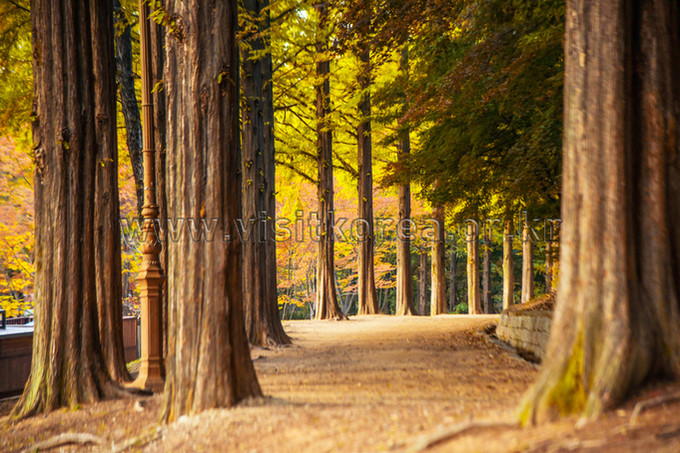
The large lake near the center is the park’s heart. In spring, the road around it turns into a cherry blossom tunnel, and in late autumn the wide avenues fill with yellow ginkgo and red maple leaves. The metasequoia path, with its tall rust-colored trunks, is where you will see people stopping every few steps for photos.
Incheon Arboretum
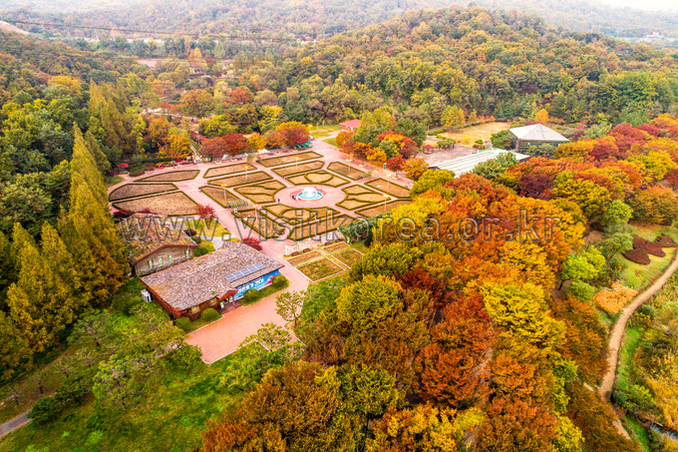
Inside the park is the Incheon Arboretum (인천수목원), a separate garden area with dozens of themed plant collections, from a pine garden to a garden designed around the five senses. There is also a greenhouse with tropical and succulent plants, which is a nice escape on a cold winter day. For anyone who loves plants and flowers, this is the part of the park that rewards slow walking.
Children’s Zoo
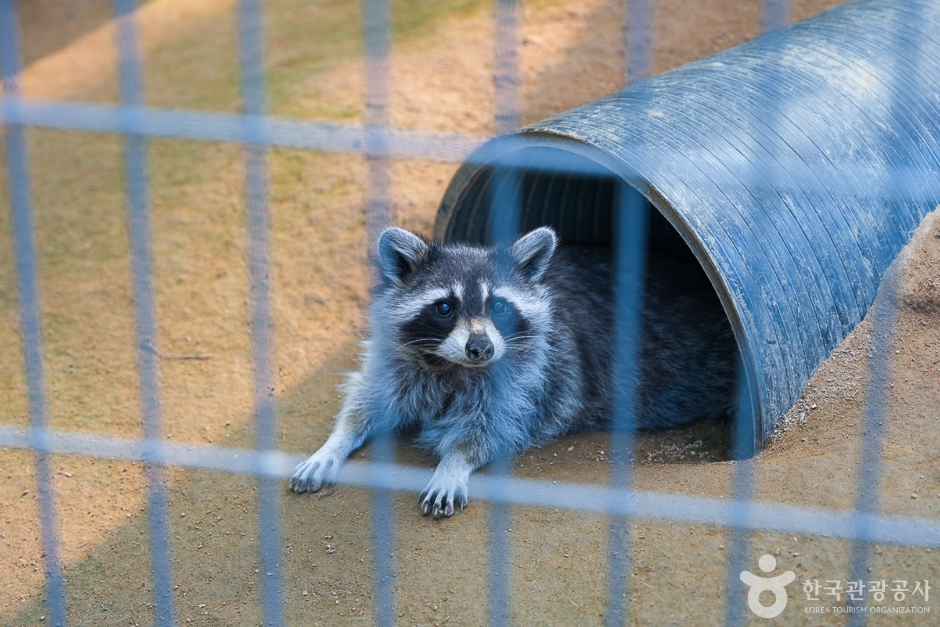
The children’s zoo (어린이동물원) is small and hands-on rather than dramatic. There are no large predators. Instead, you will find animals like rabbits, guinea pigs, Japanese macaques, fennec foxes, meerkats, parrots, and ostriches. Some of the birds here, including the cinereous vulture and the Eurasian eagle-owl, are protected as Natural Monuments in Korea.
A fun detail for English speakers: the Korean word doksuri (독수리) is usually translated as “eagle,” but it actually refers to the cinereous vulture. Each enclosure has an explanation board, so children can read about the animals as they go. It is the kind of zoo where a four-year-old will happily spend an hour.
Healing Forest Trail
Toward the hills, the Healing Forest Trail (치유숲길) leads into a quieter part of the park. The path is mostly flat, with benches and rest spots along the way, so it works for grandparents and small children as well as serious walkers. The entrance is marked by wooden arches, and in autumn the trail is covered in fallen leaves. If the lake area feels crowded on a weekend, this is where to go for silence.
Wood Culture Experience Center
The Wood Culture Experience Center (목재문화체험장) is a woodworking space where visitors can make things by hand. It has two workshops divided by age. One is for elementary school students through adults, who can build everyday items and small DIY furniture. The other is designed for children six and under, who make simple wooden crafts. Programs require booking, so check the official site before you go.
Pet Playground
In 2018, the park opened Incheon’s first public pet playground (반려동물 놀이터). Large dogs and small-to-medium dogs have separate fenced areas, and there is shaded seating for owners. It is free to use, which is one reason it is busy on weekends. Dog culture has grown fast in Korea over the past decade, and this corner of the park shows it.
Campground
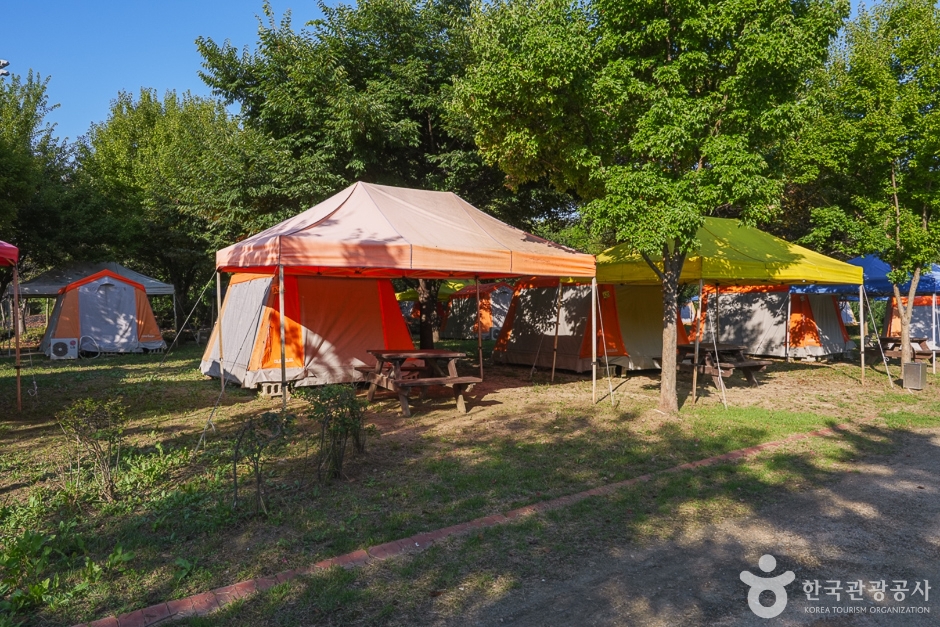
The park also has a campground, known as the Neonadeuri Campground (너나들이캠핑장), set under shady trees near the main parking lot. It feels surprisingly far from the city even though you are still inside Incheon. There is a small shop at the entrance for basic supplies. Sites need to be reserved in advance through the campground’s own booking system.
Renting a Bike: The Best Way to See It All
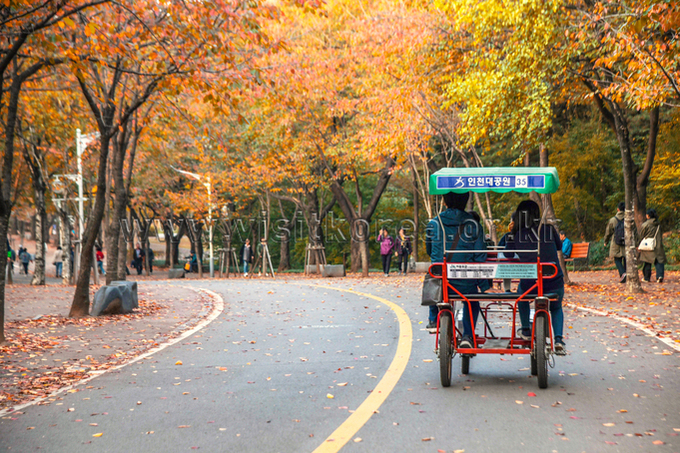
Because the park is so large, many locals skip walking altogether and rent a bike. The rental station is at the park’s bicycle plaza, and the paved roads inside are wide and well separated from the footpaths, so even beginners feel comfortable.
There are single bikes and multi-seat bikes. The multi-seat ones are what you will see couples pedaling together along the lake road, laughing because one person is always doing more of the work. Families rent the larger versions, which can carry two adults and two children. On busy spring and autumn weekends, the multi-seat bikes run out fast, and you may need to take a number and wait.
A few practical points matter here, especially for foreign visitors:
- Bring a physical ID. Rentals require an actual ID card, and a passport works for foreigners. A photo on your phone will not be accepted.
- Bring a physical card. Payment has been card-only, so have a credit or debit card with you.
- Adults rent. Children can ride, but an adult must make the rental.
- Prices are low. A single bike costs a few thousand won per hour, while multi-seat bikes cost more. Rates and rules can change, so check the official park site.
How Locals Picnic Here
There is a snack shop and a few places to eat inside the park, but locals know the prices are noticeably higher than outside. So most people come prepared. Before heading in, families stop at a supermarket or a Korean convenience store to stock up on drinks, fruit, snacks, and gimbap.
Then comes the essential piece of Korean picnic gear: the dotjari (돗자리), a thin, foldable ground mat. On a sunny weekend, the lawns look like a patchwork of dotjari in every color, with small pop-up tents for shade and kids running a circle around them. People play badminton, kick a soccer ball, toss a frisbee, or simply nap. School classes and church outings hold games in the open spaces, just as we did years ago.
If you plan to picnic Korean-style, a few tips help:
- Bring your own mat. Sitting directly on the grass is not common.
- Pack out your trash. Bins exist, but locals are expected to leave their spot clean.
- Arrive early on spring and autumn weekends. The shady spots near the lake go first.
Why Most Tourists Never Come Here
Most foreign visitors to Incheon see the airport, maybe Chinatown, and then head straight to Seoul. Incheon Grand Park is on the opposite side of the city from the famous port areas, and it does not have a single iconic landmark to put on a postcard. Its appeal is quieter: space, trees, and the everyday life of local families.
That is also exactly why it is worth the trip. If you want to see how Koreans actually spend a free Saturday, this is a more honest picture than any shopping street. You will see grandparents walking with grandchildren, couples on shared bikes, office workers napping under trees, and kids hunting for something in the bushes.
Right Outside the Park: An 800-Year-Old Ginkgo
Just outside the park boundary in Jangsu-dong stands one of Incheon’s oldest living things: the Jangsu-dong Ginkgo Tree (장수동 은행나무). It is estimated to be around 800 years old and about 30 meters tall, and it was designated a Natural Monument in 2021. In late autumn, when its leaves turn gold, people come from all over the region to see it. The tree deserves its own story, so I will cover it, along with the local restaurants around it, in a separate post.
The tree deserves its own story, so I wrote a separate guide to the Jangsu-dong ginkgo tree, including the legends around it and the loach soup restaurants nearby.
Visiting Incheon Grand Park
Getting There
The easiest way is by subway. Take Incheon Subway Line 2 to Incheon Grand Park Station (인천대공원역), which is the only above-ground station on the line. Leave through Exit 3, and the park’s south gate is only about 150 meters away. From Seoul, take Seoul Subway Line 1 to Juan Station, transfer to Incheon Line 2, and ride toward Unyeon.
If you are driving, the park has several parking lots, and there is a small daily parking fee. On peak cherry blossom and autumn foliage weekends, the lots fill up early, so the subway is the less stressful option.
Hours, Fees, and Seasons
| Item | Details |
|---|---|
| Admission | Free to enter the park |
| Park hours | Opens early in the morning and closes in the evening; hours vary by season |
| Facilities | Zoo, arboretum, and workshops keep shorter daytime hours |
| Best seasons | April for cherry blossoms, late October to early November for autumn leaves |
Opening hours, rental prices, and program schedules change from time to time, so check the official Incheon Grand Park website before you go.
Pairing It With Other Namdong-gu Stops
Incheon Grand Park sits in the same district as two other places I have written about. Moraenae Market, the traditional market where I followed my mother on grocery runs as a child, is a short ride away. Sorae Port, with its fish market and salted seafood stalls, makes a good second stop if you want to end the day with fresh seafood. If you prefer a smaller, more central city park, Incheon Citizens Park in Juan-dong is another option on the same subway line.
Final Thoughts
Some places in a city are built to impress visitors. Incheon Grand Park was built for the people who live here, and that is what makes it special. It has watched generations of Incheon kids run across its lawns looking for folded paper notes, and it is still doing that today.
If you come, bring a mat, pack some gimbap, and give yourself a full day. Rent a bike, get a little lost in the forest trail, and find a spot by the lake. You will not find a grand monument here. You will find something better: an ordinary Korean weekend, done well.
Photos: © Korea Tourism Content Lab / Korea Tourism Organization (KOGL Type 1; photographers as credited on each image); © Korea Tourism Content Lab / Korea Tourism Organization (KOGL Type 3).