Sorae Port sits at the bottom edge of Incheon, where a tidal creek separates the city from Gyeonggi Province. It is a working fishing harbor with a large seafood market attached, and it draws enormous weekend crowds from across the metropolitan area.
Here is the honest version: the fish market itself is not the reason to come. It is a fish market — busy, loud, and priced for tourists. What makes Sorae Port worth a half day is what surrounds it. A colonial-era salt farm that the wetland has slowly taken back. A footbridge that used to carry a train barely wider than a car. Eight thousand years of tidal mudflat sitting inside a city of three million.
What Sorae Port Actually Is
Sorae is a designated national fishing harbor, straddling the boundary between Namdong-gu in Incheon and Siheung in Gyeonggi Province. The name is thought to derive from an older Korean word meaning a narrow tidal inlet, which is exactly what the geography is.
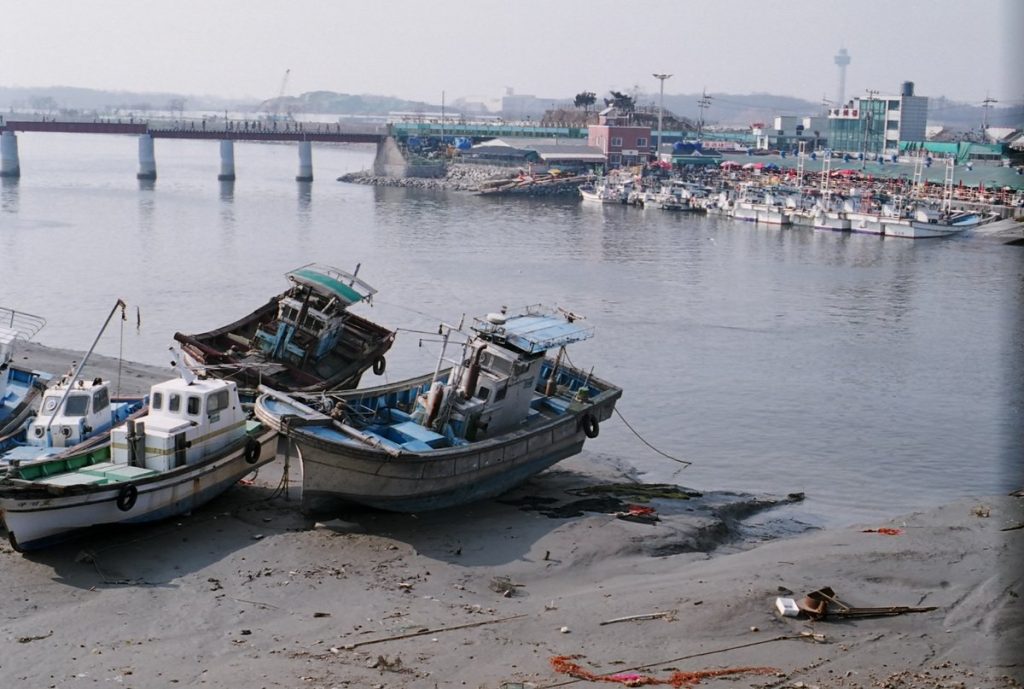
Boats still work out of here. What you see tied up along the water is not decoration — crews unload catch, and the market buys it. That is genuinely unusual this close to Seoul, and it is the thing worth registering while you walk around.
The Salt Farm That Was Here First
Before the market, this was salt.
Construction on Sorae Salt Farm began in 1934 under the colonial Government-General, and the works were completed in stages between 1935 and 1937. It was one of the largest sun-dried salt operations in the country. Seawater was let in at high tide and moved through a reservoir, two evaporation ponds, and a crystallizing bed until what was left was salt.
One detail that rarely makes it into English accounts: much of the construction was carried out by Chinese salt-making technicians. The Shandong community that had settled in Incheon after 1884 supplied the expertise, which is a thread running straight back to the neighborhood we covered in our guide to Incheon Chinatown.
By the 1970s this was the biggest salt-producing site in South Korea. Then the economics collapsed, and in July 1996 the salt farm closed for good.
What the Wetland Took Back
The site sat abandoned for a few years. In June 1999 Incheon opened part of it as Sorae Wetland Ecological Park, and after a series of expansions the full park opened in 2009.
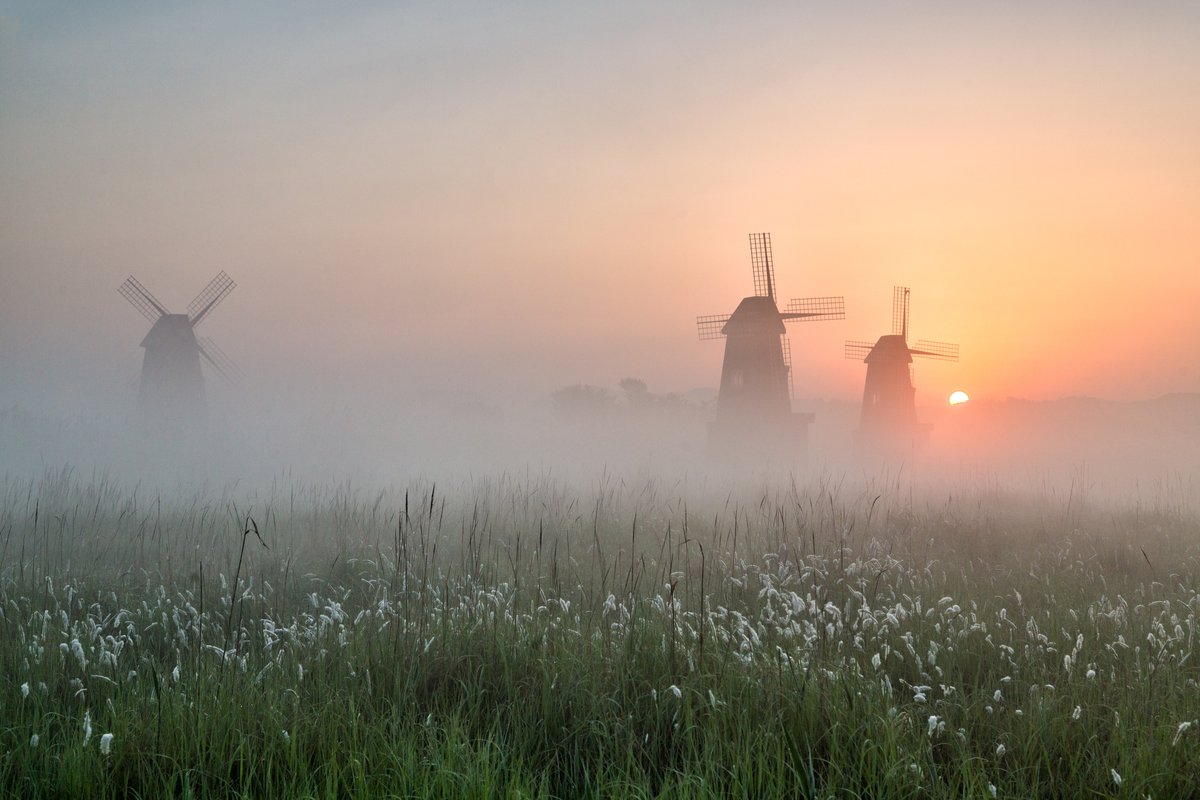
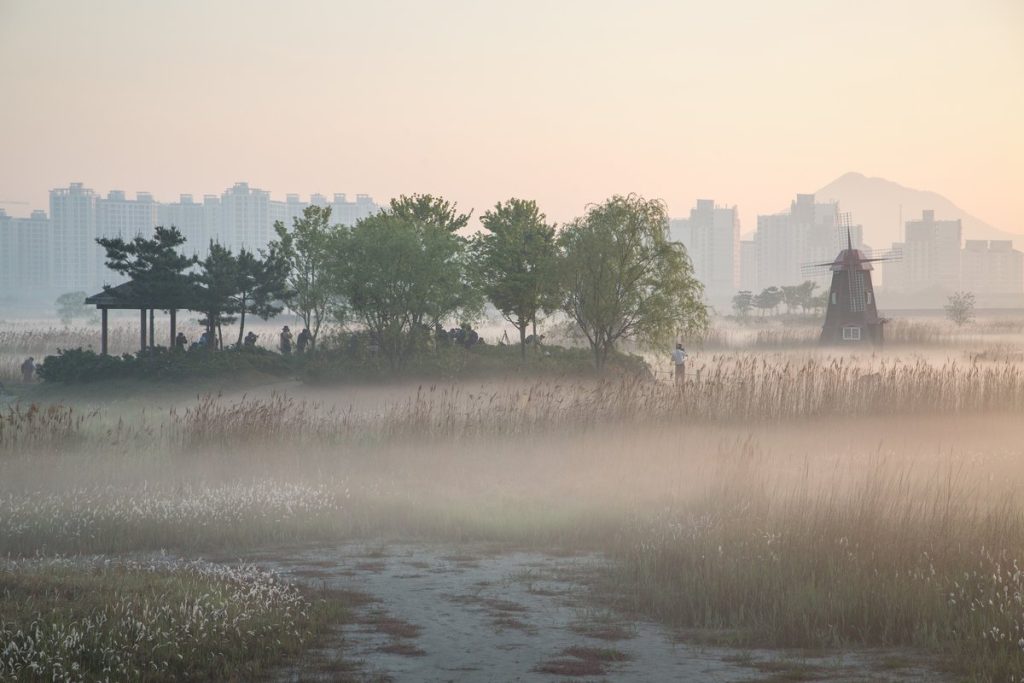
What is there now is strange and quite beautiful. The old evaporation ponds are still legible as rectangles in the ground. Three windmills stand in the reeds — the structures used to move seawater between ponds, rebuilt as they would have looked. Boardwalks run out over the tidal channels. An exhibition hall covers how sun-dried salt was made, and a small working salt bed still produces some.
The plant life is the part people photograph. Reeds cover most of the site, and in autumn the salt-tolerant chilmyeoncho turns the flats deep red. The mudflat underneath is estimated at around eight thousand years old.
Almost none of this is signposted in English, and almost no foreign visitors come. On a weekday it is close to empty.
The Bridge the Small Train Used to Cross
The other reason to come is a footbridge that most visitors cross without knowing what it is.
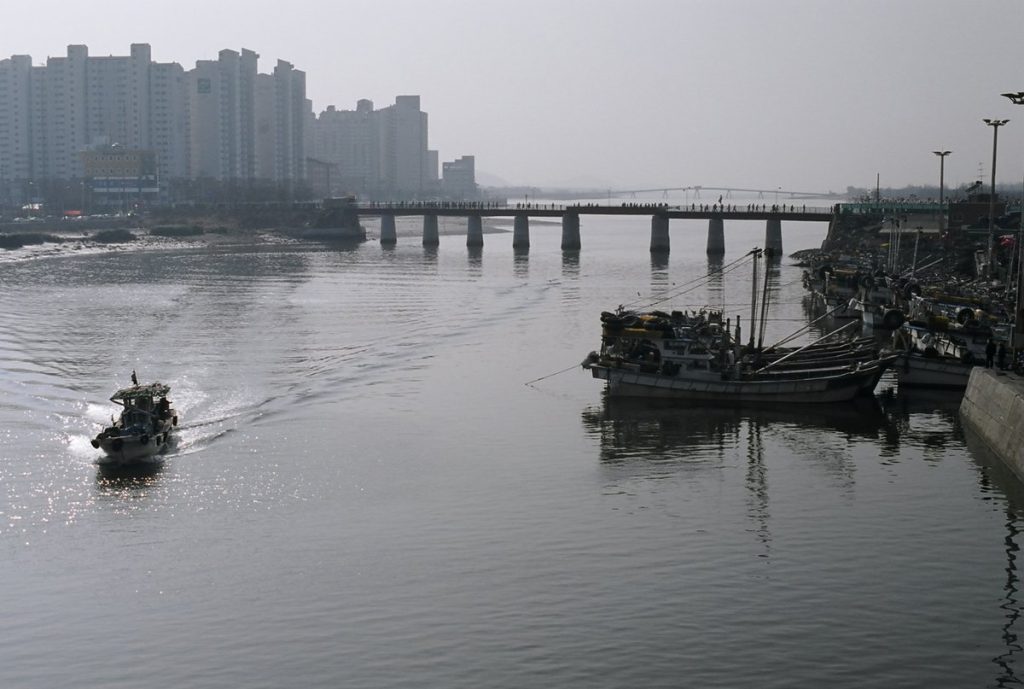
Sorae Iron Bridge opened in 1937 as part of the Suin Line — a narrow-gauge railway built to move salt from the Gyeonggi Bay salt fields to the port at Incheon. Narrow gauge means exactly that: the trains were small enough that passengers sitting opposite each other could reach across and shake hands.
The bridge is 126.5 meters long, ten meters above the water, and 1.2 meters wide. It was never built for people. But there was no other way to cross to Wolgot on the Siheung side, so residents walked it anyway — during the Korean War, and for decades afterward, despite official prohibition and a real accident rate.
Trains stopped in 1994 and the line closed in 1995. The rails came out, a deck and railings went in, and it has been a footbridge ever since. Crossing it now takes two minutes and is completely safe. Standing in the middle, you are on the provincial boundary.
If you want the full story, Sorae History Museum is a short walk from the station and has a preserved narrow-gauge steam locomotive outside.
The Fish Market: What to Know Before You Buy
The market is large, covered, and aggressively busy on weekends. Tanks of live fish, crates of blue crab, shrimp by the kilo. It is worth walking through.
It is also worth being careful. Prices here are negotiated, not posted. This is normal at Korean fish markets, but it catches visitors out, and Sorae has a reputation among Incheon residents for being expensive.
- Ask the price before you agree to anything. Not after it is bagged.
- Confirm the weight. Ask to see the scale.
- Ask what the preparation fee is. Most stalls will send you to an upstairs restaurant to have your purchase cooked, and that service is charged separately, per person.
- Compare two or three stalls. They sell the same thing at different prices, a few meters apart.
None of this means don’t buy. It means treat it as a market, not a shop.
What to Eat
Seasonality matters more here than anywhere else on this site.
- Blue crab — spring and autumn. Steamed, or raw-marinated in soy sauce.
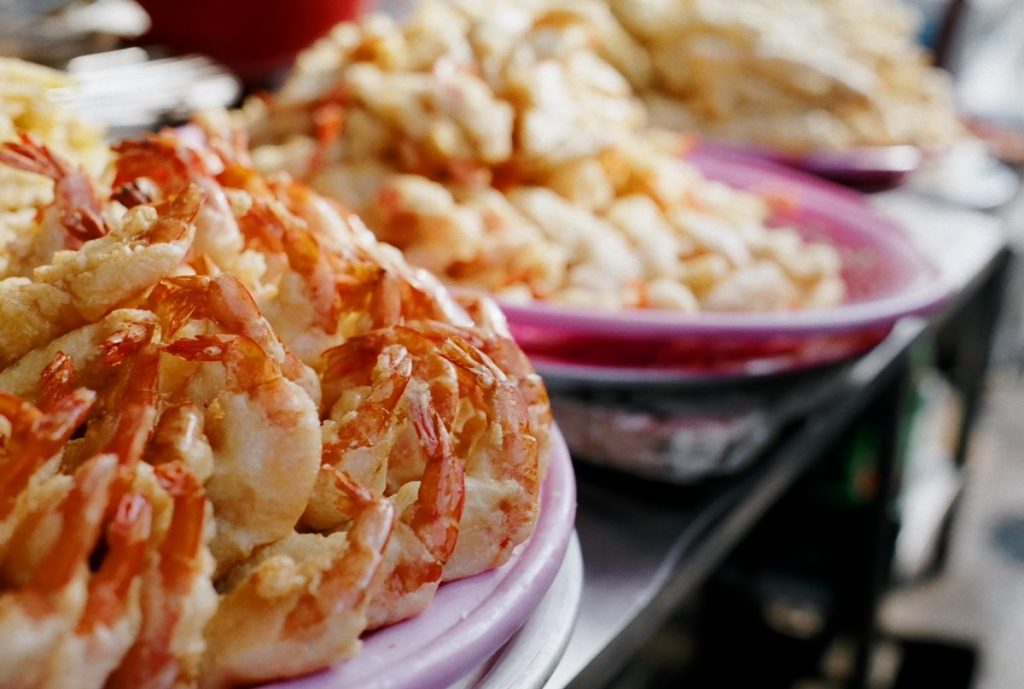
- Shrimp — autumn is the season. Salt-roasted shrimp is the classic order.
- Grilled clams and shellfish — year-round, and the easiest thing to order without Korean.
If a market meal is what you’re after but you’d rather skip the negotiation, Sinpo International Market in central Incheon has fixed prices and street food you can point at.
How to Get There
Take the Suin-Bundang Line to Soraepogu Station. The market is a five-minute walk. From Seoul the trip runs roughly an hour and a half depending on where you transfer.
The wetland park is a separate destination about twenty minutes on foot from the market, or a short bus ride. Do not assume they are adjacent — plan them as two stops.
This is a different line from the one serving central Incheon, so it pairs badly with a Chinatown day but well with a slow half day on its own. If you want the historic port district instead, start at Dongincheon Station.
Sorae Port is in Namdong-gu, the same district as Incheon Grand Park. If you want a quieter half of the day after the noise of the fish market, the park’s lake, arboretum, and bike paths make a relaxing contrast.
When to Go
- Autumn is the best season. Shrimp and crab are in, and the salt flats turn red.
- Go on a weekday. Weekend crowds at the market are severe.
- Check the tide. At low tide the boats sit on mud; at high tide the channel fills. Both are worth seeing, but they are completely different scenes.
- Bring layers. There is no shelter on the wetland boardwalks and the wind off the flats is cold from October.
Why It Is Worth the Trip
Sorae is not a pretty harbor town. It is a fishing port with apartment towers behind it and a highway overhead.
But the sequence of what happened here is unusual and legible on the ground. A colonial salt works built by Chinese technicians on Korean mudflat. A narrow-gauge train that carried the salt out and later carried people who had nowhere else to walk. Both gone by 1996. And then the tide came back over the ponds, and the reeds took the rest.
You can walk all of that in an afternoon, and almost nobody who comes here for the seafood ever does.
Sorae isn’t the only Incheon waterfront with a price reputation — our guide to Wolmido covers what locals say about eating there.
Much of Sorae’s seafood ends up in neighborhood markets across Incheon. One of the best places to see that everyday side of it is Moraenae Market in Guwol-dong, a local market that has served the same neighborhood for around four decades.
Image credits: “소래포구 일출” and “소래포구 아침” by 황기모; “소래포구_0026”, “소래포구_0034”, and “소래포구_0048” by 김민지, licensed under CC BY. All images via Korea Copyright Commission.