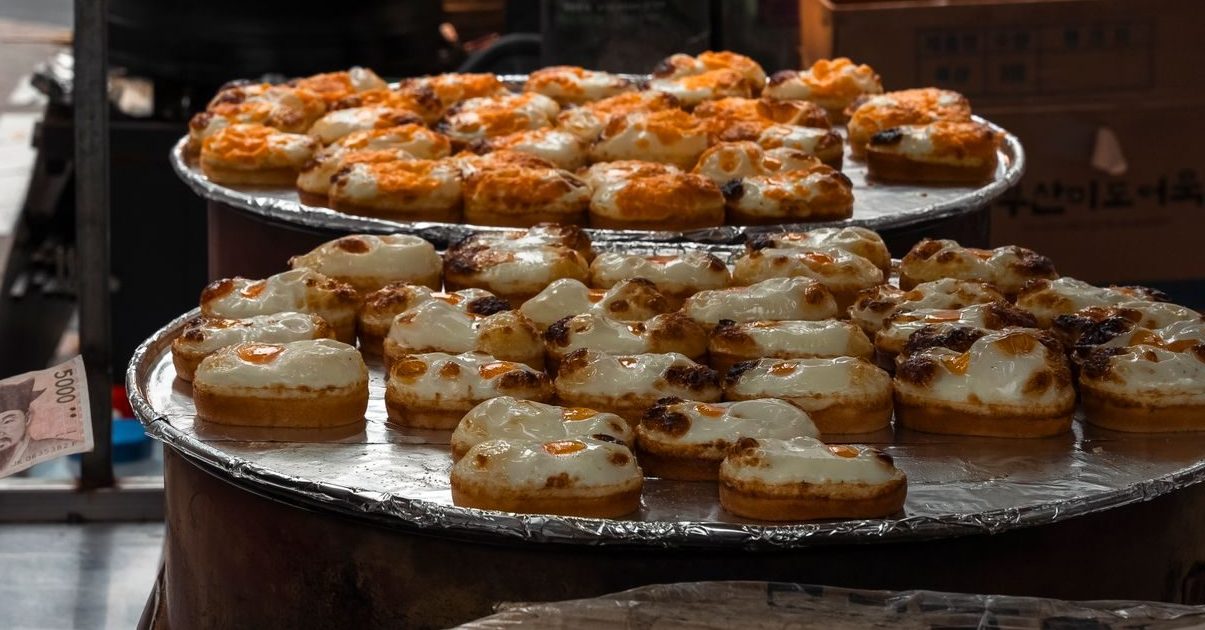
Korean egg bread, called gyeran-ppang (계란빵) in Korean, is the warm, oblong street snack that lines winter markets and subway exits across the country. The name is literal: gyeran means “egg” and ppang means “bread,” and that is exactly what you get — a soft, pancake-style loaf with a whole egg baked right into it.
It made international headlines in October 2025 when CNN named it one of the “World’s 50 Best Breads,” alongside baguette from France and pão de queijo from Brazil. For a lot of foreign readers, that was the first time they had even heard the word gyeran-ppang. For Koreans, it has been a cold-weather staple for decades.
What It Tastes Like
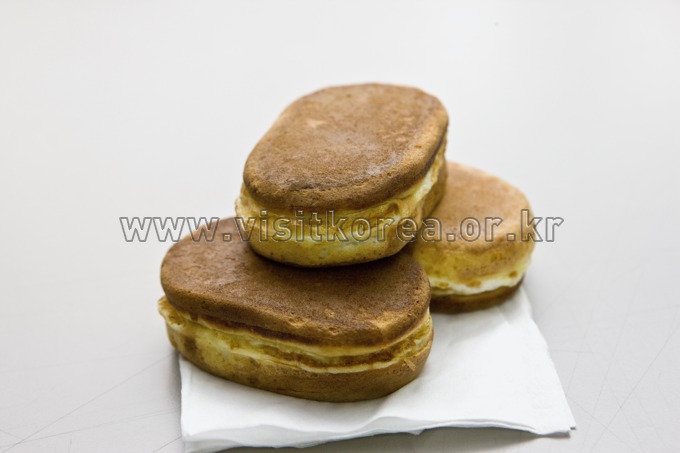
The batter is closer to a mild pancake or cornbread than to a cake — lightly sweet, with a soft, slightly springy crumb. The egg cooks right into the top or the center depending on the style (more on that below), so every bite carries both the sweetness of the bread and the savoriness of the egg. Plain versions are simple and comforting; topped versions with cheese, ham, or chopped parsley add a salty contrast that balances the sweetness.
It is always sold and eaten warm. Vendors wrap each piece in a small paper or cardboard sleeve straight out of the machine, so you can hold it without burning your fingers. That warmth is part of the appeal — this is not a snack anyone eats cold.
How Koreans Actually Eat It
Gyeran-ppang is grab-and-go food. Office workers buy one on the way to the subway, students pick one up between classes, and it is one of the most common things sold outside traditional markets from late October through March. Nobody sits down to eat it — you eat it walking, still steaming, straight from the wrapper.
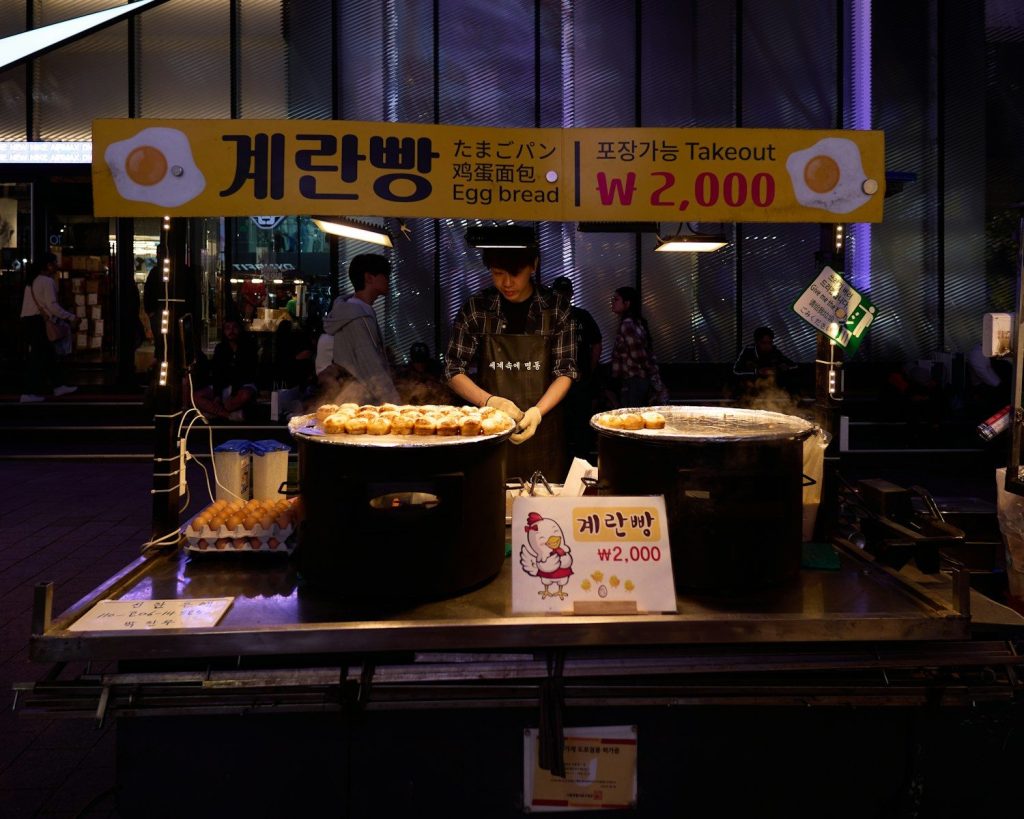
It also functions as a cheap, filling breakfast substitute. At roughly 1,500–2,500 won a piece, it is far cheaper than a coffee shop pastry, and the whole egg inside makes it more filling than most other street snacks. That combination — cheap, hot, and filling — is a big part of why it has stuck around for so long.

Source출처 : ⓒ한국관광콘텐츠랩-알렉스분도
Two Styles You’ll Actually Find
There are two versions on the street, and it is worth knowing the difference so you are not surprised by either one.
- Egg-inside style — an older, more old-school format where the whole egg is folded into the batter before baking, so it sits inside the loaf like a filling. This is closer to what most Koreans mean when they talk about the “original” gyeran-ppang from decades ago.
- Egg-on-top style — the more common version today, made in a machine with rows of oblong molds. Batter goes in first, then a raw egg is cracked directly on top of each one before it cooks, so the egg sits visibly on the surface once it’s done. This is the version most street carts use now because it is faster to make in volume.
Either way, the machine itself is part of the show. Watching a vendor pour a dozen molds of batter, crack a dozen eggs in quick succession, and flip a dozen breads without missing one is its own small piece of street theater.
Where It Came From
Gyeran-ppang is a street food invention, not a traditional or royal dish — there is no centuries-old story here. It grew out of Korea’s broader family of “bbang” street snacks (bungeoppang, hoppang, and similar cheap wheat-based treats) sold from small carts, and vendors who worked those carts through the 1980s say the snack’s real jump in nationwide popularity came, somewhat ironically, during the 1997–98 Asian Financial Crisis, when Koreans were looking for food that was both filling and cheap. That timing lines up with several other street snacks from the same era, and longtime vendors still describe it that way today, though it is worth noting this is oral history from people who were selling it at the time rather than a documented company record.
What is better documented is where the snack stands now: it survived the trend cycles that killed off plenty of other street foods, and in 2025 it got its biggest international recognition yet with the CNN “World’s 50 Best Breads” list — the kind of validation that has sent a wave of foreign visitors looking for it for the first time.
Where to Try It
Look for it around university neighborhoods, subway station exits, and traditional markets — anywhere with steady winter foot traffic. Carts tend to disappear in the warmer months and reappear as soon as the weather turns, so your best odds of finding one are roughly October through March. If you see steam and a stack of empty eggshells next to a cart, that is the signal.
If you want to try making it at home, the batter is a simple sweet pancake mix (flour, sugar, baking powder, milk, melted butter, a little vanilla), poured into a muffin tin or mini loaf pan with a raw egg cracked on top of each one, then baked until golden. It is a forgiving recipe and a good one to try if you can’t get to Korea to buy it fresh off a cart.
Source 출처 : ⓒ한국관광공사 전형준
A Small, Steamy Piece of Korean Winter
Gyeran-ppang will probably never be the headline dish that brings someone to Korea, but it is one of the most honest windows into how ordinary Koreans actually eat in winter — cheap, warm, portable, and unpretentious. If you’re visiting between October and March, it is worth the 2,000 won and the minor risk of burning your fingers.
For two more Korean winter street snacks with the same cheap-and-cheerful spirit, see our guides to bungeoppang, the fish-shaped red bean pastry, and roasted sweet potatoes sold from drum-can carts. And if you’re curious how Korean convenience stores fit into this same grab-and-go food culture, our guide to Korean convenience stores covers the other side of quick Korean eating.
Source: CNN Travel, “World’s 50 Best Breads” (October 2025).
Image credits: Pexels / Unsplash via Instant Images.