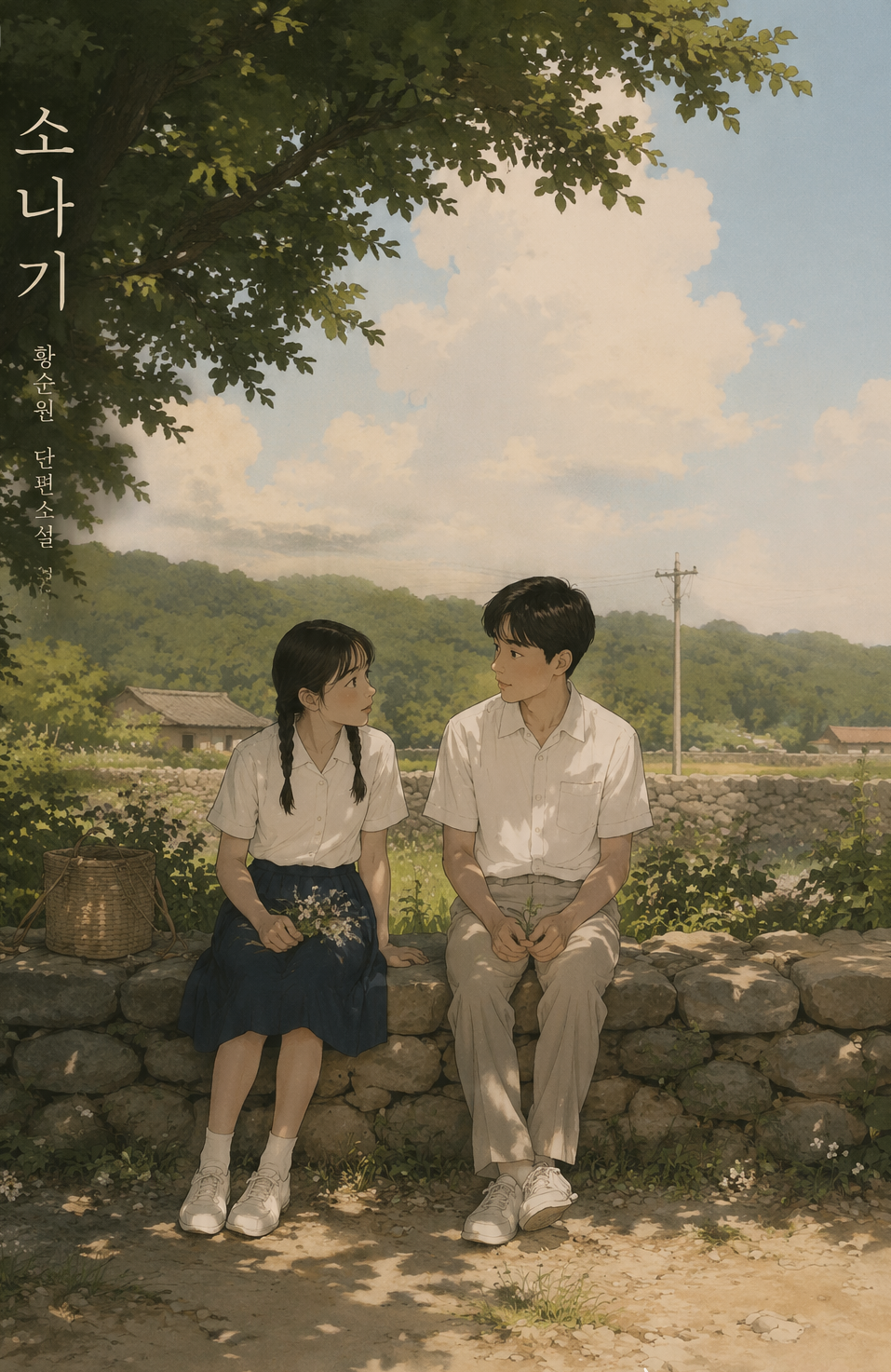
Ask any Korean, from a teenager to a grandparent, about a short story called “Sonagi,” and watch their expression soften. For more than sixty years, this brief, aching tale of first love has been taught in Korean classrooms, so nearly everyone in the country has read it at the same tender age. It is arguably the most beloved short story in all of modern Korean literature. If you want to understand the quiet, bittersweet heart of Korean storytelling — the same sensibility behind so many K-dramas — Sonagi is the perfect place to begin. Here is a guide to the story and how to read it in English.
The Master Behind the Story
Sonagi was written by Hwang Sun-won (1915–2000), widely regarded as one of the greatest masters of the Korean short story. Born in what is now North Korea and educated in Japan, where he earned a degree in English, Hwang built his reputation on spare, luminous stories about ordinary people finding tenderness in hard times.
One detail reveals his character: during the Japanese colonial period, when many writers gave in to pressure to publish in Japanese, Hwang refused, choosing to write in Korean even when it meant not publishing at all. That quiet integrity runs through his fiction, which returns again and again to purity, innocence, and the fragile beauty of human connection. He first published Sonagi in 1953, and it quickly became his signature work.
What Happens in Sonagi
The story is short enough to read in a single sitting, and its plot is deceptively simple.
A country boy meets a girl who has just moved from Seoul to his rural village — she is the great-granddaughter of a once-prominent local family. At first he is shy and awkward around her, even a little standoffish. But over a series of gentle encounters by a village stream, the two children grow close. One afternoon, exploring the hills together, they are caught in a sonagi — a sudden, brief summer downpour — and take shelter side by side, a small moment of closeness that becomes the emotional center of the story.
Then comes the turn that has broken Korean hearts for generations. (A gentle warning: the ending is the whole point, so skip ahead if you’d rather discover it yourself.) After that day, the girl falls ill. She never fully recovers. The story closes with the boy overhearing, almost by accident, that her final wish was to be buried in the very clothes she wore on the day of the shower — the day with him. It is a masterclass in saying the most by showing the least.
Why “Sonagi”? The Meaning of the Title
The title itself carries the story’s meaning. A sonagi is a sudden cloudburst that appears out of a clear summer sky, drenches everything for a few intense minutes, and then vanishes as quickly as it came. It is the perfect metaphor for the children’s love: brief, unexpected, overwhelming, and gone far too soon — yet impossible to forget. Hwang never spells this out. He trusts the rain to say it for him, which is exactly why the story is studied as a model of literary craft.
The Story Every Korean Knows by Heart
It is hard to overstate how deeply Sonagi is woven into Korean life. Because it has appeared in school textbooks for decades, it functions as a shared memory across generations — a rare story that grandparents and grandchildren have both read as children.
Its influence spreads far beyond the page. It was adapted into a well-loved 1978 film, referenced in countless dramas and songs, and honored with a Google Doodle in 2015 for the 100th anniversary of Hwang’s birth. There is even an entire literary theme park devoted to it — Sonagi Village, part of the Hwang Sun-won Literary Village in Yangpyeong, just east of Seoul, where visitors can walk through scenes from the story. For a two-thousand-word tale about two children, that is an extraordinary cultural footprint.
How to Read Sonagi in English
Here is where Sonagi differs from Korea’s classic novels. Unlike longer works with famous standalone editions, this short story is usually found inside anthologies of Korean fiction rather than as a book of its own. It has been translated several times, sometimes under the titles “The Shower” or “Rain Shower,” so the version you find may vary.
The practical tip: look for collections of modern Korean short stories in English, where Hwang Sun-won is almost always represented. Because the story is so brief, it makes an ideal first taste of Korean literature — you can read it in the time it takes the rain to pass. And if you’d rather watch than read, the gentle 1978 film adaptation captures the mood beautifully.
Why It Still Moves Readers
You do not need to be Korean to feel Sonagi. Its subject is universal: the first time we feel something for another person, and the first time we learn that beautiful things do not last. That combination of tenderness and loss is the same emotional register that makes Korean films and dramas resonate with global audiences today. Read Sonagi, and you will recognize its DNA everywhere in Korean culture.
Keep Exploring Korean Books
Want to go further back? Try our beginner’s guides to two Joseon-era classics: The Nine Cloud Dream, Korea’s most beloved classic novel, and The Story of Hong Gildong, its most famous folk hero. And if you’d like to see the real Korean countryside that stories like Sonagi capture so well, take a look at Okjeong Lake, one of the country’s most beautiful hidden getaways.
Sonagi has been adapted for the screen twice — here’s which version to watch.