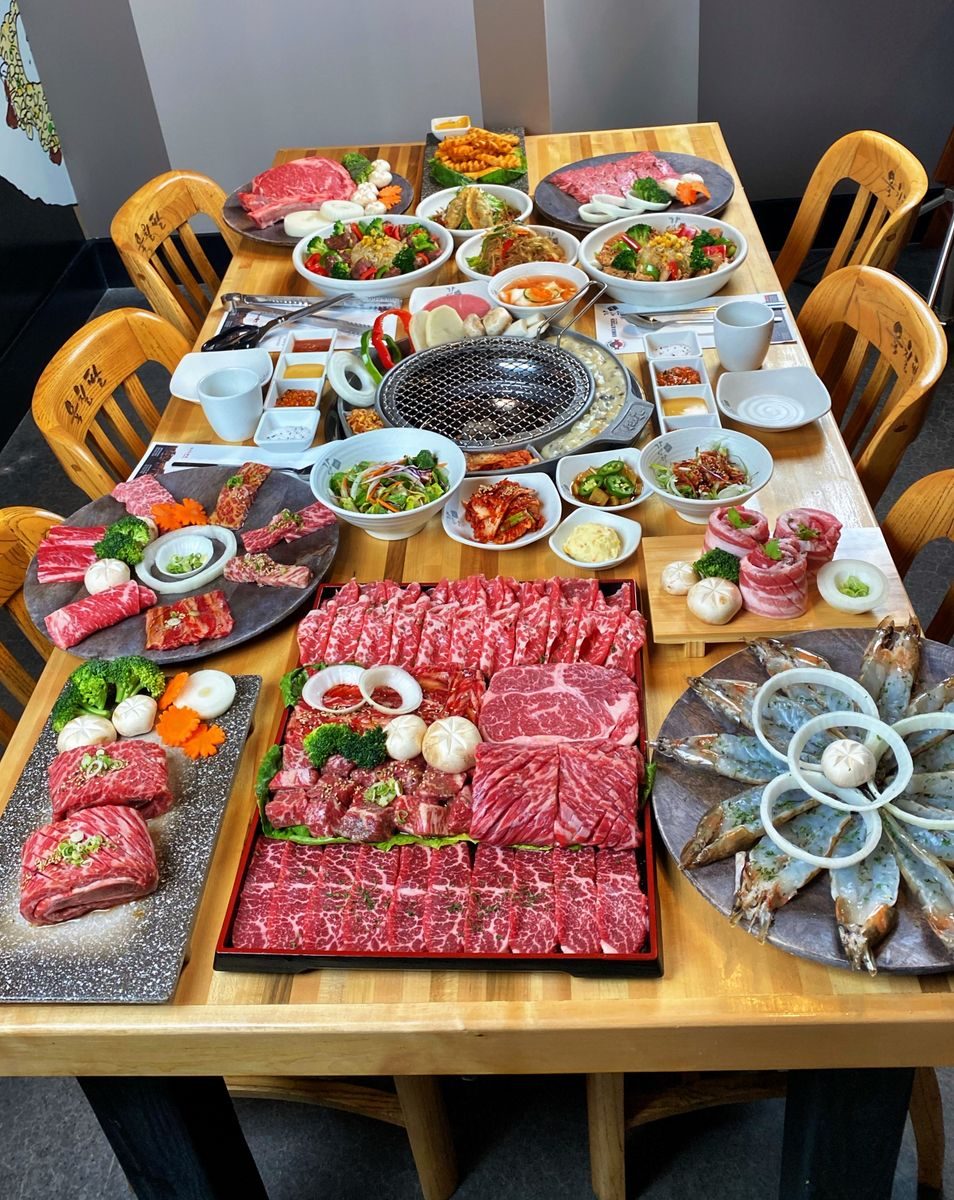
Korean restaurant etiquette involves a handful of conventions that nobody explains, because everyone here grew up with them. Most of them are the opposite of what you would expect coming from a Western restaurant, and getting them wrong tends to make visitors more cautious than they need to be.
The Side Dishes Are Free, and So Are Refills
The small dishes that arrive before your food — banchan — are included. You did not order them and you will not be charged for them. Neither will you be charged when you ask for more.
This is the single most common misunderstanding. Visitors ration the kimchi because they assume each dish costs money, then discover at the end that it was all included. Ask for a refill by holding up the empty dish and saying “deo juseyo” (더 주세요, “more please”).
Two exceptions worth knowing. Refills generally do not apply to anything with meat or seafood in it, and some restaurants — particularly buffet-style banchan bars — have you serve yourself. And finishing every dish is not expected. Leaving banchan is normal.
Water, Cups, and the Wet Towel
Water is free and self-service in most places. There will be a cooler or a jug on the table, along with a stack of small stainless steel cups. Nobody is going to bring it to you, and waiting for someone to do so means waiting a long time.
The wet towel that arrives with your setting is for your hands, not your face. It is also free.
Yes, Press the Button
Many Korean restaurants have a call button on each table. Some do not, in which case the expected move is to call out “jeogiyo” (저기요) across the room.
Both feel aggressive to visitors from cultures where you wait to be noticed. Neither is rude here. Korean servers do not circle the room asking how everything is — they come when called, and they will not come otherwise. A table waiting patiently for eye contact is a table that has been forgotten.
You Pay at the Counter
The bill is usually left on your table shortly after the food arrives. That is not a hint to leave. When you are finished, take it to the counter near the entrance and pay there.
Asking a server to bring a card machine to your table works in larger restaurants but is not the default. In smaller places you will be waved toward the front.
Do Not Tip
There is no tipping in Korea. Not at restaurants, not at cafes, not in taxis.
Leaving money on the table is likely to result in someone chasing you down the street to return it. If service was exceptional, saying “jal meogeosseumnida” (잘 먹었습니다, “I ate well”) on the way out is the local equivalent, and it lands better than cash would.
The Food Is Shared
Stews, grilled meat, and most main dishes arrive in the center of the table for everyone. You are not each getting your own portion, and dishes are frequently sized for two or more — solo diners at some restaurants will find certain items unavailable for one person.
Eating directly from the shared pot with your own spoon is standard among people who know each other. If that is uncomfortable, ask for a small bowl: “apjeopsi juseyo” (앞접시 주세요).
A few table conventions come with this. Your rice bowl and soup stay on the table rather than being lifted to your mouth, and chopsticks should not be left standing upright in rice — that arrangement belongs to memorial rites for the dead. More on Korean table manners here.

Someone Will Probably Pay for Everyone
Splitting the bill evenly is increasingly common among younger Koreans, but the older convention is that one person covers the whole meal — typically the eldest, the person who suggested it, or whoever is doing the hosting.
If a Korean friend or colleague pays for you, the expected response is not to insist on repaying immediately but to cover the next round. Coffee afterward is the standard follow-up, and it is a real system rather than a courtesy.
Shoes, Sometimes
Traditional restaurants with floor seating require you to remove your shoes at the entrance to the dining area. There will be a shelf or a cubby, and everyone else’s shoes will already be there.
Wear slippers indoors. Korean households remove outdoor shoes, but bare heels on concrete still carry. Indoor slippers are standard partly for this reason.
The same call-when-you-need-it, defer-to-elders logic carries onto public transit on the way there. Korean subway and bus etiquette has its own version of “ask for what you need” — priority seats work differently than you’d expect.
What Nobody Warns You About
Two practical things that catch visitors off guard.
Scissors are normal. At a barbecue table, someone will cut the meat with kitchen scissors, often the server. Cold noodles get cut the same way. It is not a novelty.
Lunch is fast. The weekday lunch hour is genuinely an hour, and restaurants near office districts turn tables quickly between roughly noon and one. Nobody is rushing you personally, but the pace at that time of day is brisk. Arrive before noon or after one if you want to linger.
The same self-serve logic carries over once the meal ends. Groups almost always move somewhere else afterward, and more often than not that means a cafe — where you order at the counter, carry your own drink, and nobody rushes you out. Korean cafe culture works on the same quiet arrangement.
The Short Version
The underlying logic of Korean restaurant etiquette is that you will ask for what you need rather than being asked. Once that clicks, the whole system becomes easier to use than the one you are probably used to.
For the faster and cheaper option, see how Korean convenience stores work.
Eating out is only part of the picture, and a smaller part than most visitors assume. Our guide to the everyday Korean meal covers what gets cooked when nobody is going anywhere.