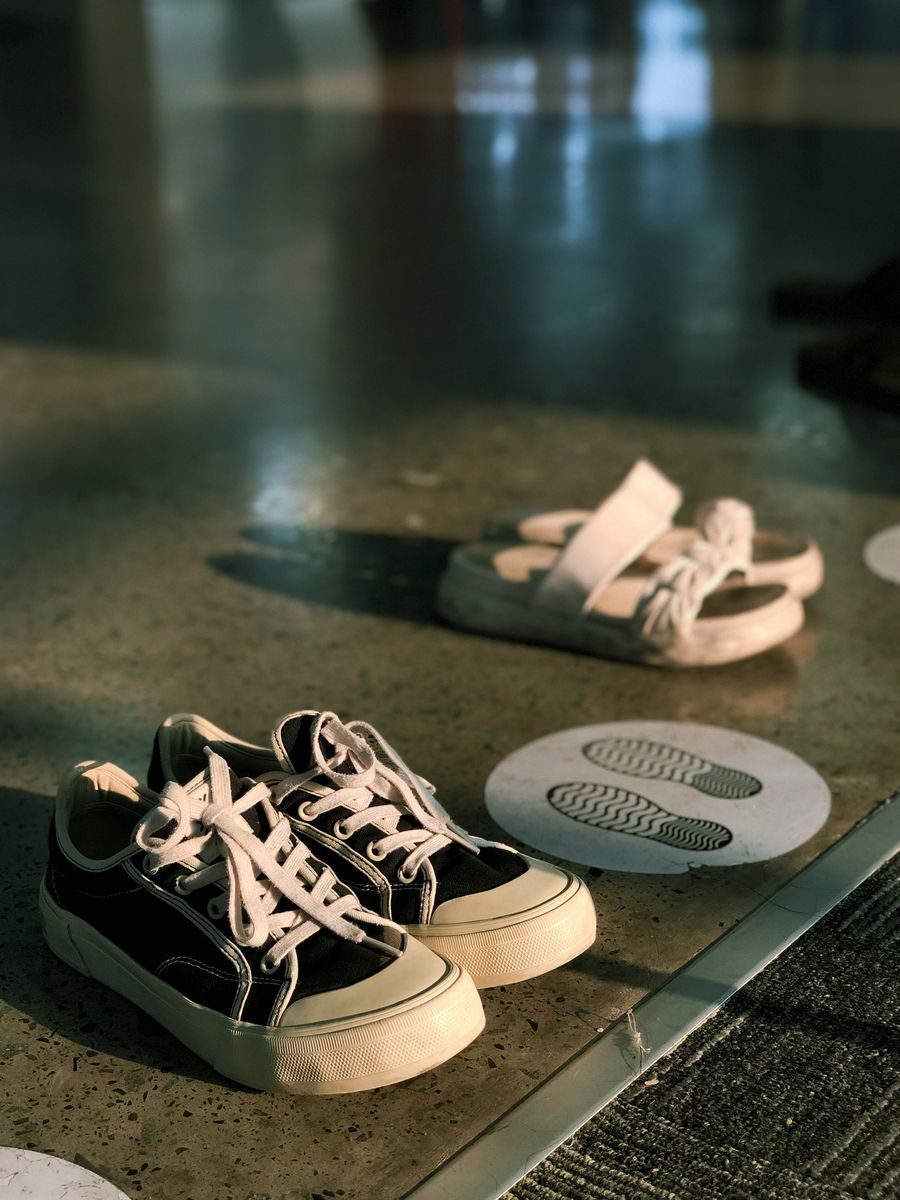
Everyone knows you take your shoes off in a Korean home. Most guides stop there, as though it were an arbitrary custom you simply have to remember.
It is not arbitrary. Koreans remove their shoes because of a heating system invented two thousand years ago, and once you understand that connection, a great deal about Korean homes, restaurants, and furniture suddenly makes sense.
It Starts With the Floor
Korean homes are heated from below. A traditional system called ondol (온돌) ran smoke from the kitchen fire through channels beneath a masonry floor, warming the stone slabs, which then radiated heat upward through the room. Archaeological remains of brick and stone ondol date back more than two thousand years on the Korean peninsula.
Western heating warms the air around a fire or radiator. Ondol warms the floor itself. That difference produced everything else.
Because the floor was the warm surface, people sat on it. Because they sat on it, they ate on it. Because they ate and sat on it, they slept on it. The floor became the primary living surface rather than something you walked across to reach furniture — and at that point, wearing outdoor shoes indoors becomes obviously unacceptable.
Korea’s Cultural Heritage Administration designated ondol culture as National Intangible Cultural Heritage in 2018, listing it not as an architectural technique but as a culture — the whole pattern of living that the heated floor produced.
It never went away
Modern Korean apartments still heat from below. The stone slabs were replaced with hot water pipes running under the floor, but the principle is identical, and a Korean apartment in winter has a warm floor and no radiators.
This is why the shoe custom shows no sign of weakening. It is not nostalgia. The floor is still the warm surface, and people still sit on it.
What those modern apartments look like inside, and why they all resemble each other, is covered in Korean apartments.
The Threshold
Korean entryways have a specific architectural feature that makes the rule physical rather than abstract. The hyeon-gwan (현관) is a recessed entry area, usually a step lower than the rest of the home. You stand in it with shoes on. You step up into the house without them.
The height difference does the work. There is no ambiguity about where the boundary is, and no possibility of drifting inside with shoes on by accident. Even small studio apartments have this step.
Shoes are left in the hyeon-gwan, generally pointing toward the door. Turning them around is a small courtesy — it means you can step into them and leave without shuffling.
Where Else Shoes Come Off
This is what catches visitors out. The rule is not limited to homes.
| Place | Shoes off? |
|---|---|
| Private homes | Always |
| Traditional restaurants with floor seating | Yes, at the raised platform |
| Temples and temple halls | Yes |
| Guesthouses and hanok stays | Yes |
| Some clinics, study rooms, and small offices | Sometimes — slippers provided |
| Fitting rooms in clothing shops | Usually yes |
| Ordinary restaurants with tables and chairs | No |
The reliable signal is a step, a raised wooden platform, or a rack of shoes near the entrance. If you see other people’s shoes on the floor, that is your answer.

Floor seating at restaurants
Many traditional Korean restaurants have a raised seating area with low tables, called jwaseok (좌석) seating. You leave your shoes on the ground and step up. There is usually a shelf or cubby, though at busy places shoes simply pile up at the edge.
Nobody will steal them. It is worth mentioning because the arrangement alarms visitors who are not used to leaving footwear unattended.
The Socks Question
Since you will be in socks more often than you expect, some practical notes.
Wear socks without holes. This is the single most repeated piece of advice from foreigners who have lived in Korea, and it is repeated because everyone learns it the hard way.
Bare feet are less ideal than socks. Going sockless in sandals and then stepping onto someone’s floor is mildly awkward. Not a scandal, but noticed.
Slip-on shoes are worth it. If you are travelling in Korea and expect to visit homes, temples, or traditional restaurants, footwear that comes off without sitting down and untying laces will meaningfully improve your day.
Guest slippers are common. Many households keep a set by the door. Take them if offered.
The Bathroom Exception
Korean bathrooms are wet rooms — the shower drains directly into the floor without a separate enclosure, so the entire bathroom floor gets wet.
Because of this, most Korean homes keep a dedicated pair of plastic sandals just inside the bathroom door. You leave your indoor slippers or socks outside, step into the bathroom sandals, and reverse the process on the way out.
This second boundary inside the home surprises people. The logic is consistent: the bathroom is a wet zone, the rest of the house is a dry zone, and you do not carry one into the other.
How Serious Is It?
Very. Of all Korean customs, this is the one where an error registers most immediately — not as rudeness exactly, but as something closer to how a Western host would react if you put your feet on their dining table.
The good news is that it is nearly impossible to get wrong. The physical layout tells you. There will be a step, or a shoe rack, or a row of other people’s shoes.
If you are ever unsure, watch what the person in front of you does, or simply ask. Nobody minds the question, and asking is far better than the alternative.
Why It Matters Beyond the Doorway
The heated floor shaped more than footwear. It explains why traditional Korean furniture is low, why floor cushions are standard, why yo and ibul — a floor mattress and quilt — were the normal bedding for centuries, and why Korean homes historically had far less furniture than Western ones. When the floor is where you live, you do not need much raised off it.
It also explains a phrase you may hear: Koreans describing a floor as tteutteuthada, warm in the comforting sense. The word carries the same emotional weight as “cosy” does in English, and it is applied to floors because that is genuinely where Korean warmth comes from.
The Short Version
- Shoes come off at any step, raised platform, or shoe rack.
- Point them toward the door once you have taken them off.
- Wear socks, and check them for holes before you travel.
- The bathroom has its own sandals — use them.
The same underlying logic — that the floor is a living surface, and that the table is where people gather — runs through Korean dining as well. Our guide to Korean table manners covers what happens once everyone is seated, and Korean age and titles explains the seniority system that decides who sits where.
More on Korean customs and daily life in the K-Culture section.
The entryway is the first thing you notice in a Korean home. The second is how you got the keys — our guide to jeonse covers Korea’s deposit-based rental system and why it is disappearing.