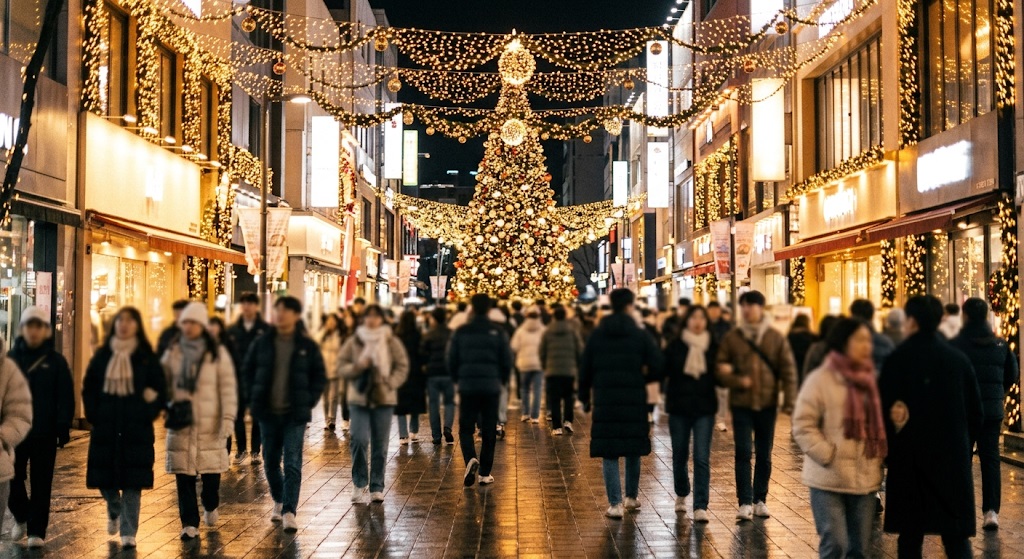
Christmas in Korea looks familiar at first glance: twinkling lights, carols in cafes, Santa hats, and giant trees outside department stores. Spend a December here, though, and you notice something different. For most Koreans, Christmas is not a family holiday at all. It is a date night, a night out with friends, and above all, a reason to buy a very good cake.
This guide explains how Christmas works in Korea: why it is a public holiday in a country where most people are not Christian, why couples treat it like a second Valentine’s Day, what people actually eat, where the lights are, and what visitors should book early if they are here for the holidays.
Christmas in Korea at a Glance
| Korean name | Keuriseumaseu (크리스마스) or Seongtanjeol (성탄절) |
| Public holiday? | Yes, December 25 is a national holiday |
| 2026 date | Friday, December 25, which makes a three-day weekend |
| Main mood | Romantic and social, rather than a family gathering |
| Must-have item | A Christmas cake |
| The big night | Christmas Eve, December 24 |
Why Christmas Is a Public Holiday in Korea
Christmas became an official holiday in Korea soon after liberation in 1945, during the period of U.S. military government, when Christians made up only a tiny share of the population. The holiday stayed on the calendar, and Christianity grew rapidly over the following decades.
Today, Korea is one of the most Christian countries in Asia, but it is still far from a Christian majority. Recent surveys put Protestants at around 17 percent and Catholics at around 8 percent, while more than half of Koreans say they have no religion at all. Churches are everywhere, especially in big cities, where red neon crosses light up the skyline at night.
That mix explains a lot. For churchgoers, Christmas is a religious celebration with services, choirs, and nativity plays. For everyone else, it is simply a cheerful winter day off, and Koreans have filled it with their own customs.
In Korea, Christmas is both a sacred day for a sizable Christian minority and a pop-culture holiday for everyone else. Both versions happen side by side.
A Couples’ Holiday: Valentine’s Day With Santa
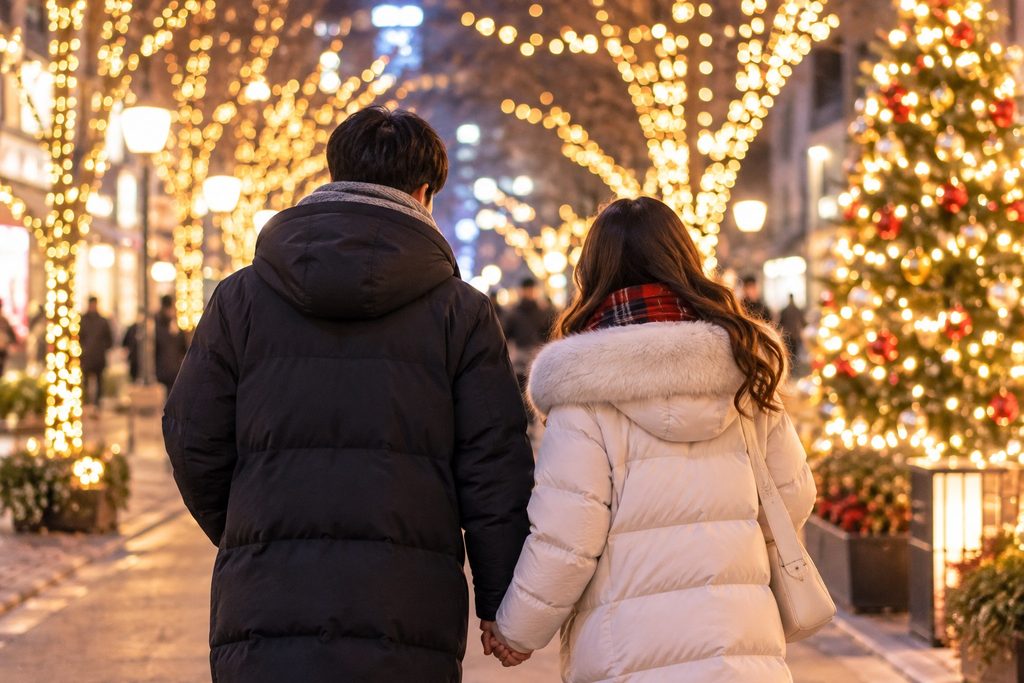
Ask Korean friends what they are doing on Christmas, and the single ones may groan. In Korea, Christmas Eve is famously a night for couples. Restaurants fill up, hotel rooms are booked weeks ahead, and popular date spots overflow with pairs taking photos under the lights.
One reason goes back to history. From 1945 to 1982, Korea had a nationwide nighttime curfew. Christmas Eve was one of the rare nights when people were allowed to stay out late, so it became the night young people went out, met friends, and went on dates. The habit stuck long after the curfew ended.
Korea’s dating culture adds to it. Couples often celebrate their 100th day together, and some people jokingly plan a confession in mid-September so that their 100th day lands right on Christmas. Christmas also fits neatly into a calendar full of small couple-friendly days, from Valentine’s Day to Pepero Day in November.
For singles, Christmas has its own running jokes. Koreans call it “couples’ heaven and singles’ hell,” and plenty of people spend it with friends instead, booking a party room, ordering food, and swapping small gifts.
The Christmas Cake: Korea’s Real Christmas Tradition
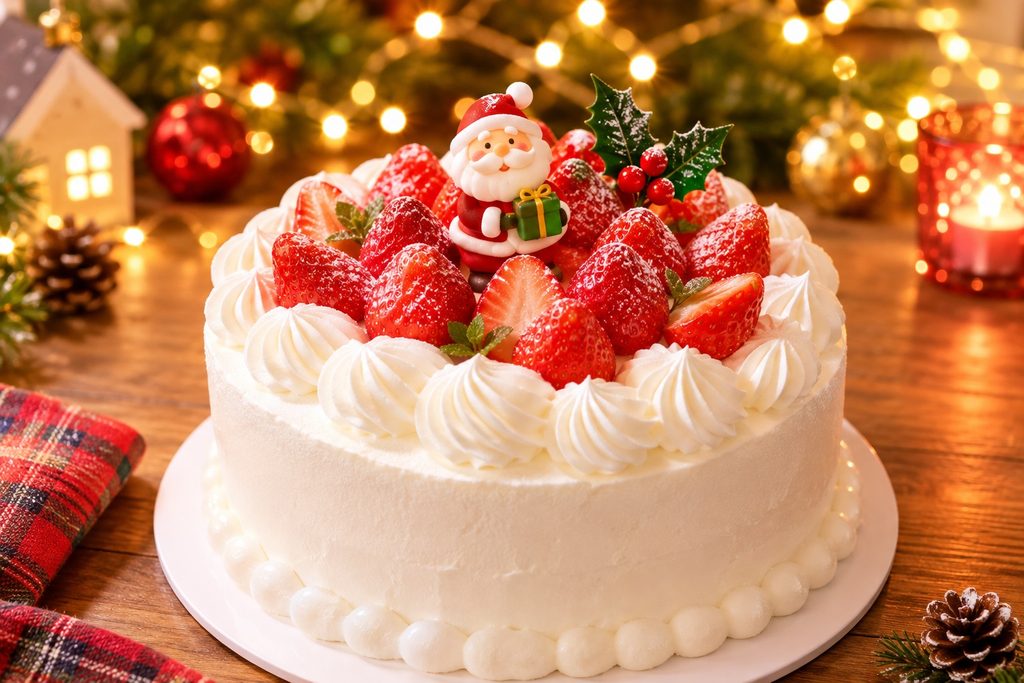
If Korea has one universal Christmas custom, it is cake. Families, couples, friends, and coworkers all buy one. A round sponge cake with whipped cream and strawberries is the classic, but every December brings new designs: snowman cakes, wreath cakes, chocolate log cakes, and elaborate creations shaped like gift boxes or Christmas trees.
Prices range enormously. Convenience stores sell mini cakes for less than 5,000 won and full cakes for under 30,000 won, while bakery chains sit in the middle. At the top end, luxury hotels compete with limited-edition cakes. In 2025, one Seoul hotel’s top cake reached 500,000 won, with only three sold per day, and several others were priced above 300,000 won.
The cake culture comes with its own routine:
- Pre-order early. Popular bakeries and hotels open reservations in late November or early December, and the best cakes sell out.
- Expect lines on the 24th. Bakeries are packed on Christmas Eve with people picking up reserved cakes.
- Convenience stores join in. If you missed every reservation, a Korean convenience store will likely have a cake ready to go.
What Koreans Eat on Christmas
There is no traditional Korean Christmas dinner, no roast turkey or ham that everyone shares. Instead, the meal depends on who you are with:
- Couples often book Italian, French, or steak restaurants, many of which offer special Christmas course menus at higher prices.
- Friends tend to order delivery: fried chicken, pizza, and snacks, with the cake as the finale.
- Families with children might eat out at a buffet or make something festive at home.
- Cafes roll out seasonal drinks and desserts, and holiday cups become a small collector’s hobby. Our guide to Korean cafe culture explains why cafes play such a big role in Korean social life.
Christmas also arrives only a few days after Dongji, the winter solstice, when many Koreans eat red bean porridge. In some years, the same week holds both a bowl of patjuk and a strawberry cake.
Santa, Gifts, and Christmas for Kids
Korean children know Santa as Santa Harabeoji (산타 할아버지), “Grandpa Santa.” Kids hang stockings or leave wish lists, and parents quietly buy the gifts, just as in many Western countries.
One custom surprises many foreigners: Santa visits at kindergartens and daycare centers. In the days before Christmas, teachers or staff dress up as Santa and hand out presents to each child. The gifts are usually bought by the parents and secretly delivered to the school in advance, so every child gets something personal from “Santa” in front of their friends.
Gift-giving among adults is lighter than in many Western countries. Couples exchange gifts, close friends might swap small presents, and some offices hold a gift exchange. If you are buying for a Korean friend or host, our guide to Korean gift-giving etiquette covers what to give and how to hand it over politely.
Churches at Christmas
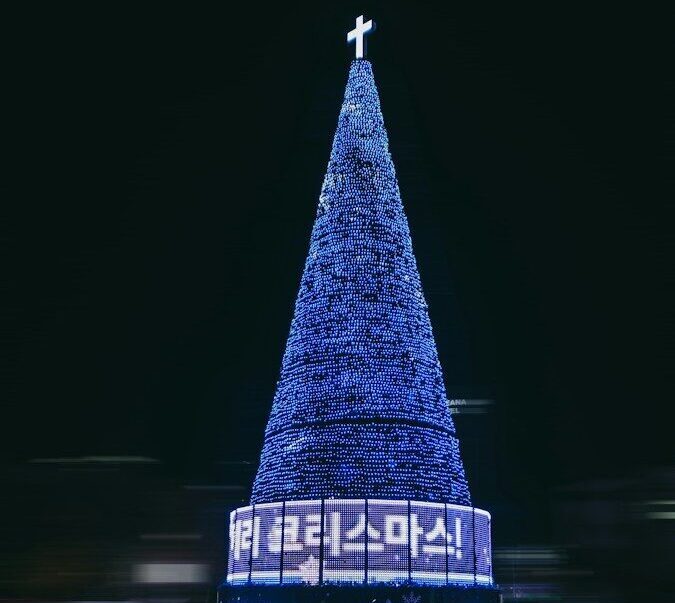
For Korean Christians, Christmas is one of the most important days of the year. Churches hold Christmas Eve and Christmas Day services, often with large choirs, candlelight, and children’s performances. Some churches go caroling around their neighborhoods, and many run charity drives in December.
Myeongdong Cathedral in central Seoul, the seat of Korea’s Catholic Church, is the most famous place to attend a Christmas Mass. Its Christmas Eve services draw large crowds, so plan to arrive early. Many large Protestant churches also offer services in English for foreign residents.
Where to See Christmas Lights
Korean cities go big on December decorations. Some of the most popular spots in and around Seoul include:
- Department store facades in Myeongdong. The giant light shows on major department store buildings have become an annual photo destination, and crowds gather every evening to watch them.
- Gwanghwamun Square and Cheonggyecheon Stream. In recent years, Seoul has run a city-wide winter festival in the area from mid-December into early January. In 2025, it ran from December 12 to January 4, with a media facade show on Gwanghwamun Gate and a Christmas market.
- Theme parks. Lotte World and Everland hold Christmas festivals with parades, lights, and seasonal shows.
- Hotels and malls. Lobbies and atriums compete with towering trees and themed decorations, and many are free to walk through.
Outside Seoul, many cities light up their own downtown streets, parks, and waterfronts. Local festival dates change every year, so check the city’s official tourism page before you go.
Christmas Then and Now: A Local Memory
When I was growing up in the 1980s and 1990s, Christmas in Korea arrived a full month early. From late November, bells and carols rang out on street after street, from shops, market stalls, and the charity kettles on busy corners. Television and radio were full of Christmas specials and church music, and you could feel the excitement building for weeks.
Churches were at the heart of it. Children rehearsed Christmas plays, and many churches kept a custom called saebyeoksong (새벽송), “dawn carols.” Late on Christmas Eve and into the early morning, church members walked together from house to house, singing carols outside the homes of fellow members. The family would come out to greet them, invite everyone inside for tea and snacks, and sing and pray together before the carolers moved on to the next door. Department stores ran Christmas events, people dropped coins into charity kettles, and exchanging small gifts felt warm and personal.
Today, that month-long build-up is much quieter. Music copyright rules are one reason shops no longer play carols freely onto the street. Dawn caroling has almost disappeared, too. In apartment-dense cities, where neighbors already worry about noise through the walls, a choir knocking on doors before sunrise would more likely bring a noise complaint than an invitation inside, and people are generally more cautious about visitors at night. Harder economic times for small shop owners have also dimmed some of the street-level cheer.
Looking back, what I miss most is not only the music but the neighborly warmth it carried. People made more room for each other back then. Christmas in Korea today is still bright and fun, but for many Koreans of my generation, it feels smaller and more careful than the Christmases we remember.
Christmas Music in Korea
Carols play in cafes, shops, and on the radio throughout December, and K-pop artists regularly release winter and Christmas songs. Some visitors still notice that streets feel quieter than they expected. Music copyright rules and concerns about noise mean that not every shop blasts carols onto the sidewalk, so much of the holiday soundtrack happens indoors.
If you want a quick Korean phrase for the season, it is easy: “Meri Keuriseumaseu!” (메리 크리스마스), Merry Christmas.
Snow is never guaranteed, but a white Christmas is a common wish. When flakes do fall on December 24 or 25, it quickly becomes the top topic on social media, and weather forecasts in mid-December often include an update on the chances of snow for Christmas Eve.
How Christmas Day Itself Feels
Because the big celebrations happen on Christmas Eve, Christmas morning in Korea is often quiet. Many people sleep in after a late night out, and city streets can feel surprisingly calm until midday.
By the afternoon, things pick up again. Malls, cinemas, and cafes fill with people enjoying the day off. Movie theaters are a popular choice, since studios often time big releases for the winter holidays, and seats for the evening shows can sell out. Families with young children head to theme parks, indoor play centers, or ice rinks, while couples who celebrated on the 24th might simply go for a walk and a coffee.
By the evening of the 25th, most people are already thinking about work the next day, at least in years when Christmas falls midweek. In 2026, the Friday holiday gives everyone a little more breathing room.
Useful Christmas Words in Korean
| Korean | Meaning |
|---|---|
| Keuriseumaseu ibeu (크리스마스 이브) | Christmas Eve |
| Santa harabeoji (산타 할아버지) | Santa Claus, literally “Grandpa Santa” |
| Keuriseumaseu keikeu (크리스마스 케이크) | Christmas cake |
| Seonmul (선물) | Gift |
| Meri keuriseumaseu (메리 크리스마스) | Merry Christmas |
If You Are Spending Christmas Away From Home
For foreign residents, the first Korean Christmas can feel a little lonely, especially if you are used to a big family dinner. A few things help. Many international churches hold English-language Christmas services and community meals. Several hotel buffets serve turkey and other Western holiday dishes in December, and import grocery stores stock ingredients that are hard to find elsewhere, from cranberry sauce to whole hams.
Many expats also lean into the Korean version of the holiday: they gather with friends, order fried chicken, cut a strawberry cake, and go see the lights. It may not be the Christmas you grew up with, but it is easy to enjoy.
Tips for Spending Christmas in Korea
If you are visiting or living in Korea in December, a few practical points will save you stress:
- Book restaurants early. Popular restaurants, especially romantic or upscale ones, can be fully booked for December 24 and 25 weeks in advance.
- Expect higher hotel prices. Hotel rates on Christmas Eve can jump sharply, sometimes to double the usual price.
- Reserve your cake. If you want a specific bakery or hotel cake, order by early December.
- Avoid peak crowds if you can. Myeongdong, theme parks, and light festivals are packed on the evenings of the 24th and 25th. Weeknights earlier in December are calmer.
- Know what is open. Christmas Day is a public holiday, so government offices and banks close, but shops, malls, restaurants, cafes, and public transport keep running.
- Plan for the long weekend in 2026. Because Christmas falls on a Friday, many people will travel or go out from Thursday night through Sunday.
After Christmas: The Year-End Season
Christmas in Korea is only the start of a busy end of year. Late December is full of songnyeonhoe (송년회), year-end gatherings with coworkers and friends, and on New Year’s Eve, crowds gather in central Seoul for the ringing of the Bosingak bell at midnight. The bigger family holiday, Seollal, the Lunar New Year, comes later in winter, and that is when most Koreans travel home to see relatives.
Seen this way, Christmas fills a particular role: it is the fun, social, slightly romantic holiday of the Korean winter, while the family traditions wait for the lunar calendar.
Final Thoughts
Christmas in Korea borrows the lights, the trees, and the carols from the West, then turns them into something distinctly Korean: a night for couples, a reason to gather with friends, a showcase for beautiful cakes, and for millions of churchgoers, a deeply meaningful celebration. If you spend December here, book your table early, reserve a cake, and take a walk under the lights. You will see a Christmas that feels both familiar and completely new.