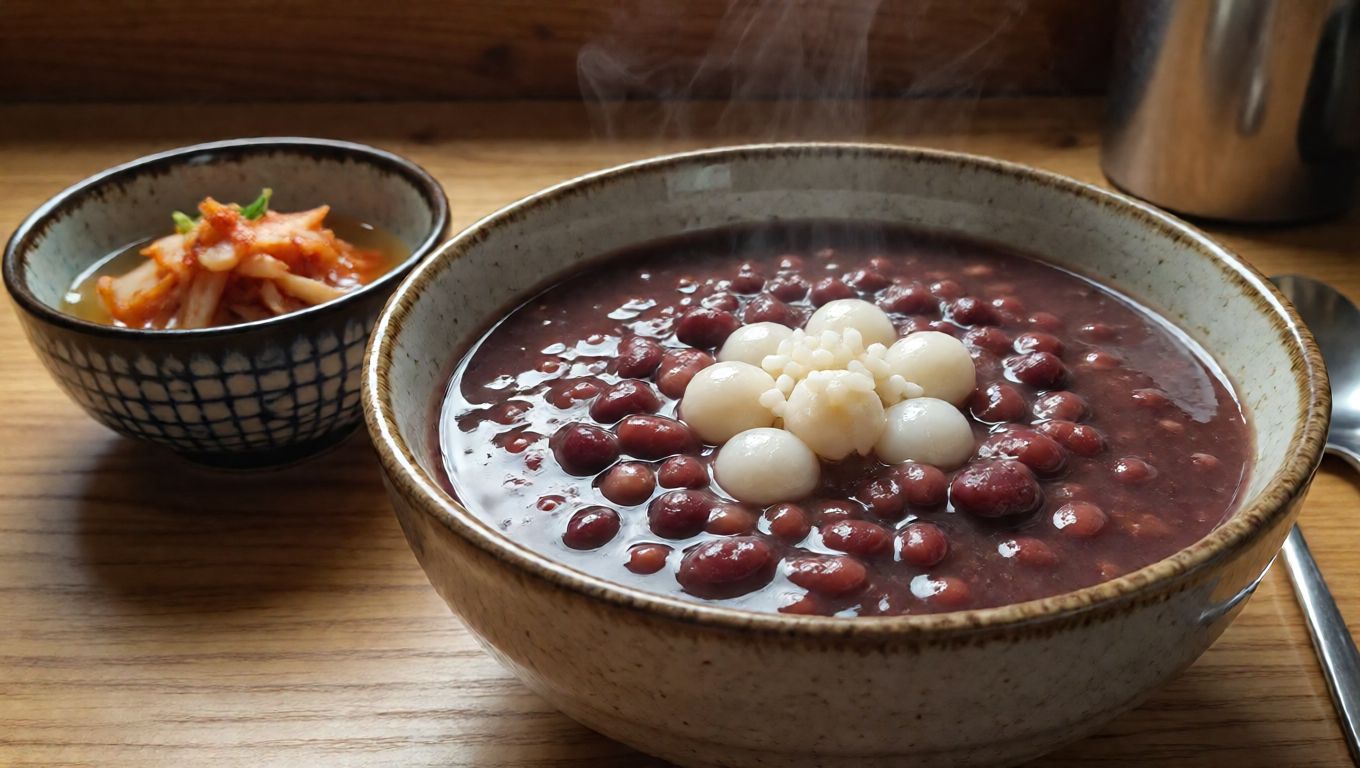
Dongji (동지), the winter solstice, is the night Koreans traditionally fight off darkness with a bowl of red bean porridge. It falls in late December, just days before Christmas, and while it is no longer a public holiday, it is still one of the most recognizable dates on the Korean seasonal calendar. Ask almost any Korean what they eat on dongji and you will get the same answer before you finish the question: patjuk (팥죽).
This guide explains what dongji is, when it falls in 2026, why red beans are supposed to keep evil away, what the small rice balls in the porridge mean, the odd rule about “baby dongji,” and where you can join in if you are in Korea this December.
Dongji at a Glance
| Korean name | Dongji (동지, 冬至), “winter’s peak” |
| 2026 date | Tuesday, December 22 (solstice at 5:50 a.m. Korea time) |
| What it is | The 22nd of the 24 solar terms; the longest night of the year |
| Signature food | Patjuk, red bean porridge with glutinous rice balls |
| Old nickname | Jageun seol (작은설), “little New Year” |
| Public holiday? | No, but widely observed with food |
What Dongji Means
Korea’s traditional calendar divides the year into 24 solar terms, or jeolgi (절기), based on the position of the sun. Farmers used them to time planting, harvesting, and preparing for winter. Dongji is the 22nd term, the moment the sun reaches its lowest point in the sky, and the day with the shortest daylight of the year.
In Seoul on the 2026 solstice, the sun rises at about 7:43 a.m. and sets around 5:18 p.m., leaving only about nine and a half hours of daylight. From the next day, the light starts to return, a little more each afternoon.
That turning point is why dongji once felt like a fresh start. Older Koreans sometimes call it jageun seol, or “little New Year,” and an old saying claims that you become one year older only after you have eaten your dongji porridge. Dongji usually lands on December 21 or 22. In 2026, the solstice happens early in the morning Korea time, so the date is Tuesday, December 22.
Why Koreans Eat Red Bean Porridge on Dongji
The long, cold night of the solstice was believed to be the peak of eum (음), the dark, cold energy known in Chinese as yin. Red has long been the color of light, warmth, and protection in East Asian tradition, and red beans were thought to carry the bright energy needed to push that darkness back.
An old story explains the custom more vividly. According to a sixth-century Chinese record of seasonal customs, the troublesome son of a mythical water god died on the winter solstice and became a demon that spread disease. He hated red beans, so people cooked red bean porridge on that day to keep him away. The custom spread across East Asia and took root in Korea, where it has lasted far longer than the story behind it.
There is also a more practical side. A thick bowl of beans and rice is filling, warming, and nourishing in the coldest part of the year, and red beans add vitamins that a winter diet of rice and preserved vegetables could lack.
Patjuk on dongji was part meal, part medicine, and part protection charm, all in one bowl.
What Is Patjuk?
Patjuk is a thick porridge made from pat (팥), small red adzuki beans, and rice. The beans are boiled until soft, mashed, and strained to remove the skins, then cooked again with rice into a smooth, deep red-brown porridge. Traditional dongji patjuk is savory, not sweet. It is usually seasoned with a little salt at the table, and many people eat it with a side of dongchimi (동치미), a cool, tangy radish water kimchi.
Visitors who know red beans only from sweet desserts, like the filling in bungeoppang or red bean buns, are often surprised by this. A sweet version called danpatjuk (단팥죽) does exist, and many cafes and porridge shops sell it, especially to younger customers. But the classic dongji bowl tastes earthy and mild, closer to a soup than a dessert.
The rice balls: saealsim
Floating in the porridge are small, chewy balls made from glutinous rice flour, called saealsim (새알심), which means something like “bird’s egg center.” Some regions call them ongsimi (옹심이). They are white, round, and soft, and they turn every bowl into a small treasure hunt.
A favorite family custom is to eat as many rice balls as your age. Children love counting them out; older relatives tend to joke about it. Whether anyone actually manages sixty or seventy rice balls is another matter, but the idea fits the “little New Year” spirit: you finish your bowl, and you have officially aged one year.

Old Dongji Customs Beyond the Bowl
In the past, dongji came with a whole set of customs. Most are rare today, but they show how seriously people took the darkest night of the year.
- Porridge on the gate. Joseon-era records describe families sprinkling or smearing a little patjuk on gates, walls, and doorways. The doorway was the boundary of the home, and red porridge there was meant to stop bad luck from coming in.
- Offerings to household spirits. Before the family ate, bowls were often set out in different corners of the house, such as the kitchen, storage areas, and the well, for the spirits believed to watch over each space.
- Calendars for the new year. Because dongji marked a turning point in the year, the royal court traditionally prepared calendars for the coming year around this time and gave them to officials, a custom remembered as dongji chaengnyeok (동지책력).
- Socks for elders. Some households gave new padded socks to older family members on dongji, wishing them warmth and a long life as the days began to lengthen.
There is even a folk saying that dongji is “the day tigers get married,” because the long night was imagined to be the time when tigers roamed. Tigers appear everywhere in Korean folklore, as you can see in the Sun and Moon Korean folktale, where a tiger stalks a family on a dark winter road. Dongji even has its own folk tale: in the red bean porridge granny story, an old woman’s pot of patjuk gathers a team of helpers who defeat a hungry tiger on the longest night.
Baby Dongji: When Koreans Skip the Porridge
Here is the rule that even many Koreans have to look up each year. Dongji follows the solar calendar, but Koreans also check where it falls on the lunar calendar, in the 11th lunar month. Depending on the lunar date, the solstice gets a different name:
| Name | Lunar date of dongji | What people traditionally eat |
|---|---|---|
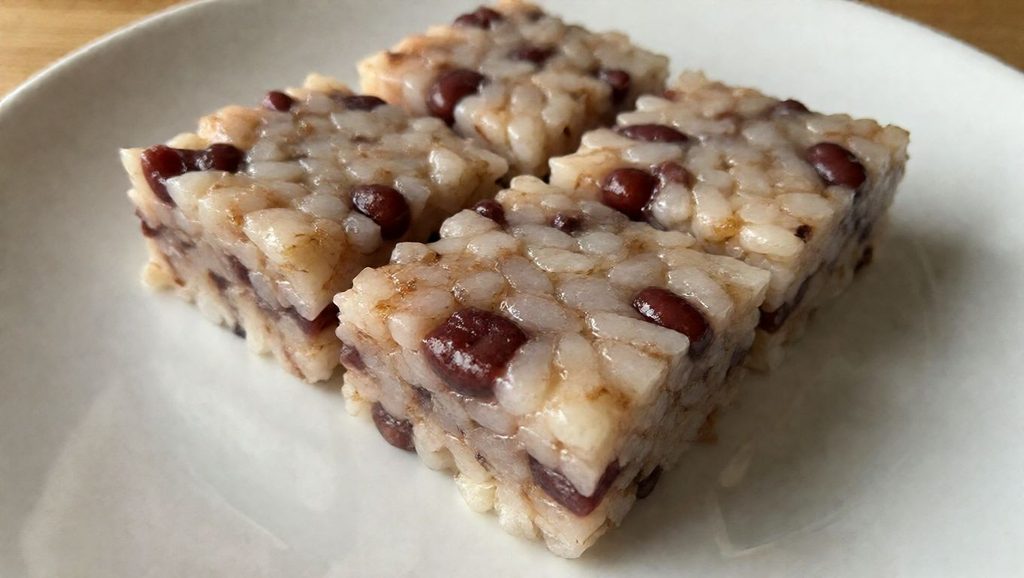
| Aedongji (애동지), “baby dongji” | 1st to 10th day | Red bean rice cake instead of porridge |
| Jungdongji (중동지), “middle dongji” | 11th to 20th day | Patjuk |
| Nodongji (노동지), “old dongji” | 21st day to month’s end | Patjuk |
In a “baby dongji” year, families with young children traditionally avoided patjuk and made pat sirutteok (팥시루떡), a steamed rice cake layered with red beans, instead. Two explanations are usually given. One says that the red porridge might chase away Samsin Halmeoni, the grandmother spirit believed to protect babies. The other is a pun: juk (porridge) sounds like jukda (to die), which felt like a bad word to serve near a small child. Turning the red beans into rice cake kept their protective color without the unlucky word.
What about 2026? December 22, 2026 falls on the 14th day of the 11th lunar month, which makes it a jungdongji, a “middle dongji.” That means patjuk is the traditional choice this year. Many families, of course, simply eat whatever they like.
How Dongji Is Celebrated Today
Modern Koreans do not usually splash porridge on their front doors, but dongji is far from forgotten. In practice, it looks like this:
- Porridge shops get busy. Juk restaurants and traditional porridge chains see long lines, and many people pick up a takeout bowl on the way home from work.
- Ready-made patjuk appears everywhere. Supermarkets and convenience stores stock instant and refrigerated patjuk in the days before the solstice, so a bowl is never far away.
- Temples share porridge. Many Buddhist temples prepare large pots of patjuk on dongji and offer it to visitors and neighbors, a long-standing tradition worth looking for if you are near a temple that day.
- Community events. Folk villages, hanok villages, and local community centers often hold dongji events where people cook and share patjuk together.
- Home cooking. In many families, a grandmother or mother still makes a big pot from scratch, and the rice balls are rolled by whoever is around to help.
Because dongji falls only a few days before Christmas, December in Korea can feel like two holiday seasons stacked together: carols and Christmas cakes in the shops, and steaming bowls of red bean porridge in the restaurants next door.
Where to Try Patjuk in Korea
You do not need a Korean grandmother to try dongji porridge. A few easy options:
- Porridge restaurants. Look for signs with the word juk (죽). Most porridge shops serve patjuk all winter, and many offer both the savory and sweet versions.
- Traditional markets. Market food stalls often sell patjuk and pat kalguksu (팥칼국수), red bean porridge with hand-cut wheat noodles instead of rice, which is especially popular in the southwestern provinces.
- Convenience stores and supermarkets. Instant cups and pouches are the quickest option, ready in a microwave.
- Temples on the day itself. If you want the traditional atmosphere, a temple visit on December 22 is the most memorable choice.
When you order, it helps to know two words: patjuk for the classic savory bowl, and danpatjuk if you want the sweet one. If the menu does not say, ask whether it is dan (sweet) or not.
Making Patjuk at Home: The Basic Idea
Patjuk takes time rather than skill. If you want to try it, the process usually goes like this:
- Cook the beans. Boil dried red beans, discard the first cooking water to remove bitterness, then simmer them in fresh water until very soft.
- Mash and strain. Mash the beans and push them through a sieve to separate the smooth paste from the skins.
- Add rice. Cook soaked rice in the bean liquid, stirring often, until it breaks down into a thick porridge.
- Make the rice balls. Knead glutinous rice flour with hot water, roll small balls, and drop them into the simmering porridge until they float.
- Season at the table. Serve with salt on the side, and sugar too if anyone prefers it sweet.
Patjuk thickens a lot as it cools, so many cooks add a splash of water when reheating leftovers. Like many Korean winter dishes, it is meant to be made in a big pot and shared, much like the community spirit behind kimjang, Korea’s annual kimchi-making season a few weeks earlier.
Dongji and the Korean Winter Calendar
Dongji sits in the middle of a long run of Korean winter traditions. Kimjang fills November with salted cabbage and red pepper paste. Street food carts start selling hot snacks like roasted sweet potatoes as soon as the weather turns. Dongji arrives in late December with its red porridge, and then Seollal, the Lunar New Year, brings the biggest family holiday of the year a month or two later.
Seen together, these customs follow the same idea: when the year is at its coldest and darkest, Korean tradition answers with warm food, shared work, and a reason to gather. If you want to understand how everyday Korean meals fit into that rhythm, our guide to how Koreans eat at home is a good place to start.
Final Tips for Dongji 2026
- Mark the date: Tuesday, December 22, 2026.
- Eat patjuk: 2026 is a “middle dongji,” so porridge is the traditional choice.
- Count your rice balls: one for every year of your age, if you can manage it.
- Try both styles: savory for tradition, sweet if you have a sweet tooth.
- Look for a temple or folk event: it is the easiest way to see the custom in a traditional setting.
On the longest night of the year, a bowl of red bean porridge is a small, warm way to join a tradition that Koreans have kept for centuries. And from the next morning, as the old saying goes, the days get longer and you are one year older.
Images in this post were created with AI.