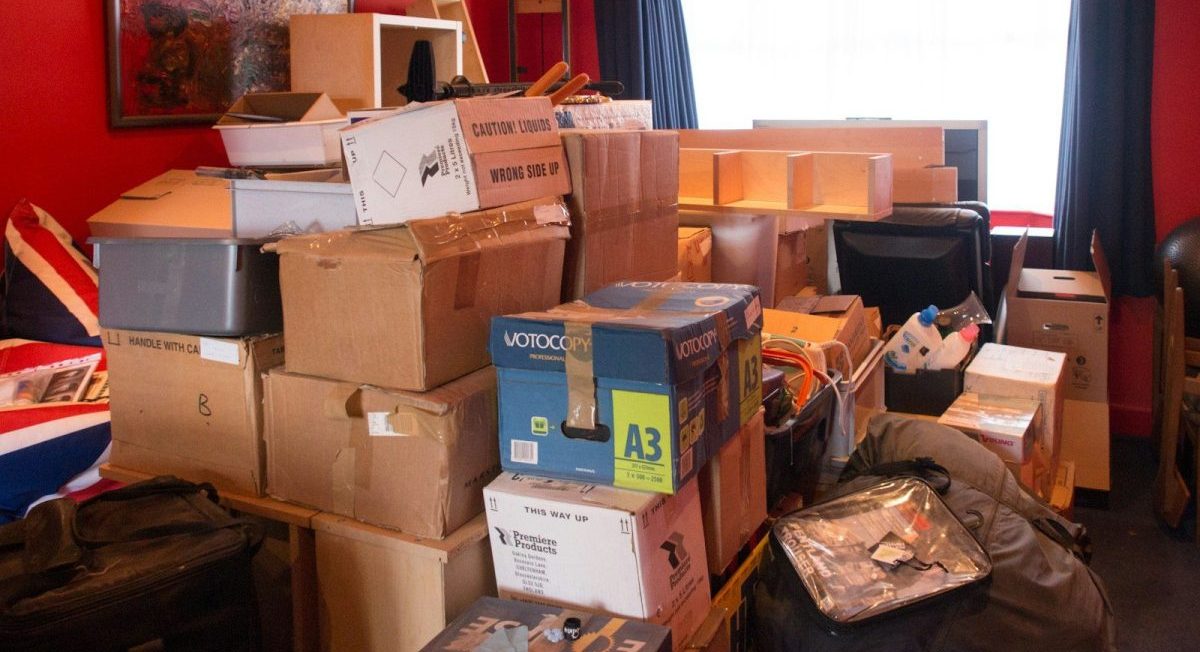
Moving in Korea starts with a choice most foreign residents do not know they are making: which of three service tiers you hire. The gap between them is large — in price, in how much work you do yourself, and in how exposed you are to a specific problem that Korea’s own consumer agency has issued warnings about.
Here is how ordinary Korean households actually move, and what to watch for.
Tier One: Pojang-isa (포장이사), the Full Packing Move
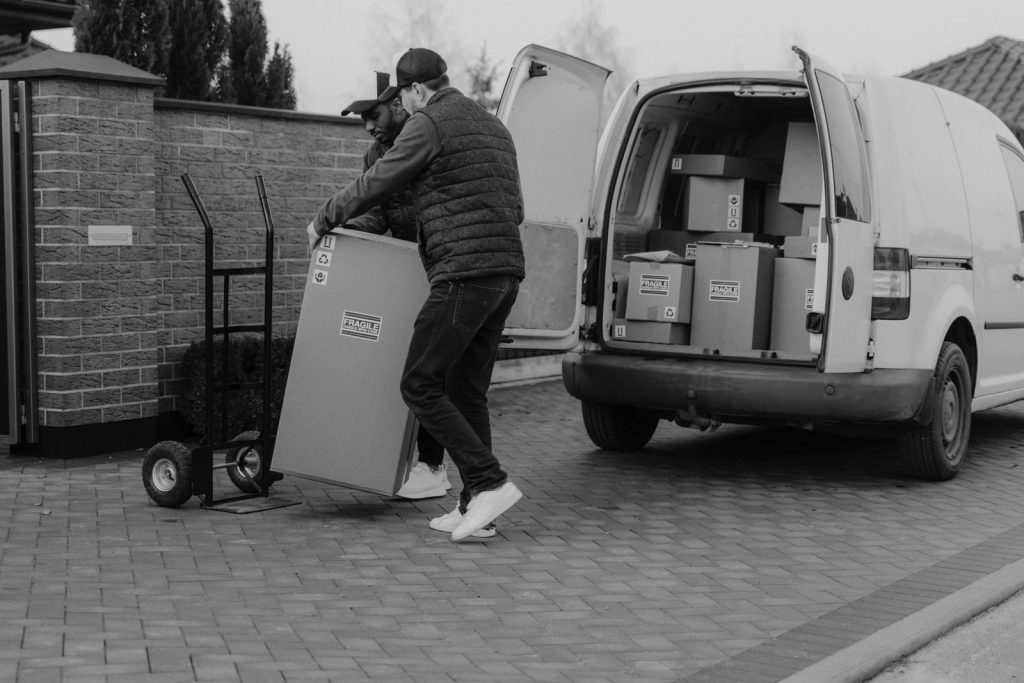
Pojang-isa literally means “packing move,” and it is the standard choice for households with a lot of belongings — families, anyone moving out of a full apartment. The crew arrives and packs everything themselves. They box your kitchen, your closets, your books, sorted and labeled, load it, transport it, and unpack at the other end.
This is meaningfully more comprehensive than what most Western moving companies provide by default. You are not expected to have done anything before they arrive. Some households book a variant called ban-pojang-isa (반포장이사), a half-packing service where the crew handles some categories and you handle the rest, at lower cost.
Tier Two: Yongdal-isa (용달이사), the Truck-Only Move
If you do not have much, yongdal-isa is the normal choice. Yongdal refers to small cargo trucks, and the arrangement is simple: you pack your own boxes before moving day, and the company just carries and transports them. No packing labor, much lower price.
The quote works differently too, and this matters. A yongdal operator inspects your belongings in advance and prices the job by total volume — not weight. A bulky duvet costs more to move than a heavy monitor. That inspection is supposed to settle the price before moving day arrives.
Tier Three: Hiring the Truck and Carrying It Yourself
Single-person households often go one step further: hire a yongdal truck operator directly and help carry the boxes yourself. It is the cheapest option in Korea by a wide margin, and it is common among students and young workers moving between one-room apartments.
It is also, according to Korea’s consumer agency, the tier where things go wrong most often — which brings us to the part worth reading carefully.
The Ladder Truck: Why Your Sofa Goes Out the Window
One sight genuinely surprises foreign residents. For apartments and mid-rise buildings, Korean movers use a sadari-cha (사다리차) — a truck-mounted ladder lift that extends up the outside of the building to your floor. Furniture, appliances, and large boxes go out through a window or balcony and ride down the ladder on a powered platform.
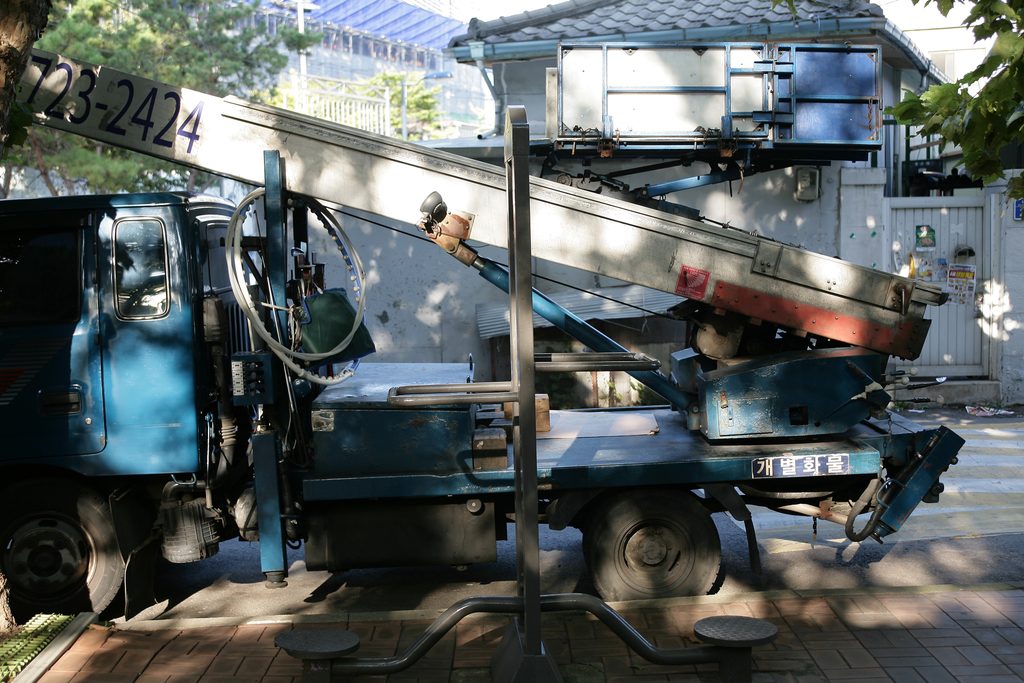
Photo source 출처: 한국저작권위원회_이인희
It is not an optional upgrade. For anything above the lower floors, it is how the move happens, because Korean apartment elevators and stairwells simply cannot take a wardrobe or a refrigerator. Smaller items that a person can carry still go by stairs or elevator, handled by the crew. If you live on a low floor, you may skip the ladder entirely.
Worth knowing: ladder truck usage is a billable line item. If your quote was given over the phone without anyone seeing your building, the ladder cost may not be in it.

Photo source 출처: 한국저작권위원회_김승회
The Mid-Move Price Demand
This is the practice that has become common enough for the Korea Consumer Agency to issue a formal advisory ahead of the spring moving season.
The pattern: a company quotes a price, you accept and pay a deposit, and then on moving day — sometimes with your belongings already half-loaded — the crew announces that you have more stuff than quoted and demands additional payment. If you refuse, they stop. In one case documented by the agency, a customer had contracted a move for 850,000 won and paid a 350,000 won deposit. On moving day the company demanded an additional 500,000 won, and when the customer refused, the crew left without moving anything and refused to return the deposit, claiming they had mentioned possible surcharges in advance.
The agency’s numbers show how widespread this is. Among small-scale moving complaints, the breakdown by type was:
- Damaged or lost items — 47.7%
- Demands for additional payment — 24.9%
- Refusal to move or failure to perform the contract — 13.9%
People in their twenties and thirties filed 65.1% of these complaints. The agency attributes the concentration to remote booking: young single-person households tend to arrange moves through apps and phone quotes without an in-person inspection, which is exactly the gap that makes a later price demand possible.
How to Protect Yourself
The consumer agency’s own guidance is straightforward, and all of it is worth following.
- Insist on an in-person quote. A phone or web quote is where disputes start. Have the operator physically look at your belongings so both sides have seen the same volume.
- Check that the company is licensed. Unlicensed operators are extremely difficult to claim against. Licensed movers carry cargo liability insurance, though that covers damage during transport only — a company that also carries dedicated moving-goods liability insurance covers more of the process.
- Get it in writing, in detail. The contract should specify the date and time, an itemized list of what is being moved, the number of workers, and every add-on service with its cost — ladder truck included. A detailed contract is what makes a later surcharge demand unenforceable.
- Handle valuables yourself. Jewelry and documents should never go on the truck. For fragile or expensive items, photograph their condition and confirm it with the crew before loading.
- Document damage immediately. If something breaks during the move, get written acknowledgment from the crew leader on the spot and take photographs before anyone leaves.
If a dispute happens anyway, Korea’s consumer counseling line is reachable at 1372 from any phone.
What About Lucky Moving Days?
You may read that Koreans schedule moves around son-eomneun-nal (손 없는 날), days in the lunar calendar when the wandering spirits that supposedly disrupt a household are absent. The custom is real and the dates are still printed on Korean calendars.
In practice, though, it carries much less weight than moving-company marketing suggests. Most people today move on the date their lease requires and the date their movers are available. If the two happen to coincide, fine — but almost nobody rearranges a contract around it.
Before You Book
Two things tend to trip up foreign residents specifically. First, moving season is real: March and April are the peak, driven by school transfers and corporate reassignments, and late August through September is the second wave. Book well ahead in those windows. Second, the end of the month concentrates everything, because most lease terms expire then.
And if you are clearing out furniture or appliances before the move, large items cannot simply be left at the curb — see our guide to Korean waste separation for how bulky-item disposal works. For the contract side of moving between rentals, our explainer on jeonse covers the deposit system most of these moves revolve around, and our overview of Korean apartments gives the bigger picture of what you are moving into.
Furniture you decide not to bring with you needs its own arrangement, and it is not something the movers automatically handle. Here is how bulky waste disposal in Korea works, from buying the sticker to what happens if you forget one.
Source: Korea Consumer Agency consumer advisory on small-scale moving services, April 2026, via Consumer24 (consumer.go.kr).
Once the kitchen is unpacked, the next question is what to actually cook in it. How Koreans eat at home covers the weeknight pattern, meal kits included.
Once the boxes are in, the accounts still need sorting out. Our guide to utility bills in Korea covers what arrives, when, and how to set up automatic payment before the first slip lands in your mailbox.
Before any of this, there is a contract to sign and a deposit to protect. See what to check before signing a lease — particularly the paperwork that has to be filed on the day you take possession.
Arriving without a place lined up is more common than it sounds, and Korea’s smallest rental format exists largely for that situation — no deposit, and a room available within a day.
Image credits: Pexels / Unsplash via Instant Images.