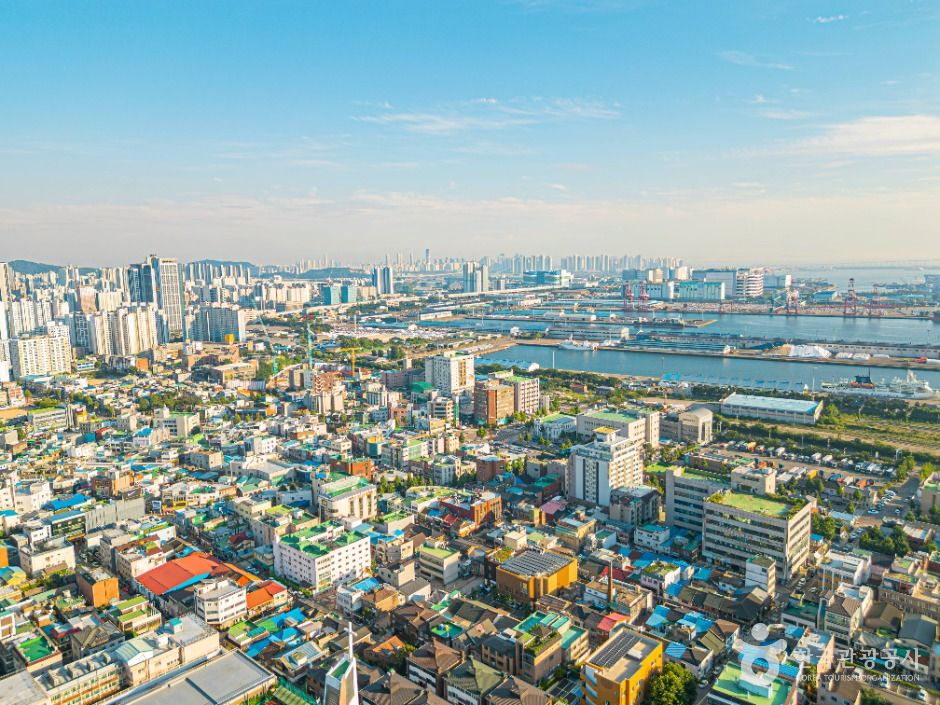
Dongincheon Station is not a place people plan to visit. It is a stop on Line 1 that most travelers pass through on the way to Chinatown, two stations further west. The area around it looks like what it is — a downtown that stopped being the downtown about forty years ago.
What is easy to miss is that within a ten-minute walk of the ticket gates, there are three buildings that each carry the word “first” in Korean history. The first Methodist church in the country. The first theater built by a Korean. The oldest cathedral in the city. And in the same few blocks, a kung fu school run by a fourth-generation lineage holder whose family came from Shandong.
None of it is signposted in English. That is the whole reason to go.
Why This Corner of Incheon Is Dense With Firsts
Incheon opened as a treaty port in 1883. For the next few decades, anything arriving in Korea from outside — missionaries, architecture, film projectors, martial arts, noodles — arrived here first and travelled inland afterward. Seoul got most of it eventually. Incheon got it first.
The hill between Dongincheon Station and Sinpo-dong is where a lot of that landed. It has never been redeveloped in the way Seoul’s old districts were, which is why the buildings are still standing and why almost nobody photographs them.
The narrow-gauge Suin Line that once ran through this district ended at the salt fields in the south. Its old iron bridge still stands at Sorae Port, now crossed on foot.
Naeri Church: Where Korean Methodism Started
Henry Appenzeller, the first American Methodist missionary to Korea, arrived at Jemulpo — the old name for this port — on Easter Sunday in 1885. He stayed in this neighborhood before continuing to Seoul, and the congregation that grew from it became Naeri Church (내리교회), the first Methodist church in Korea.
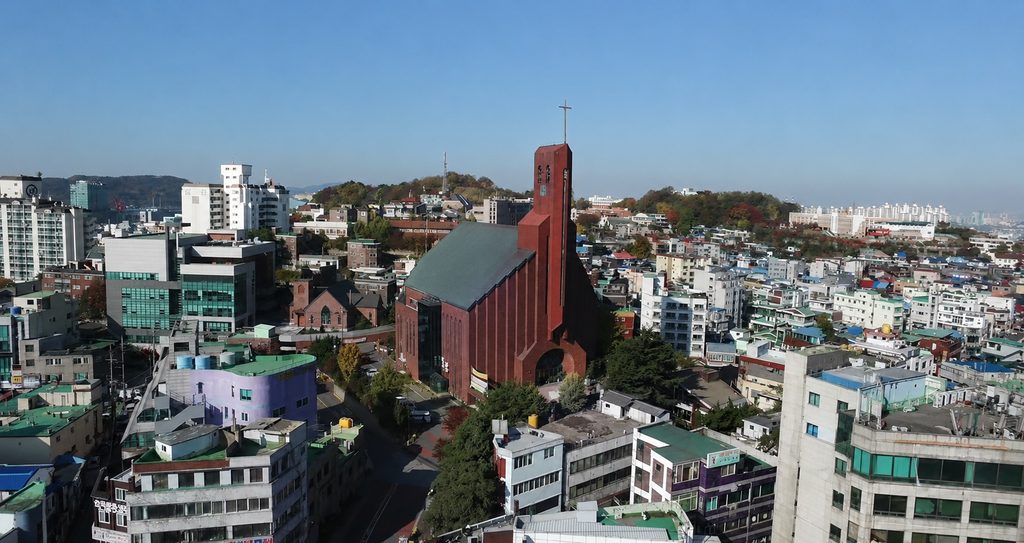
The congregation built a chapel here in 1901. In 2013 the church reconstructed that cross-shaped Wesley Chapel on the site, so what you see is a modern rebuilding rather than the original structure — worth knowing before you go expecting a nineteenth-century building.
The other thing that started here is less obvious: in 1892, a school attached to the church opened as one of the earliest Western-style elementary schools in the country. It still operates as an elementary school today.
Getting there: Dongincheon Station, Exit 2, then a short uphill walk. The climb is steeper than it looks on a map.
Aegwan Theater: 130 Years and Still Selling Tickets
This is the one that surprises people.
In 1895, a businessman named Jeong Chi-guk opened a performance hall in the Gyeong-dong area called Hyeopryulsa (협률사). It predates the better-known Hyeopryulsa in Seoul by seven years and Dansungsa in Jongno by twelve, which makes it the first theater built by a Korean. The name changed to Chukhangsa, and then in the early 1920s to Aegwan (애관) — a word that means, roughly, “loving to watch.”
It is still open. Not as a museum or a preserved facade — as a working cinema showing current releases, with several screens. The building burned during the Korean War and was rebuilt, so the structure is not original, but the business has run continuously on this site since 1895.
In its earliest years, the hall staged traditional puppet plays and pansori — including Heungbu and Nolbu, the folk tale of two brothers and a swallow’s broken leg. If you want the story itself, we covered it in our guide to Heungbu and Nolbu.
For a while the surrounding streets were called Cinema Street, packed with theaters. Aegwan is the one that survived.
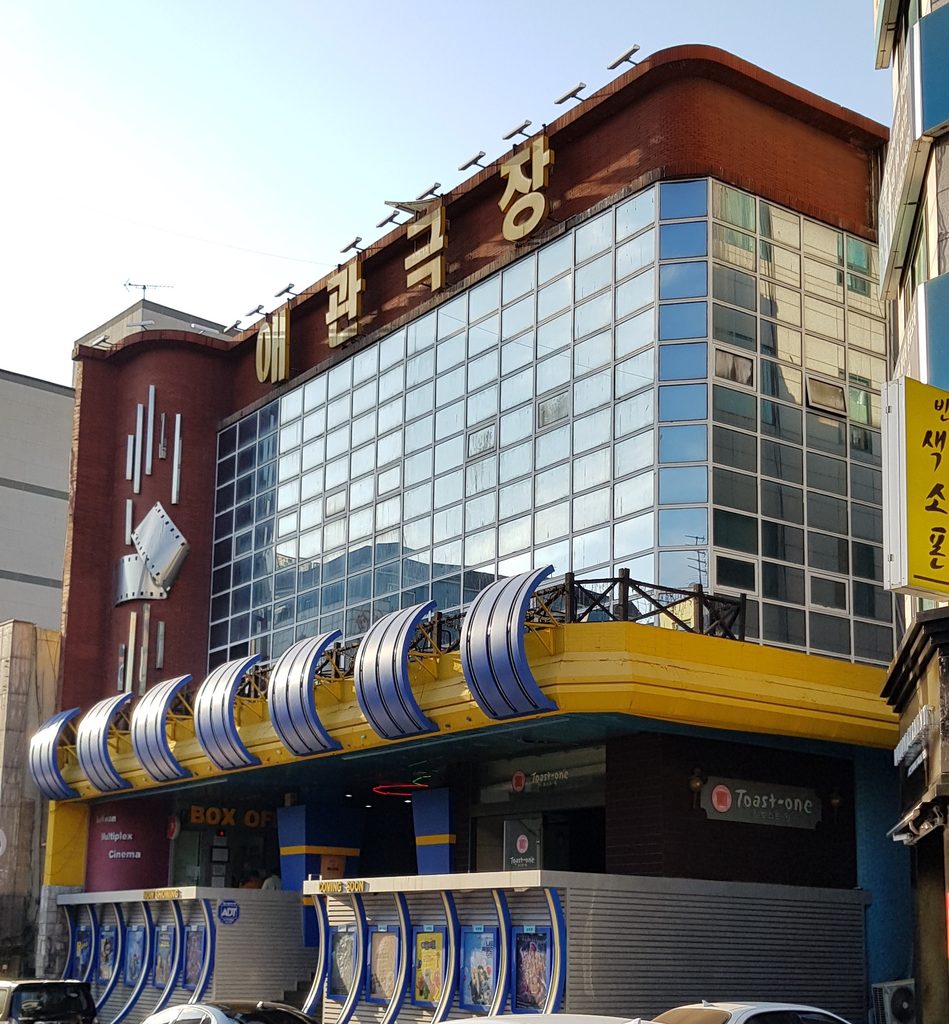
Photo: PuzzletChung via Wikimedia Commons (CC0)
Dapdong Cathedral: Red Brick and Three Bell Towers
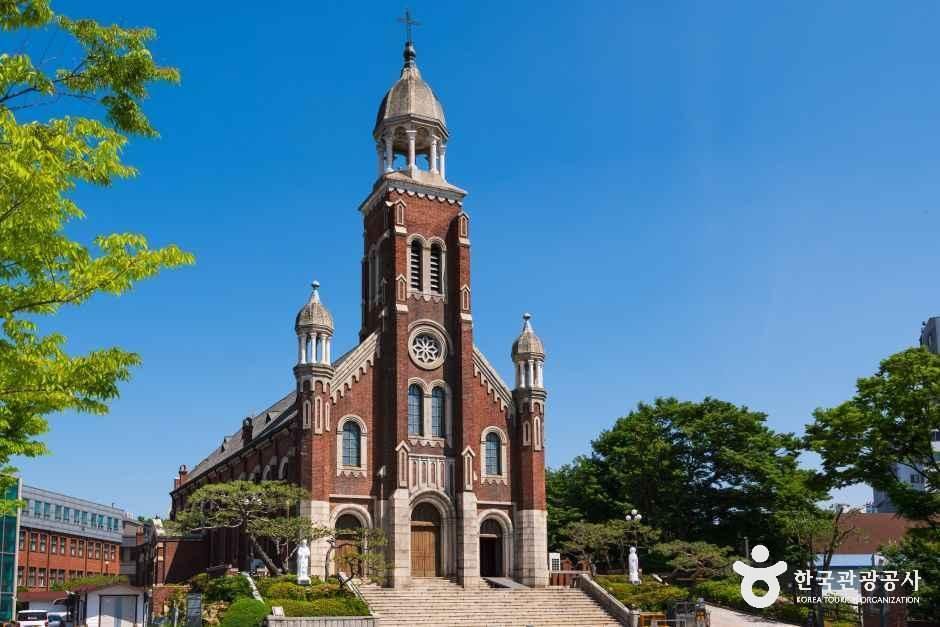
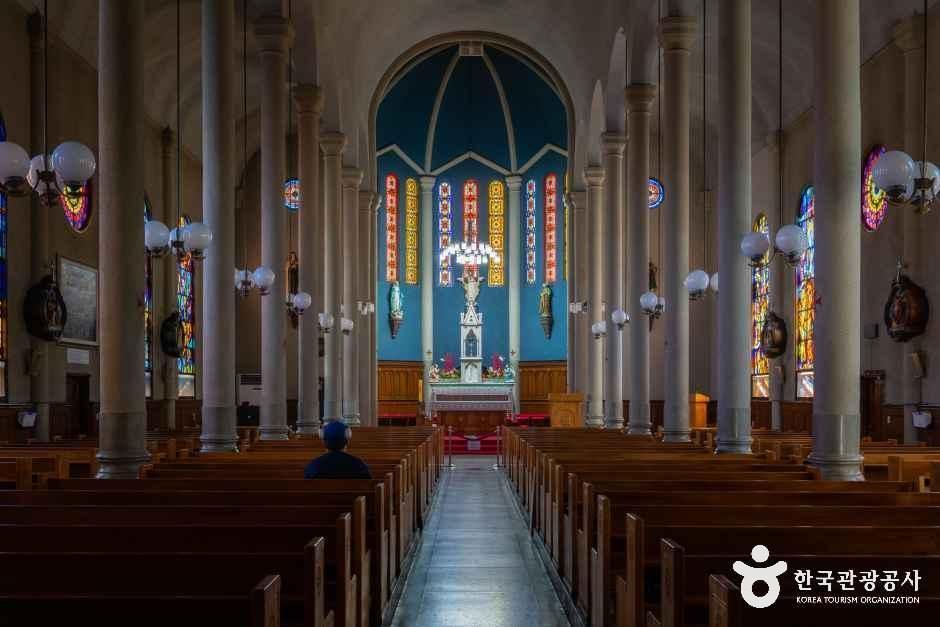
Ten minutes downhill from the theater is Dapdong Cathedral (답동성당), the seat of the Catholic Diocese of Incheon and the first Catholic church built in the city.
Source: ⓒKorea Tourism Contents Lab or ⓒKorea Tourism Organization
The original was completed in 1897 to a design by a French missionary priest, and expanded in 1937. It is red brick over granite, with three bell towers across the front, each topped with an octagonal dome. It was designated a national historic site in 1981 and is one of the oldest Western-style buildings of its kind in Korea.
It also took direct fire during the Incheon Landing in 1950. Enough of the structure survived that it was restored rather than rebuilt, which is unusual for anything in this city.
The grounds are open and quiet, and the view back down toward the harbor from the terrace is the reason to walk up rather than around.
Source: ⓒKorea Tourism Contents Lab or ⓒKorea Tourism Organization
The First Thing That Arrived Here Was Not a Building
Chinese martial arts entered Korea through this port. When Shandong immigrants settled in Incheon after the Qing concession was established in 1884, they brought northern fighting systems with them — and for decades those systems stayed inside the community.
The reason was not secrecy for its own sake. During the colonial period, hwagyo elders reportedly refused to teach Koreans at all, on the grounds that anyone they trained might one day use it against them. Local accounts hold that martial artists in the Chinese quarter organized to protect residents during periods of unrest elsewhere in the country, and that the district came through those years largely untouched while other communities did not.
That changed after the Korean War. The schools opened to Korean students, and from the 1980s onward interest in Chinese martial arts spread nationally. Incheon is where the thread starts. Most people trace kung fu in Korea to Hong Kong films; the actual entry point was a hillside a few minutes from this station, carried by families who arrived to unload ships.
There is no museum for this and no plaque. It is simply the kind of history that stays in a neighborhood rather than getting written down.
Where to Eat
Do not eat near the station. Walk fifteen minutes and eat at the market instead.
Sinpo International Market is where this walk should end — jjolmyeon, sweet-and-spicy fried chicken, and hollow gonggalppang pastries, in an arcade that has been running since the port era. We covered what to order in our guide to Sinpo International Market.
The useful piece of local knowledge: an underground shopping arcade runs from Dongincheon Station all the way to the market. In summer heat or winter wind, take it. Exit 28 puts you at the market gate; Exit 29 puts you at the cathedral.
How to Get There
Take Line 1 to Dongincheon Station. From Seoul Station the ride is about an hour with no transfer. Exit 2 for the church and the theater; the underground arcade for the cathedral and the market.
Line 1 splits into branches west of Seoul, so check that your train is bound for Incheon rather than Seodongtan or Sinchang. Our guide to Incheon Subway Line 1 explains how the branches work.
Chinatown is one stop further at Incheon Station, and Bupyeong Station is a few stops back toward Seoul if you want a completely different kind of neighborhood on the same line.
Practical Notes
- This is a hill walk. Church, theater, and cathedral sit at three different elevations. Wear the right shoes.
- Check opening hours before you go. Cinema showtimes and cathedral access both vary, and neither is optimized for drop-in visitors.
- Weekday mornings are best. The market gets busy after lunch; the historic buildings never do.
- Almost no English signage. Save the Korean names before you leave: 내리교회, 애관극장, 답동성당, 신포국제시장.
Why It Is Worth an Afternoon
Seoul preserves its history behind ticket barriers and interpretive panels. Dongincheon does not preserve anything. The oldest theater in the country is showing whatever came out last Friday. The cathedral holds mass. The market sells lunch.
That is a rarer experience than a restored palace, and it is fifty-eight minutes from Seoul Station.
Visitor information for the district is available from the Incheon Jung-gu tourism office.
A few minutes past the station in the other direction sits Hwapyeong-dong’s naengmyeon street, famous nationwide for a bowl the size of a wash basin.