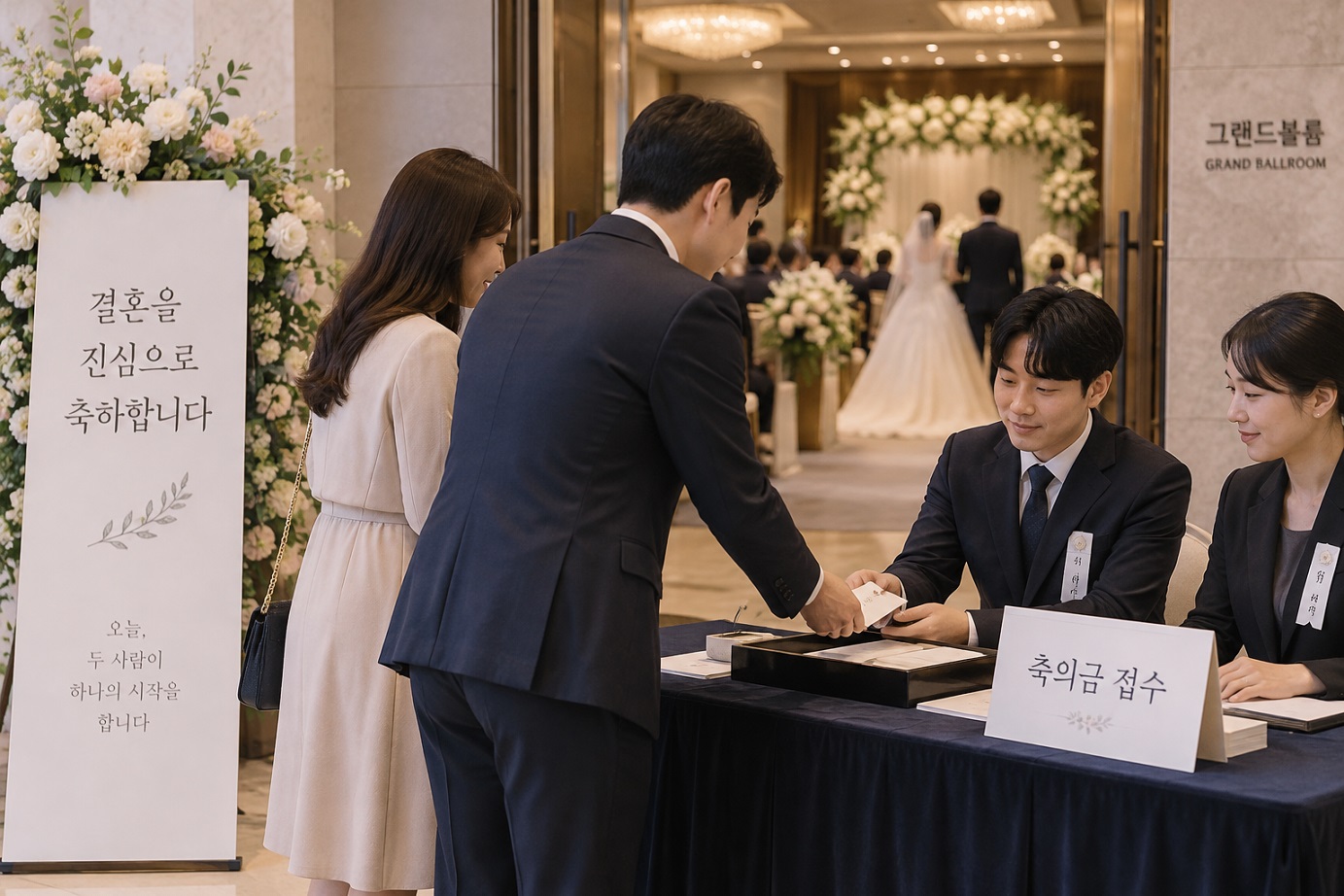
Bring the wrong envelope to the wrong event in Korea, and it’s not a small mistake. A condolence envelope at a wedding, or a celebration envelope at a funeral, reads as a genuine error rather than an innocent mix-up. Korean wedding and funeral money etiquette runs on a specific set of rules — the envelope, the wording, even the amount — and almost all of it comes down to getting a handful of small details right.
The Envelope Itself
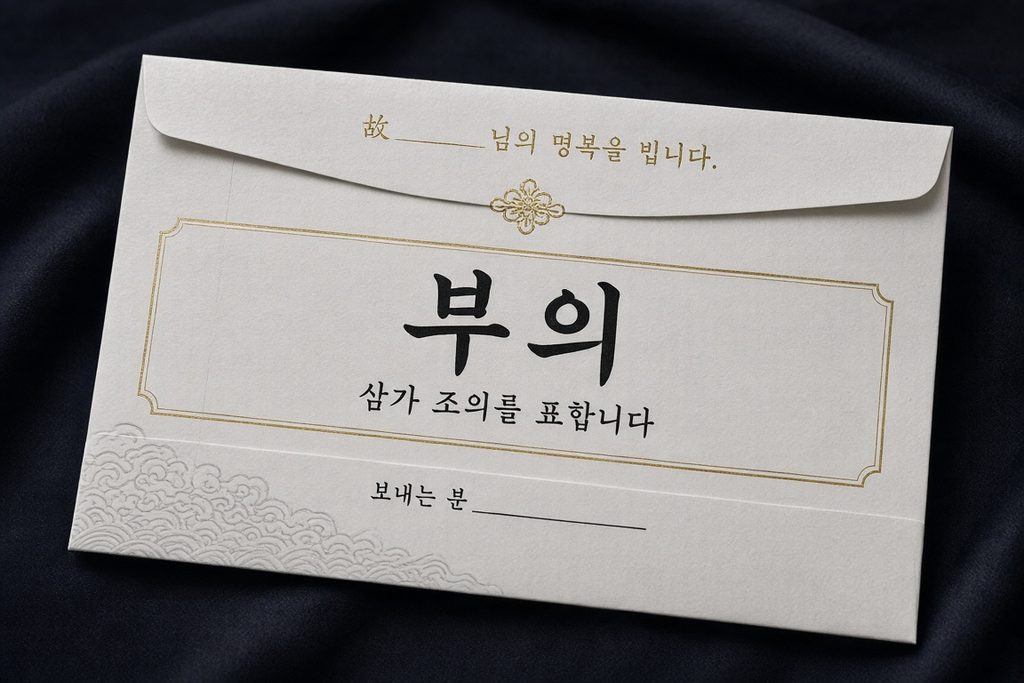
Both occasions use a plain white envelope, but the wording on the front tells you immediately which one you’re holding. For a wedding, it reads “축 결혼” (congratulations on the marriage) or the Chinese-character version, 祝 結婚. For a funeral, it reads “부의” (賻儀) or “근조” (謹弔) — condolence money — written in black ink only. Red ink on a funeral envelope is avoided entirely; the color carries the wrong association for a somber occasion.
Your name goes on the back of the envelope, typically the bottom left, written vertically if you’re following the more traditional format. Skipping your name isn’t an option — the host or family needs to know who to thank afterward, so an anonymous envelope creates its own small awkwardness.
Why the Amount Isn’t Arbitrary
The number matters here in a way it doesn’t in a lot of gift-giving contexts. Odd-numbered amounts are considered the safer, more traditional choice — 30,000, 50,000, 70,000 won and so on — rather than an even number. This is the same logic behind the number four coming up elsewhere in Korean gift giving etiquette: certain numbers carry weight beyond their face value.
Nine specifically gets avoided too, tied to the phrase “아홉수” (ahopsu), a belief that years or numbers ending in nine can carry bad luck. At funerals in particular, amounts like 90,000 won are skipped for this reason, and larger round numbers — 100,000, 300,000, 500,000 — are treated as their own exception to the odd-number rule, since a fully round number reads as complete rather than unlucky.
Weddings vs. Funerals: Not the Same Rules
Wedding money (chugeuigeum, 축의금) tends to run somewhat higher than funeral money, especially among close friends or coworkers who expect to attend the wedding banquet as a guest — the amount is loosely understood to help cover your own seat at the meal, on top of the gift itself. Funeral money (buigeum, 부의금) is typically more modest, and for funerals specifically, a common piece of advice is that the bills inside shouldn’t look brand new — slightly used bills are considered more appropriate than crisp new ones, the opposite of what you might expect for a celebratory gift.
The envelope itself is handled differently too. At a wedding, it’s fine to seal it. At a funeral, tradition holds that the envelope should be left unsealed and unfolded when handed over — symbolically letting the person depart without anything closed off in their way.
What to Wear
For a funeral, dark, understated clothing is the expectation — a black suit is the safest default, and bright colors or busy patterns are worth avoiding entirely. Understated is the operating word for jewelry and makeup too. Weddings are far more relaxed on this front, though genuinely all-white outfits are still generally avoided out of deference to the bride.
The Mistake Worth Actually Avoiding
Of everything here, the one true faux pas is the envelope mix-up — showing up to a wedding with condolence wording, or a funeral with celebratory wording. It happens more easily than you’d think when you’re grabbing a pre-printed envelope in a hurry, and it reads as a real error rather than a forgivable slip, precisely because the wording announces exactly what occasion you think you’re attending.
Everything else here — the exact amount, the precise fold, the ink color — matters less than getting that one thing right.
What Visitors Should Know
If you’re invited to either occasion in Korea, a plain white envelope with the correct wording, an odd-numbered amount (or a clean round number), and your name written on the back will cover the basics. None of this requires speaking Korean — most stationery stores near a wedding hall or funeral venue sell pre-printed envelopes for exactly this purpose, so buying one on the way in is entirely normal.
Money handed over with both hands, the same gesture that shows up everywhere else in Korean two-handed etiquette, closes out the exchange the same way it started — carefully, and with your name on it.