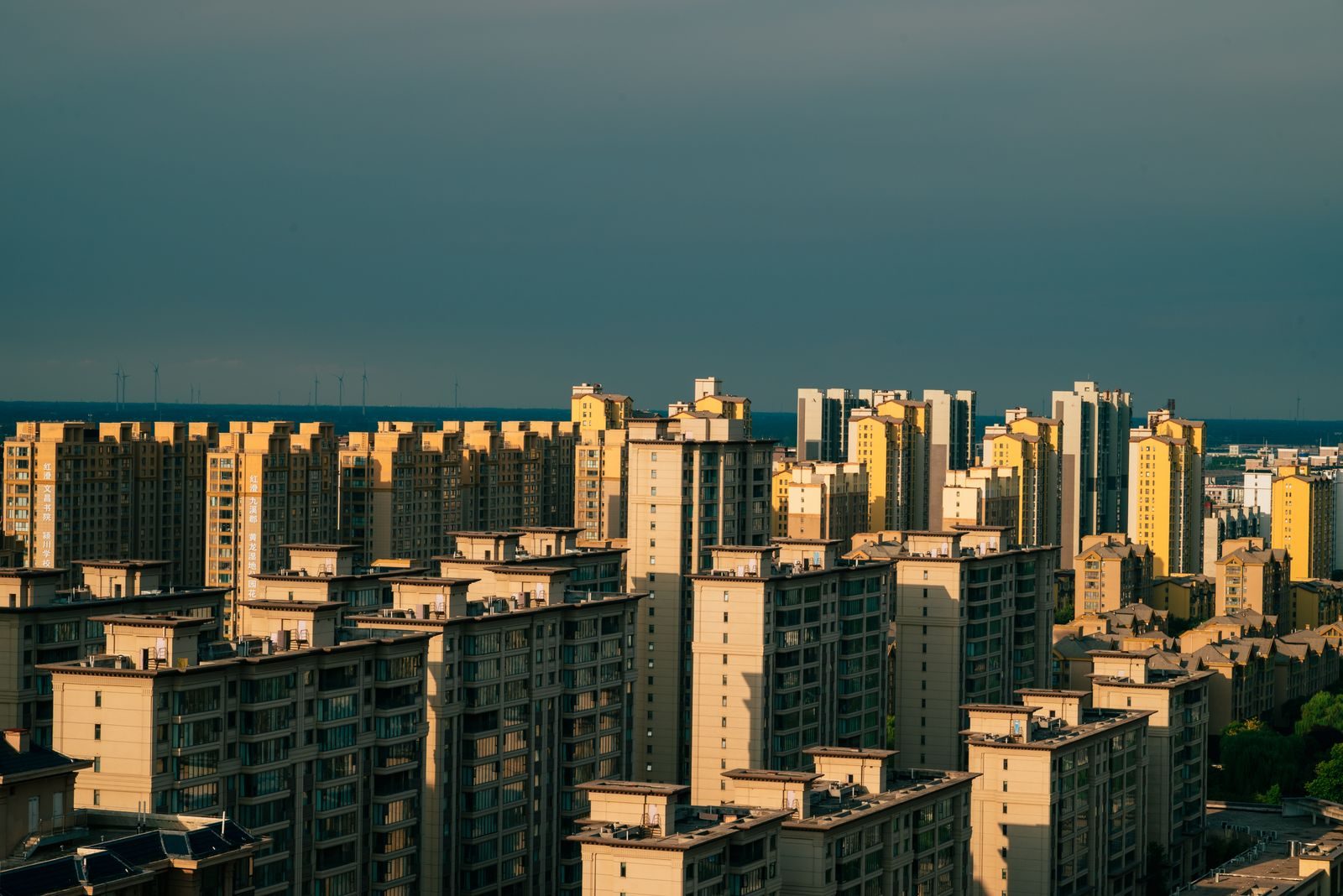
Fly into Incheon, take the train toward Seoul, and you will pass them for forty minutes without a break — identical towers in blocks of eight or twelve, numbered in enormous digits on their sides, repeating across the landscape.
Visitors often read this as bleak. Korean apartments house roughly half the country’s population, and the uniformity is not a failure of imagination but the result of a specific historical problem solved at extraordinary speed.
Why They All Look the Same
In 1960, Seoul had around two and a half million people. By 1990 it had over ten million. Korea urbanised faster than almost any country in recorded history, and it did so on a peninsula where roughly seventy percent of the land is mountainous and unbuildable.
Housing that many people on that little flat land, in that little time, permitted exactly one answer: build upward, build fast, build in standardised units. The towers look the same because they were designed to be reproducible — same floor plans, same construction methods, same layouts repeated across thousands of buildings by a handful of large construction firms.
The giant numbers on the sides exist for a practical reason. A complex may contain twenty buildings and several thousand households, and the numbers are how anyone finds anything, including delivery riders and emergency services.
The Complex, Not the Building
The unit of Korean residential life is not the tower. It is the danji (단지), the complex — a walled or landscaped group of towers sharing grounds and facilities.
A typical complex contains:
- A central playground and landscaped walking paths
- Outdoor exercise equipment, used mostly by older residents in early morning
- A management office handling maintenance, parking, and disputes
- Underground parking, in anything built after roughly 2000
- Often a small gym, study room, or community hall
- Commercial units at the perimeter — convenience store, bakery, hair salon, cram school
This is why Korean apartment living does not feel as isolating as the exterior suggests. The complex functions as a small neighbourhood with its own internal geography, and children in particular grow up in a space that is enclosed, familiar, and largely car-free.
The management office also handles the designated drop-off point for large items, which is why getting rid of large furniture looks different in an apartment complex than it does in a detached house.

The name matters
Korean apartment complexes carry brand names — Raemian, Xi, Hillstate, The Sharp, Prugio, Castle. These are construction company brands, and they function much like car marques. Koreans can infer a great deal about a complex from its brand, its completion year, and its district in combination.
Apartment brand is a genuine social signifier in a way that has no clean English equivalent. It appears in conversation, in matchmaking, and in how neighbourhoods are ranked.
Inside
Layouts are standardised enough that Koreans can usually picture an apartment from its size alone.
| Term | What it means |
|---|---|
| Pyeong (평) | Traditional unit, about 3.3 square metres. Officially abolished but universally used in speech |
| 84 m² (34 pyeong) | The standard family apartment. Three bedrooms, two bathrooms |
| 59 m² (25 pyeong) | Smaller family or couple unit. Two or three bedrooms |
| Officetel (오피스텔) | Studio-style unit in a mixed-use building. Common for single people |
Certain features are near-universal:
Underfloor heating. No radiators. The floor is the heat source, which is the modern descendant of ondol — and the reason shoes come off at the door.
The balcony. Enclosed with glass rather than open. Used for laundry drying, kimchi refrigerators, and storage. Many households have “expanded” the balcony into the living room, which is legal in some configurations and a permanent point of confusion in others.
Wet-room bathrooms. The shower drains into the floor with no separate enclosure. Hence the bathroom sandals.
A dedicated kimchi refrigerator. A separate appliance, usually in the balcony or kitchen, holding kimchi at a controlled temperature. Around three-quarters of Korean households have one.
The entrance step. The hyeon-gwan — a recessed entry area lower than the floor level, where shoes stay.
Renting: Two Systems
Korea has a rental arrangement that exists almost nowhere else, and any foreigner planning to live here will encounter it immediately.
Wolse (월세) — monthly rent
A deposit plus monthly payments. This is the arrangement most foreigners recognise, though Korean deposits are far larger than Western ones — often ten to twenty times the monthly rent. The deposit is returned when you leave.
Jeonse (전세) — the lump-sum lease
You hand the landlord a very large deposit, historically somewhere between half and eighty percent of the property’s value, and then pay no monthly rent at all. At the end of the lease, typically two years, you get the entire deposit back.
The system made sense in an era of high interest rates and rising property prices: the landlord invested the lump sum and kept the returns instead of collecting rent. For tenants it meant housing with no recurring cost.
The arrangement has come under serious strain. Falling interest rates weakened the landlord’s return, and a wave of deposit-fraud cases — landlords unable or unwilling to return deposits — damaged confidence badly. The market has been shifting toward monthly rent as a result, and jeonse is a smaller share of the rental market than it was a decade ago.
If you are considering jeonse, the deposit protection insurance offered through government-linked guarantee agencies is not optional in practice. This is a subject that deserves professional advice rather than a blog paragraph.
Before you get to the building itself, there is the contract. Korea’s deposit-based lease system is unlike anything in most rental markets, and it is changing fast — we explained how it works and why it is fading in our guide to jeonse.
Living in One
Noise between floors is the defining conflict of Korean apartment life. The term cheunggan soeum (층간소음) — inter-floor noise — appears constantly in news coverage, and disputes between upper and lower units occasionally escalate seriously. Concrete slab construction transmits impact noise efficiently, and the cultural expectation of quiet after evening hours is firm.
Waste separation is strict. Food waste goes in designated bags or weighed bins, recycling is sorted into multiple categories on set days, and general waste requires district-specific paid bags. Getting it wrong produces a note from the management office.
Deliveries arrive constantly. Korean logistics are fast enough that same-day and dawn delivery are ordinary, and apartment lobbies handle enormous parcel volume.
The management fee covers maintenance, security, cleaning, and shared utilities, billed monthly on top of rent. It is not trivial and is worth asking about before signing anything.
That compactness is also why so much Korean social life happens outside the home. Inviting friends over is a larger gesture here than in most countries, so the meeting moves to a third place — usually a cafe, which Korea has in extraordinary density.
Is It Changing?
Slowly. There is visible fatigue with uniformity, and newer complexes make more effort with facades, landscaping, and shared amenities. Some developments now include libraries, cafés, and swimming pools.
But the underlying constraint has not moved. The land is still mountainous, the population is still concentrated in the capital region, and apartments remain both the most efficient use of space and the country’s primary household asset. That last point matters most — a Korean apartment is not merely somewhere to live but the main vehicle through which most families hold wealth, which makes the form remarkably resistant to change.
Seeing Them Differently
The towers are worth a second look. They are the physical record of a country that went from war ruins to a developed economy inside two generations, and the repetition that reads as monotony from a train window is, from inside, a working neighbourhood with a playground at its centre.
How life inside those apartments is organised — the floor, the entryway, the table — is covered in our guides to why Koreans remove their shoes and Korean table manners.
More on Korean daily life in the K-Culture section.
Living stacked vertically has one predictable consequence — how Koreans handle apartment noise disputes.
Living in one costs more than the rent. Every complex bills a separate monthly charge for the building itself, and in winter it can rival the rent — our guide to Korean apartment management fees breaks down what it covers and which line you can claim back.
Daily life in one runs on shared rules, and the strictest of them govern the bins — our guide to Korean waste separation covers the four streams and the mistake that gets people fined.
Curious who actually decides your building’s budget? Our guide to the Korean apartment resident representative explains the elected council behind every management fee.
Planning a move into or out of one? Our guide to moving in Korea covers the three service tiers, the ladder truck, and what to put in the contract.
Whether your utilities arrive bundled or separately depends heavily on the type of home you choose, and paying for electricity, water and gas looks quite different outside an apartment complex.
Studios and officetels follow their own rental conventions, and renting on a monthly contract works differently from what most newcomers expect.